 how-to
Charged With a Violent Crime: Steps to Take Now
Quick Summary
After being charged with a violent crime, stay calm, avoid arguing with officers, and ask for a criminal defense attorney before answering any questions. Do not sign anything without legal advice, and keep track of every court date and deadline.
- Ask for a criminal defense attorney, then stop talking to police.
- Do not sign anything without legal advice.
- Write down what you remember, for your lawyer only.
- Keep track of every court date and deadline, since missing one can lead to a bench warrant.
- Turn off auto-delete settings and do not delete anything that could be evidence.
Table of Contents
- What to Do First After Being Charged With a Violent Crime
- Hire a Criminal Defense Attorney Before Anything Else
- Exercise Your Right to Remain Silent
- Understand the Charges, Penalties and Bail Conditions
- Your First Court Appearance After Arrest
- Preserving Evidence for a Criminal Defense
- What Not to Do After Being Charged With a Crime
- Getting Your Case Evaluated Without Delay
- Frequently Asked Questions
What to Do First After Being Charged With a Violent Crime
Being charged with a violent crime is frightening, and the first hours matter more than most people expect. The steps you take now can shape how your case unfolds for months or years. Start with one rule: say as little as possible and get a lawyer involved fast. (Source: Fifth Amendment to the U.S. Constitution)
Here is what to do right away:
- Stay calm and avoid arguing with officers
- Ask for a criminal defense attorney, then stop talking
- Do not sign anything without legal advice
- Write down what you remember, for your lawyer only
- Keep track of every court date and deadline
Each step protects a different part of your case. The sections below explain what each one means in practice.
The first steps you take after a violent-crime charge tend to matter most, so this summary lists the immediate actions the article recommends.
| Action | Why it matters | When |
|---|---|---|
| Stay calm and avoid arguing with officers | Protects your case from avoidable statements | Immediately |
| Ask for a criminal defense attorney, then stop talking | Stops statements that can be used against you | Immediately |
| Do not sign anything without legal advice | Prevents waiving rights by accident | Before signing |
| Write down what you remember, for your lawyer only | Preserves details while memory is fresh | As soon as possible |
| Keep track of every court date and deadline | Missing one can lead to a bench warrant | Ongoing |
Hire a Criminal Defense Attorney Before Anything Else
A criminal defense attorney is the single most important person in your case. Ask for one the moment you are arrested, and do not answer questions until one is present. Many people assume they can explain the situation and fix it. In practice, a few casual sentences to police can be used against you later.
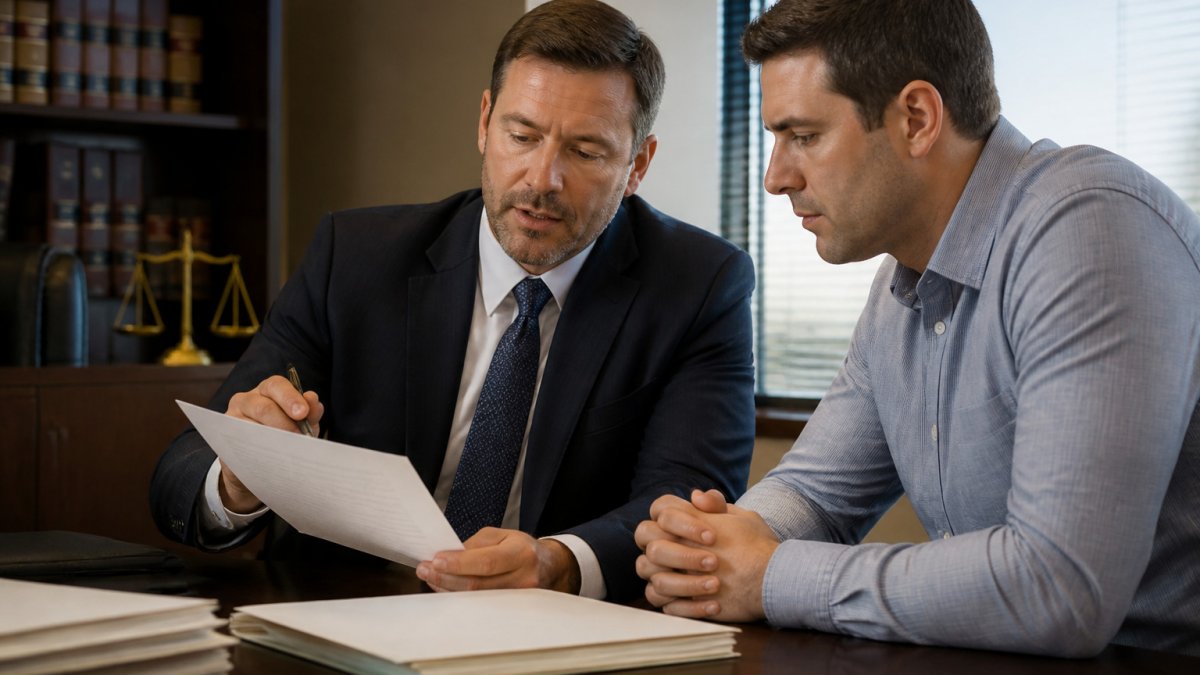
A defense attorney does several things early:
- Reviews the police report and charging documents
- Speaks with the prosecutor about the charges
- Advises you on bail and release conditions
- Protects you at your first court appearance
A common mistake is waiting until a court date to hire counsel. By then, important decisions about bail, evidence, and statements may already be made. Contact a lawyer as soon as possible.
Exercise Your Right to Remain Silent
The Fifth Amendment protects you from being forced to incriminate yourself (Fifth Amendment | U.S. Constitution | US Law). You have the right to remain silent, and you should use it. Say clearly that you want a lawyer and that you will not answer questions without one.
Silence is not an admission of guilt. Police often try to keep people talking, sometimes by saying that cooperating will help. Your lawyer can decide what, if anything, to say to investigators.
Watch out: Statements made to friends, family, or on social media can be used as evidence. Keep discussion of the case between you and your attorney.
Understand the Charges, Penalties and Bail Conditions
A violent-crime charge is not a single thing. The specific offense, the injuries alleged, the presence of a weapon, and your prior record can move a case from a misdemeanor to a felony, change the potential sentence by years, and change how a judge handles release.
How charge categories differ in practice:
- Assault and battery. Simple assault is often charged as a misdemeanor, while aggravated assault, typically involving a deadly weapon or intent to cause serious bodily injury, is commonly a felony. The line between them often turns on injury severity and the alleged weapon.
- Domestic violence. Many jurisdictions attach enhanced penalties, mandatory protective orders, and firearm restrictions to domestic-violence allegations, even when the underlying conduct would otherwise be a lesser charge. A conviction can also carry long-term collateral consequences for firearm possession and custody.
- Robbery. Robbery is generally a felony and is distinguished from theft by the use or threat of force. Armed robbery allegations usually carry stiffer exposure than unarmed robbery.
- Weapons allegations. A firearm or other weapon allegation can add separate counts and trigger sentencing enhancements. Lawful possession is not a defense to a weapons count added to a violent-crime charge, so the weapon facts need their own review.
- Injury severity. Photos, medical records, and the alleged victim's statements often drive whether the prosecution treats an injury as minor or serious, and that classification can drive the charge level.
Laws vary by jurisdiction, so treat any general description as a starting point, not a prediction. Your lawyer can tell you how the charging statute in your case actually works.
Bail and release conditions in violent-crime cases. Judges weigh the nature of the charge, the alleged injury, any weapon, your criminal history, your ties to the community, and the risk of nonappearance or new conduct. In violent-crime cases, the court may also consider the safety of the alleged victim and the public. Common conditions include:
- No contact with the alleged victim or witnesses, directly or indirectly
- Restrictions on travel or leaving the area
- Surrender of firearms or other weapons
- Mandatory check-ins, reporting, or electronic monitoring
- Substance-abuse or anger-management conditions
Violating any condition can lead to revocation of release even if the new conduct seems minor. A message passed through a third party can be treated as a violation. (Source: guidelines on the importance of legal counsel)
What happens after the first appearance. The arraignment is the beginning, not the end. After it, the case typically moves through charging decisions, discovery (where the prosecution shares its evidence with your lawyer), pretrial hearings, plea discussions, and, if no resolution is reached, trial. Each stage has deadlines and decisions that affect the next. Ask your lawyer to walk you through the expected timeline so you know what is coming and what is expected of you at each step.
Request a Free Case Evaluation →
Your First Court Appearance After Arrest
Your first court appearance, often called an arraignment, is where the judge reads the charges and addresses bail and release (Criminal Cases). It usually happens within a short time after arrest. Your attorney should be present or arrange to appear with you.
At this stage, the court typically confirms your identity, informs you of the charges, and sets the conditions of release. Do not speak out of turn in court. Let your lawyer speak for you.
Dates matter. Missing a court appearance can result in a bench warrant and new charges. Write every date down and confirm it with your attorney.
Preserving Evidence for a Criminal Defense
Evidence can disappear quickly, sometimes because a phone auto-deletes, sometimes because a witness moves, sometimes because a business overwrites security footage on a short cycle. Your defense depends on what the investigation has collected and what is still available, so start preserving early and preserve lawfully. The rule is simple: save copies, do not alter or delete originals, and route everything to your attorney.
Concrete steps for digital evidence:
- Turn off auto-delete. Disable disappearing-message settings and auto-delete timers on messaging apps before anything else. Once a message is gone, it is usually gone.
- Do not delete anything, even material that looks harmful. Deleting messages, photos, or call logs can look like destruction of evidence and may create a separate problem.
- Preserve in place first. Take screenshots or export copies of text threads, call logs, voicemails, and social media posts, including timestamps and account identifiers. Keep the original device intact and do not factory-reset it.
- Location and account records. Many phones and accounts retain location history and login records. Ask your lawyer about lawful ways to preserve those records before retention periods expire.
- Third-party footage. Home security systems, doorbell cameras, and business cameras often overwrite on a short cycle. Identify the owners and ask your lawyer to send a preservation request promptly.
- Witness details. Write down names, phone numbers, and what each person said they saw, for your lawyer only. Do not coach or pressure witnesses.
Non-digital evidence to gather:
- Photos of injuries, clothing, or property damage
- Medical records and receipts tied to the incident
- Any documents showing where you were or what you were doing
Avoid spoliation. Spoliation, losing or destroying evidence that may be relevant, can hurt your case even when the loss was accidental. Do not "clean up" your phone, do not delete social media accounts, and do not ask anyone else to delete material on your behalf. If you are unsure whether something should be preserved, preserve it and tell your lawyer.
Organize what you collect. Keep a simple log: what the item is, where it came from, the date you obtained it, and where the original is stored. This log helps your lawyer move quickly and shows that you took preservation seriously. Stop posting about the case, and assume anything you share online can be used as evidence.
What Not to Do After Being Charged With a Crime
Some mistakes can hurt a case more than the original charge. Avoid these actions:
- Contacting the alleged victim or witnesses, even to apologize
- Posting about the incident or your arrest online
- Discussing the case with cellmates or other detainees
- Missing court dates or violating release conditions
- Trying to hide or destroy evidence
A common mistake is trying to "clear things up" with the other person. Even a friendly message can be treated as witness tampering or a violation of a no-contact order. Let your attorney handle all communication.
Getting Your Case Evaluated Without Delay
The sooner your case is reviewed, the more options your lawyer has. Early review can identify weaknesses in the prosecution's evidence, possible grounds for reduced charges, and strategies for bail and trial.
Prepare a short list of questions for your first meeting:
- What exactly am I charged with, and what are the possible penalties?
- What are my release conditions, and when do they apply?
- What is the next court date?
- What evidence do the police appear to have?
Van Nuys Crime offers a free case evaluation. Contact us to talk through your charges, your options, and the next steps before your next court date.
Frequently Asked Questions
What should I do first after being charged with a violent crime?
Contact a criminal defense attorney as soon as possible, before you answer questions or make statements to anyone. Early legal representation matters because charges, bail and release conditions are often set within the first few days. Your attorney can review the charging documents, advise you on bail and help you avoid statements that could be used against you. If you cannot afford a lawyer, ask the court at your first appearance about appointed counsel.
Should I speak to police after being charged with a violent crime?
No. You have the right under the Fifth Amendment to remain silent, and you can ask for an attorney before answering any questions. Anything you say, including casual explanations or denials, can be used as evidence. Politely state that you will not answer questions without your lawyer present, and then stop talking. Let your attorney handle all communication with investigators.
Can I contact the alleged victim after being charged?
Assume you cannot. Courts often issue protective or no-contact orders in violent crime cases, and violating one can lead to new charges and a higher bail or detention. Even messages sent through friends, family or social media may count as contact. If you need to communicate about housing, children or property, ask your attorney to arrange it through proper channels.
What evidence should I preserve after a violent crime charge?
Keep anything that could support your account of events, including text messages, call logs, photos, videos, social media posts, receipts and witness names. Preserve digital evidence exactly as it is and do not delete, edit or post about the case. Write down what you remember while it is fresh, and share these notes only with your attorney, since they are generally protected by attorney-client privilege.