 How-to
How the Violent Crime Plea Bargain Process Actually Works
Last Updated: November 18, 2026
Quick Summary
A violent crime plea bargain is a negotiated agreement in which the prosecutor offers reduced charges, dismissed counts, or a sentencing recommendation in exchange for a guilty or no-contest plea. Negotiations typically begin after charges are filed and evidence is reviewed, and the judge must review and can reject the deal. The defendant alone decides whether to accept.
- More than 90% of criminal cases ending in conviction result from plea bargaining, per the Vera Institute of Justice.
- Charge bargaining reduces or drops charges, while sentence bargaining trades a plea for a sentencing recommendation.
- A 2024 survey of 180 prosecutors found they weigh whether the crime was violent when making offers.
- A sentencing recommendation is not binding on the judge, so confirm in writing what is guaranteed.
- Victims can submit impact statements and ask to be heard but cannot veto a plea agreement.
Table of Contents
- The Violent Crime Plea Bargain Process From Arrest to Plea Hearing
- When Is a Plea Deal Offered in a Violent Crime Case
- Charge Bargaining, Sentence Bargaining, and the Plea Itself
- Plea Bargain Examples in Violent Crime Cases
- Plea Bargain Pros and Cons for Defendants Facing Violent Charges
- Plea Deals for First-Time Offenders Facing Violent Crime Charges
- How Victims Are Informed and Heard in Plea Negotiations
- Request a Free Case Evaluation Before You Accept Any Plea Offer
- Frequently Asked Questions
The Violent Crime Plea Bargain Process From Arrest to Plea Hearing
Most criminal convictions never reach a jury. According to the Vera Institute of Justice review of plea bargaining research, more than 90% of criminal cases that end in conviction result from plea bargaining. That single fact shapes everything that follows an arrest for a violent crime.
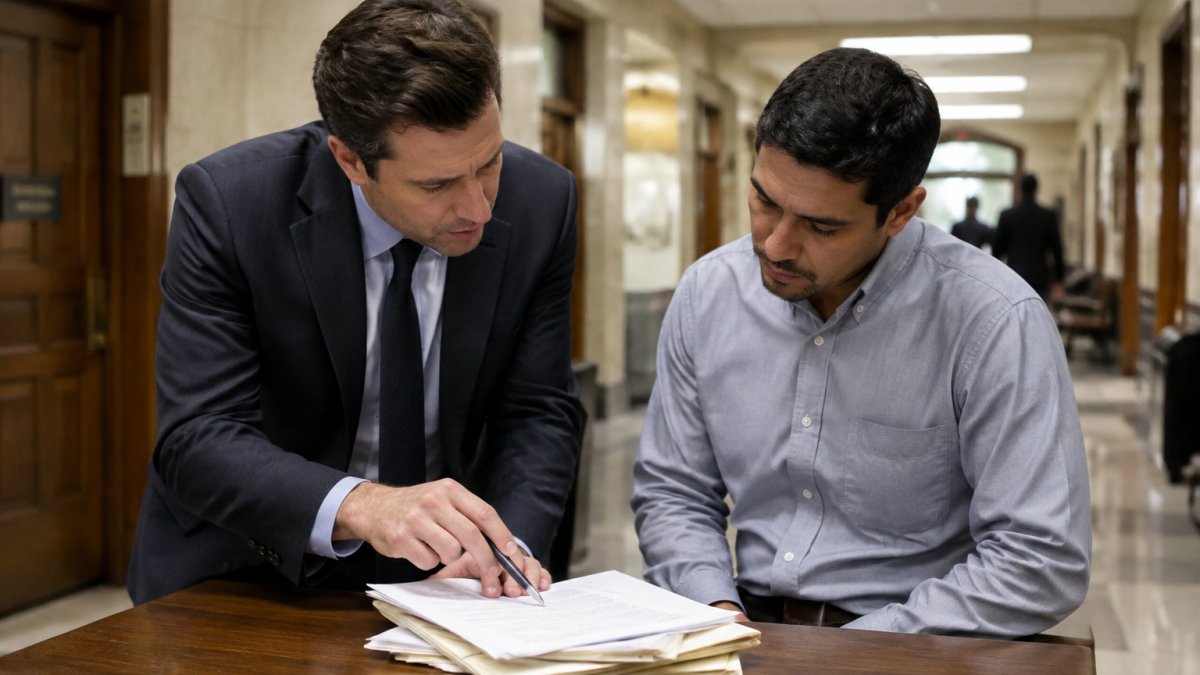
Below, we break down each stage, from the first court date to the final plea hearing, so you know what to expect and where your rights stand.
How Plea Negotiations Begin After a Violent Crime Arrest
Negotiations rarely start at the arraignment. First comes the arrest, booking, and the setting of bail or pretrial release. The prosecutor then files charges, and your defense counsel requests the police report and evidence.
Only after both sides understand the case do talks begin. If you were just arrested, the steps you take now matter. Our guide on what to do after a violent crime charge covers the immediate actions that protect your position before any offer is discussed.
Who Sits at the Table: Prosecutor, Defense Counsel, Defendant, and Judge
Four parties shape a plea agreement. The prosecutor, often a district attorney, decides what to offer. Defense counsel advises the defendant and negotiates terms. The defendant alone decides whether to accept. The judge reviews the deal and can approve or reject it.
The defense lawyer's skill changes what lands on the table. For a closer look at how private counsel influences terms, read how counsel shapes a plea bargain.
Here is the sequence of events that typically follows an arrest for a violent crime before any plea is entered.
| Step | What happens |
|---|---|
| Arrest and booking | Bail or pretrial release is set |
| Charges filed | Prosecutor files charges; defense requests police report and evidence |
| Evidence review | Both sides review the case before talks begin |
| Negotiation | Prosecutor, defense counsel, and defendant shape the agreement |
| Judge review | Judge reviews the deal and can approve or reject it |
When Is a Plea Deal Offered in a Violent Crime Case
A plea deal is typically offered after charges are filed and evidence is reviewed, often before trial but sometimes on the courthouse steps. Timing depends on the offense, the strength of the evidence, and the jurisdiction.
Prosecutors weigh several factors before making an offer. A 2024 survey of 180 prosecutors published in Psychology, Public Policy, and Law found they consider the nature of the crime, including whether it was a crime against a person or a violent crime.
Pretrial detention also matters. Pretrial detention can increase pressure on a defendant to resolve a case by plea.
Charge Bargaining, Sentence Bargaining, and the Plea Itself
Plea bargaining takes two main forms. Charge bargaining reduces or drops charges. Sentence bargaining trades a plea for a specific sentencing recommendation. Most violent crime deals combine both.
Reduced Charges, Dismissed Counts, and Sentencing Recommendations
In charge bargaining, the prosecutor may drop a charge to a lesser offense or dismiss some counts entirely. In sentence bargaining, the prosecutor recommends a penalty to the judge, who is not bound by it.
The distinction matters. A reduced charge can lower sentencing exposure, while a dismissed count removes it. Both are negotiated terms, not guarantees.
Guilty Pleas, No-Contest Pleas, and the Judge's Approval
A guilty plea admits the conduct. A no-contest plea accepts punishment without an admission of guilt. In both, the judge must review the agreement in open court and confirm the defendant understands the rights being waived.
The judge can accept or reject the deal. Approval is not automatic.
Plea Bargain Examples in Violent Crime Cases
Outcomes in violent crime cases vary widely by offense, evidence, and jurisdiction. The patterns below are illustrative, not promises, and they assume a defendant with counsel and no unusual aggravating facts. Use them to understand the range of what negotiations can produce, then ask your lawyer how your facts compare.
Assault and Battery Charges
A simple assault or misdemeanor battery often resolves through charge bargaining to a lesser included offense, a deferred adjudication or diversion program, or a plea with probation and anger-management conditions. When the injury is serious or a weapon is involved, prosecutors are less likely to reduce the charge and more likely to insist on a sentencing recommendation that includes custody.
Robbery Charges
Robbery carries higher sentencing exposure than theft because it involves force or fear. Charge bargaining in robbery cases often focuses on whether the facts support a lesser theft or larceny charge, or whether one of several counts can be dismissed in exchange for a plea to a single count. Prosecutors weigh the strength of witness identification, surveillance footage, and recovery of property.
Homicide and Manslaughter Charges
The highest-stakes negotiations involve homicide. Charge bargaining may reduce a murder charge to manslaughter, or a first-degree charge to a lesser degree, depending on evidence of intent, provocation, and causation. Sentence bargaining in these cases often involves agreed sentencing ranges rather than a single number, and the judge retains discretion. Because the consequences are severe, defense counsel typically commissions independent investigation and may consult forensic experts before advising on any offer.
Domestic Violence and Protective Order Cases
Domestic violence cases often carry collateral consequences beyond the criminal sentence, including protective orders and firearm restrictions. Prosecutors may offer a plea to a lesser charge with a no-contact condition, or a diversion program that dismisses the charge upon completion. The victim's position can influence the offer, but the prosecutor decides whether to extend one.
What Shapes the Offer
Several case factors consistently move negotiations: the strength of the evidence, the availability and credibility of witnesses, the severity of injuries, the defendant's prior record, and mitigating circumstances such as self-defense or provocation. Studies reviewed by the Bureau of Justice Assistance found that when plea bargaining was limited, more cases went to trial, which underscores how much the offer reflects the prosecutor's assessment of trial risk.
Watch out: a reduced charge is not the same as a dismissal, and a sentencing recommendation is not binding on the judge. Confirm in writing what is guaranteed and what is merely recommended before you sign anything.
Plea Bargain Pros and Cons for Defendants Facing Violent Charges
The trade-offs are real. Weigh them carefully before signing anything.
Pros:
- Certainty of outcome versus trial risk
- Lower sentencing exposure
- Fewer charges on your record
Cons:
- A permanent conviction
- Waiver of trial rights
- Pressure from pretrial detention
If you accept a deal, know what comes next. Our guide to expunging violent crime charges explains how a conviction may later be cleared.
Plea Deals for First-Time Offenders Facing Violent Crime Charges
First-time offenders often have more room to negotiate. Prosecutors may offer diversion, reduced charges, or lighter sentencing recommendations when a defendant has no prior record.
Your rights during this process are specific. Our overview of rights for first-time offenders in California explains what you are entitled to before you decide.
How Victims Are Informed and Heard in Plea Negotiations
Victims are not bystanders in the plea process, but their role depends on jurisdiction and the stage of the case. A practical walkthrough helps you understand what to expect, whether you are the defendant or the victim.
Notification Before a Plea Is Offered
In many jurisdictions, the prosecutor's office must notify a victim before a plea agreement is finalized. Notification may come by mail, phone, or through a victim advocate, and it typically includes the proposed charges, the recommended sentence, and the date of the plea hearing. The timing varies: some offices notify as soon as an offer is extended, while others notify only after the defendant has accepted. Ask the prosecutor's office or the court's victim services unit what the local rule requires.
Consultation and the Right to Be Heard
Many states give victims a right to consult with the prosecutor before a plea is entered, and a right to be heard at the plea hearing or sentencing. The National Crime Victim Law Institute argues that victims' rights need protection when cases resolve through plea bargaining rather than trial, because the plea hearing may be the only opportunity for the victim to address the court.
Victim Impact Statements
A victim impact statement can describe the physical, emotional, and financial harm caused by the offense. Judges often consider it when deciding whether to accept the plea and what sentence to impose. In some courts, the statement is read aloud; in others, it is submitted in writing and included in the record. The defendant's counsel may review the statement in advance.
Protective Orders and No-Contact Conditions
A plea agreement in a violent crime case often includes a no-contact condition or a protective order. The victim may be asked whether the order is needed and what terms would help. Violating the order can lead to additional charges or revocation of the plea agreement.
What the Victim Can and Cannot Do
A victim can provide information, submit a statement, and ask to be heard. A victim cannot veto a plea agreement or force the prosecutor to go to trial. If the victim disagrees with the offer, the prosecutor may still proceed, and the judge may still accept the plea.
Watch out: notification rules and victim rights vary significantly by state and even by county. Confirm the local requirements with the prosecutor's office or court victim services rather than relying on general information.
Request a Free Case Evaluation Before You Accept Any Plea Offer
At Van Nuys Crime, we provide aggressive, personalized defense for violent crime charges. Before you decide, review our client testimonials to see the outcomes we have secured.
A plea offer can feel like pressure to decide fast. Our attorneys will explain your options, challenge the evidence, and fight for the best resolution in your case.
Frequently Asked Questions
Can a judge reject a plea agreement in a violent crime case?
Yes. A plea bargain is an agreement between the prosecutor and the defense, but the judge decides whether to accept it. The judge reviews the plea in open court, confirms the defendant understands the rights being given up, and checks that the plea has a factual basis. If the judge rejects the agreement, the defendant can usually withdraw the plea. Because judicial review is discretionary, the terms you accept should be ones your defense counsel believes the court will approve.
What happens if a defendant rejects a plea offer?
Rejecting an offer means the case proceeds toward trial unless a better deal is negotiated later. Rejecting an offer carries trial risk, including the possibility of a longer sentence if convicted at trial. Before turning anything down, ask your defense lawyer what the sentencing exposure looks like and whether the prosecution's evidence has weaknesses worth testing.
Do victims have a role in plea bargain negotiations?
Victims are not parties to the negotiation, but they are not invisible either. Victims' rights advocates argue that when cases resolve through plea bargaining, victims' rights need protection during that process. In practice, prosecutors often consult victims before finalizing an offer, and victims may speak at the plea hearing. How much weight a victim's position carries varies by jurisdiction and by the prosecutor handling the case.
How does pretrial detention affect a plea bargain decision?
It matters more than most defendants expect. Pretrial detention can increase pressure on defendants to resolve cases quickly, sometimes by pleading guilty. That pressure can push someone toward an offer they would reject while free. If you are in custody, your defense counsel should evaluate the offer on its legal merits, not on how fast it gets you released.