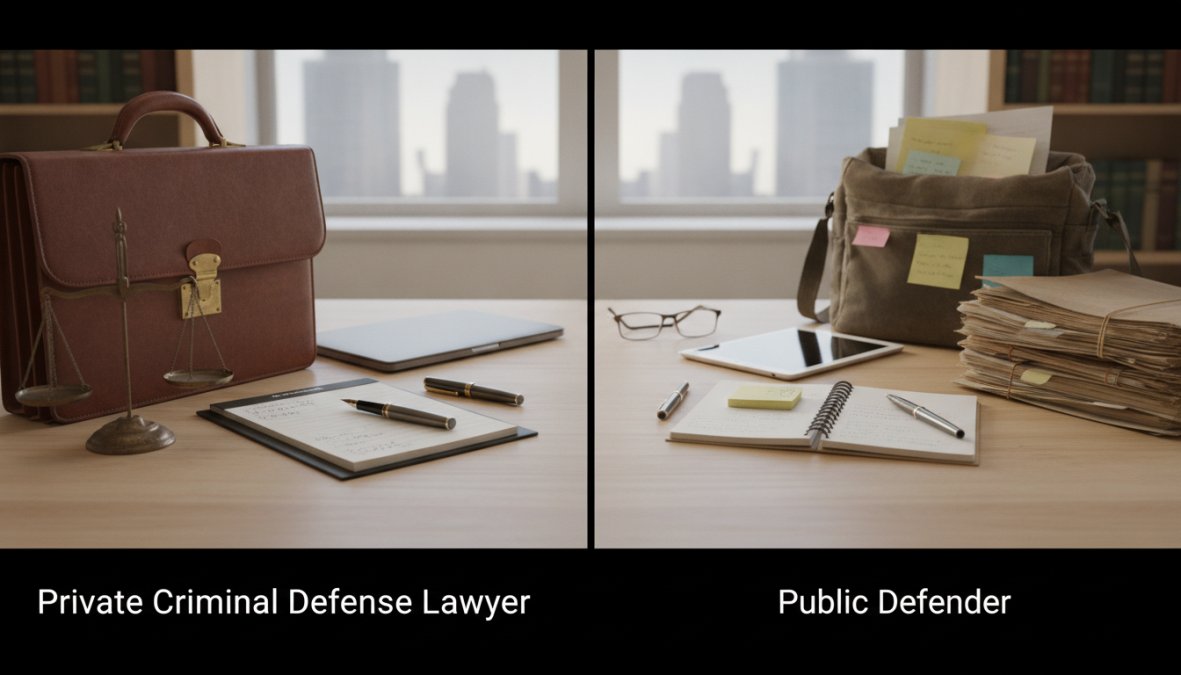
 comparison
Private Criminal Defense Lawyer vs Public Defender: A 2026 Comparison
Table of Contents
- Private Criminal Defense Lawyer vs Public Defender: Key Differences
- Comparison Table: Private Attorneys and Public Defenders
- Caseload, Resources, and Investigative Capacity
- Cost of Hiring a Criminal Defense Lawyer: Private vs Public
- How to Qualify for a Public Defender and Eligibility Requirements
- Personalized Attention, Availability, and Client Communication
- Questions to Ask a Criminal Defense Lawyer Before Hiring
- When to Hire a Private Attorney: Scenarios and Case Types
Last Updated: July 15, 2026
Private Criminal Defense Lawyer vs Public Defender: Key Differences
When facing criminal charges, choosing between a private criminal defense lawyer and a public defender is one of your first decisions. This choice affects your case strategy, available resources, and ultimately your outcome. A private criminal defense attorney is a lawyer you hire directly through a retainer or fee agreement. A public defender is a court-appointed attorney provided free to those who qualify financially. Both provide legal representation, but the systems supporting them operate under fundamentally different constraints. Understanding these distinctions helps you make an informed decision about your legal representation.
Comparison Table: Private Attorneys and Public Defenders
| Factor | Private Attorney | Public Defender |
|---|---|---|
| Cost | Retainer + hourly fees or flat rate | Free (income-based eligibility) |
| Caseload | 20-50 active cases | 100-300+ active cases |
| Availability | Direct access, flexible scheduling | Limited availability, shared resources |
| Investigative Resources | Can hire investigators, experts | Limited to public resources |
| Specialization | Often specialized in specific crime types | General criminal law practice |
| Client Communication | Regular updates, detailed strategy discussions | Minimal contact, brief meetings |
| Trial Experience | Varies widely by attorney | Generally extensive courtroom experience |
| Best For | Serious felonies, complex cases, high stakes | Minor charges, limited resources, quick resolution |
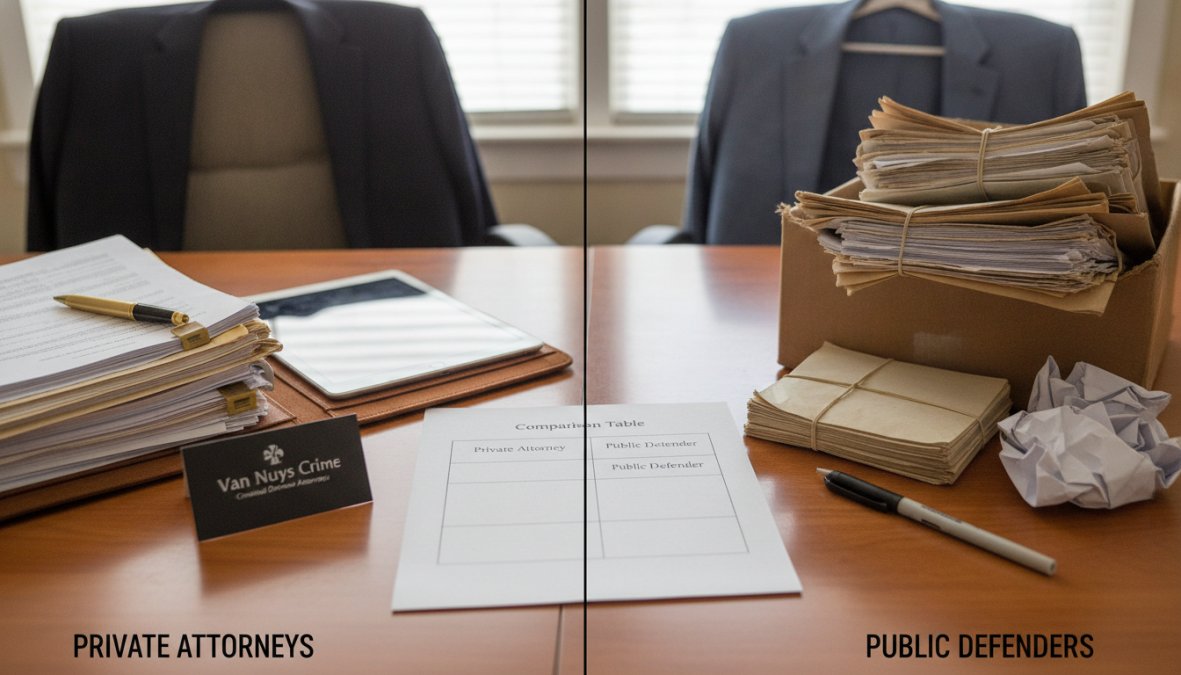
Caseload, Resources, and Investigative Capacity
The practical reality of criminal defense hinges on how much time and resources your attorney can allocate to your case.
How Caseload Affects Your Defense
Public defenders typically manage 100-300+ active cases simultaneously. A public defender handling 200 felony cases has roughly 1-2 hours per case for investigation, strategy, and court preparation. Private attorneys typically maintain 20-50 active cases, allowing 20-40 hours on case preparation. This difference directly affects outcomes: cases with adequate attorney time produce better results, while rushed cases result in inadequate plea deals and missed evidentiary challenges.
Access to Expert Witnesses and Investigative Resources
Private attorneys can hire independent investigators, forensic experts, toxicologists, and subject-matter specialists to challenge prosecution evidence. Public defenders rely on county-provided resources, often the same lab that processed evidence for the prosecution. For drug charges, a private attorney can hire a toxicologist to challenge blood test procedures; a public defender typically cannot. This resource gap directly affects case outcomes.
Cost of Hiring a Criminal Defense Lawyer: Private vs Public
Understanding Retainer Agreements and Legal Fees
Private attorneys typically structure fees through retainer agreements, an upfront payment that secures the attorney's availability. Once paid, your attorney draws against it as they work, billing hourly or by task. Retainer amounts vary based on case complexity, attorney experience, and local market rates.
Your retainer agreement should specify the hourly rate or flat fee structure, what services are included, how expenses are billed, refund policies, and what happens if you run out of retainer funds.
Financial Assistance Options and Pro Bono Services
If you cannot afford a private attorney but don't qualify for a public defender, options exist. Some attorneys take cases pro bono or at reduced rates, particularly for civil rights issues or wrongful convictions. Legal aid organizations, law school clinics, and non-profit defense organizations sometimes handle cases at no cost or reduced cost. Payment plans allow you to pay retainers over time rather than upfront.
How to Qualify for a Public Defender and Eligibility Requirements
State-Specific Eligibility Criteria
Public defender eligibility is income-based. States set their own thresholds, some at 125% of poverty level, others at 200% or higher. The determination process involves completing a financial affidavit listing income, assets, expenses, and dependents. Courts also consider liquid assets separately from income, having $5,000 in savings might disqualify you even if monthly income is low. Eligibility is determined at your first court appearance; if circumstances change later, you can request reconsideration.
The Public Defender Myth vs Reality
Many public defenders are excellent attorneys who chose government service despite lower pay. They have extensive courtroom experience and understand criminal procedure deeply. However, caseload constraints limit what any public defender can accomplish. An excellent attorney managing 200 cases cannot provide the same level of service as a competent private attorney managing 30 cases. This is a resource problem, not a competence problem.
Personalized Attention, Availability, and Client Communication
Response Times and Direct Access to Your Attorney
With a private attorney, you typically have direct phone access and can reach your lawyer within 24-48 hours. Strategy meetings happen regularly, often weekly during active case phases. With a public defender, communication is limited to court appearances and brief office visits. Phone calls may take days or weeks to return.
This difference matters practically. If you remember crucial information or have questions about prosecution evidence, you need timely answers. Direct access also affects decision-making, understanding your options requires detailed explanation, not rushed courthouse hallway conversations. Private attorneys typically provide written case updates and strategic analyses; public defenders rarely have time for this.
Questions to Ask a Criminal Defense Lawyer Before Hiring
Essential Questions on Experience, Strategy, and Outcomes
Experience questions:
"How many cases similar to mine have you handled?" Listen for specific numbers. "What's your trial-to-plea ratio?" This reveals whether the attorney actually tries cases. "Have you handled cases in this specific courthouse?" Familiarity with local judges and prosecutors matters significantly.
Strategy questions:
"What's your initial assessment of the evidence against me?" A good attorney identifies weaknesses immediately. "What are the strongest and weakest parts of the prosecution's case?" Honest assessment suggests integrity.
Outcome questions:
"What percentage of your clients go to trial versus accepting plea deals?" "Can you provide references from past clients?" "How do you charge, and what does my retainer cover?"
Red flags:
- Attorney guarantees a specific outcome
- Attorney refuses to discuss case weaknesses
- Attorney seems more interested in fees than your case
- Attorney cannot articulate a clear strategy
- Attorney is dismissive of your concerns
When to Hire a Private Attorney: Scenarios and Case Types
Felony Charges and Complex Criminal Cases
Felony convictions carry prison time, justifying private representation investment. Serious felonies, murder, sexual assault, major drug distribution, require specialized expertise. Public defenders are generalists; a private attorney specializing in murder defense or sex crimes brings specific knowledge that matters enormously. Complex cases involving financial crimes or extensive documentary evidence require attorneys who understand the specific domain. Cases involving multiple defendants create conflicts of interest that public defender offices often cannot handle.
The Plea Bargain Reality: Negotiation Power and Outcomes
Plea bargains resolve approximately 95% of criminal cases. A private attorney with a reputation for taking cases to trial has negotiating leverage. Prosecutors know that if they don't offer reasonable plea deals, the case will go to trial. This translates to better plea offers. Public defenders, lacking time for trial preparation, have less leverage. The difference can be substantial: a private attorney might negotiate 18 months where a public defender accepts 36 months.
However, a favorable plea deal is often the best outcome available. A public defender recommending a plea deal that avoids prison time is giving sound advice.
Facing criminal charges without adequate legal representation puts your future at risk. The choice between hiring a private criminal defense lawyer vs public defender isn't simply about cost, it's about access to resources, investigative capacity, and personalized attention that directly affect outcomes. Whether you're facing felony or misdemeanor charges, focused criminal defense protects your rights and reputation. Request a free case evaluation today to discuss your situation and learn how personalized representation can change your outcome.
Frequently Asked Questions
Are public defenders as good as private criminal defense lawyers?
Public defenders and private criminal defense lawyers can both provide effective legal representation, but they operate under different constraints. Public defenders are often highly skilled and dedicated professionals, but they typically carry significantly larger caseloads, which can limit personalized attention. Private attorneys can dedicate more time and resources to individual cases. The quality of representation depends on the specific attorney, jurisdiction, and case complexity. Many public defenders achieve excellent outcomes despite resource limitations, while some private lawyers may not always outperform them. The key difference lies in availability and focus rather than inherent legal expertise.
When should you hire a private criminal defense attorney instead of using a public defender?
Consider hiring a private criminal defense lawyer for felony charges, cases involving multiple charges, complex evidence, or situations where the prosecution has significant resources. Private attorneys are beneficial when your case requires specialized expertise, extensive investigation, or expert witness testimony. If you face potential incarceration, job loss, or reputational damage, the personalized attention of a private lawyer may be invaluable. Additionally, if you have the financial means and want guaranteed availability and direct communication with your attorney, private representation offers advantages. Some defendants use private counsel for initial representation and negotiations, then transition to a public defender if needed.
How much does it cost to hire a criminal defense lawyer, and what factors affect pricing?
Criminal defense attorney fees vary widely based on case complexity, attorney experience, jurisdiction, and whether the case goes to trial. Some attorneys charge hourly rates, while others use flat fees or retainer agreements. Misdemeanor cases typically cost less than felony cases. Your specific pricing depends on the nature of charges, amount of investigation required, trial likelihood, and the attorney's specialization. For accurate pricing information tailored to your situation, contact a criminal defense firm directly for a case evaluation. Many firms, including Van Nuys Crime, offer free initial consultations to discuss costs and payment options.
What are the eligibility requirements to qualify for a public defender?
Public defender eligibility typically depends on income and financial hardship. You must demonstrate that you cannot afford private legal representation based on state-specific financial thresholds. Courts evaluate assets, income, dependents, and outstanding debts to determine indigency. Eligibility criteria vary significantly by state and jurisdiction, so requirements in California differ from other states. You'll complete a financial affidavit during your initial court appearance. If approved, you have a constitutional right to counsel under the Sixth Amendment. Some defendants initially denied public defenders can reapply if their financial circumstances change during the case.
Can I switch from a public defender to a private criminal defense lawyer during my case?
Yes, you can transition from a public defender to a private attorney at various stages of your case, though the process and timing matter. You'll need to request permission from the court, which is typically granted if you can demonstrate financial ability to hire private counsel. The judge may require you to formally withdraw your public defender before private counsel takes over. Early transition is easier than switching mid-trial. However, switching late in proceedings may delay your case or create continuity issues. Discuss this possibility with your public defender early if you're considering private representation, as they can advise on timing and court procedures.
This article was written using GrandRanker