 ultimate-guide
Why Is Attorney-Client Privilege Important in Criminal Cases?
Last Updated: November 1, 2026
Quick Summary
Attorney-client privilege protects confidential communications between you and your defense lawyer from disclosure to prosecutors and courts. This lets you share the full facts, including uncomfortable ones, so your lawyer can build an effective defense. Without it, every admission could become evidence against you.
- Privilege belongs to the client, so you decide whether it is maintained or waived.
- Privilege protects communications, not the underlying facts that police can still investigate.
- The crime-fraud exception generally removes protection when advice is sought to further a crime.
- Recorded jail calls and messages are a frequent source of unintended waiver.
- Tell your lawyer the same day if you believe a privileged disclosure has occurred.
Table of Contents
- What Attorney-Client Privilege Means in a Criminal Case
- Why Candid Communication With Your Defense Lawyer Matters
- What Does Attorney-Client Privilege Protect?
- Attorney-Client Privilege Exceptions: When Protection Ends
- How Attorney-Client Privilege Waiver Happens
- Attorney-Client Privilege and Third Parties
- Protecting Your Privilege From Arrest Through Trial
- Frequently Asked Questions
Facing a criminal charge in Van Nuys is one of the most stressful experiences a person can go through, and the first conversation with your lawyer often carries more weight than anything else. Learn how a Van Nuys assault and battery defense team handles these charges from the start.
Attorney-client privilege is a legal protection that generally keeps confidential communications between a client and their lawyer from being disclosed to prosecutors, courts, or other outsiders.
What Attorney-Client Privilege Means in a Criminal Case
Attorney-client privilege is a rule of evidence that protects confidential communications made for the purpose of obtaining legal advice. In criminal matters, it covers conversations, letters, and certain documents exchanged between you and your defense attorney.
The privilege exists because the justice system depends on accurate information reaching defense counsel. Read why you need a criminal defense attorney in Van Nuys after an arrest.
Why Candid Communication With Your Defense Lawyer Matters
Candor is the foundation of an effective defense. Many clients hold back details because they are embarrassed or unsure whether a fact is relevant, but those omissions can damage a case.
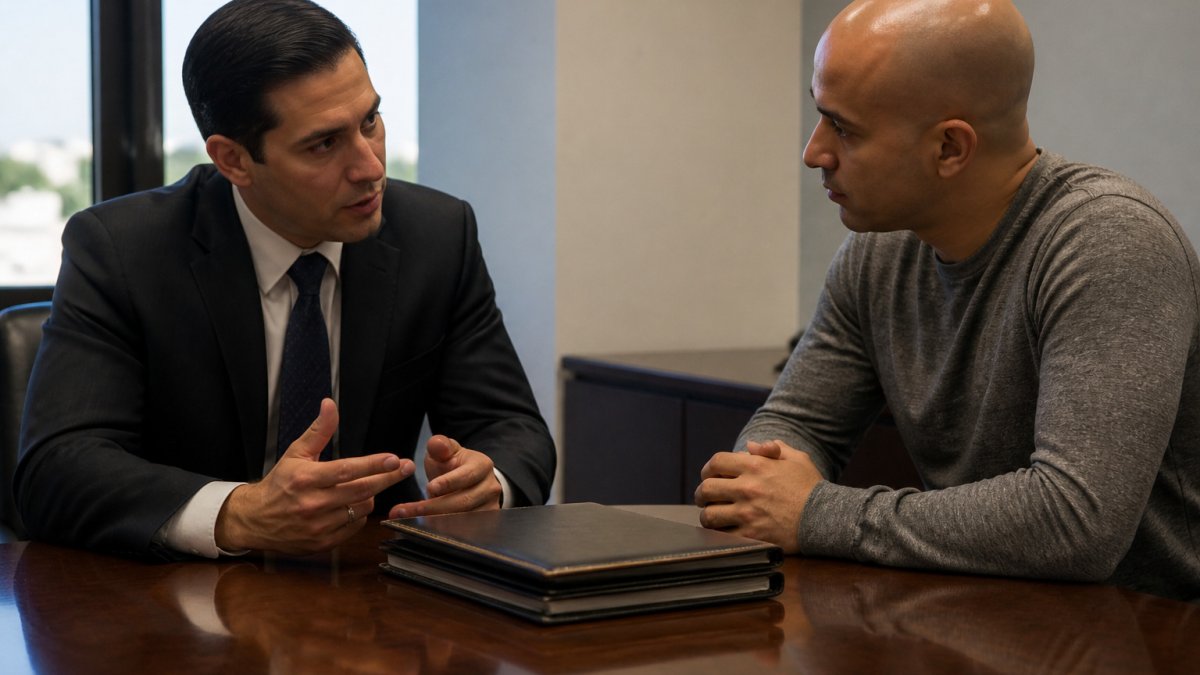
Privilege is what makes that openness safe. When you know your conversations are protected, you are more likely to share what your attorney needs to investigate police reports, evaluate evidence, and identify weaknesses in the prosecution's case.
What Does Attorney-Client Privilege Protect?
Privilege generally protects communications that are confidential and made for the purpose of seeking or receiving legal advice. That typically includes what you tell your lawyer in person, over the phone, by email, or in writing, along with the lawyer's responsive advice.
Privilege does not protect underlying facts. The police can still investigate what happened, and a witness can still be questioned about what they saw.
Privilege Versus Confidentiality and Work-Product Protection
Three related protections are often confused. Attorney-client privilege is an evidentiary rule that lets you prevent disclosure of confidential communications in legal proceedings. Confidentiality is a professional duty, governed by state bar rules, requiring your lawyer to keep client information private; it is broader, covering information learned from any source during the representation. Work-product protection shields materials a lawyer prepares in anticipation of litigation, such as investigation notes and strategy memos, even when they are not communications with the client (attorney work product privilege | Wex | US Law).
In practice, all three work together. A confidentiality duty binds your lawyer even when privilege does not apply, while work-product protection can cover your defense file even if a particular conversation is later challenged.
Attorney-Client Privilege Exceptions: When Protection Ends
The privilege is not absolute. The most significant limit is the crime-fraud exception, which generally removes protection when a client seeks legal advice to further a crime or fraud, or to conceal one.
Other exceptions apply in narrower circumstances, including when a client puts their own communications at issue, such as by claiming ineffective assistance of counsel, or when a court orders disclosure after a proper showing.
The privilege has limits, and the most significant ones are summarised below.
| Exception | Effect on protection | Key condition |
|---|---|---|
| Crime-fraud exception | Protection generally removed | Communication sought to further a crime or fraud |
| Client puts communications at issue | Protection may be waived | Client claims ineffective assistance of counsel |
| Court-ordered disclosure | Disclosure required | Proper showing made to the court |
| Underlying facts | Not protected | Police may still investigate what happened |
How Attorney-Client Privilege Waiver Happens
Privilege is waived when the client voluntarily discloses a protected communication to someone outside the attorney-client relationship, or otherwise gives up the protection. Waiver can be express, such as formally consenting to disclosure, or implied, such as relying on your attorney's advice as part of a legal defense. In criminal cases, waiver questions often arise at the worst possible moment, so understanding the mechanics beforehand matters.
Express and Implied Waiver
Express waiver is straightforward: you or your lawyer intentionally disclose the communication or consent to its release. Implied waiver is more subtle. Courts may find waiver when a client puts the communication at issue, for example by claiming ineffective assistance of counsel and relying on what the lawyer said or did. Advancing an advice-of-counsel defense can also open the door to the underlying communications.
Request a Free Case Evaluation →
Accidental Disclosure: A Response Checklist
Accidental disclosure happens when a privileged email goes to the wrong recipient, a protected document is produced in discovery by mistake, or a file is shared through a cloud link. Many courts recognize limited protection for inadvertent disclosure when the holder took reasonable steps to prevent it and acted promptly to retrieve the material. The following steps are a common, jurisdiction-qualified pattern:
- Stop further dissemination. Do not forward, reply-all, or discuss the material in a new thread. Limit access to the smallest possible group.
- Notify your attorney immediately. Prompt notice is the single most important step. Your lawyer can assess whether the disclosure was inadvertent and whether privilege may still be preserved.
- Preserve everything. Keep the original message, headers, timestamps, and any metadata. Do not delete the email or file, even if it is embarrassing; deletion can look like spoliation and make the situation worse.
- Ask for return or destruction in writing. Your lawyer may send a written demand asking the recipient to return or destroy the material and confirm compliance. Keep a record of the request and response.
- Consider clawback procedures. Many courts and litigants use clawback agreements or orders that allow a party to retrieve inadvertently produced documents without conceding waiver. In federal practice, the Federal Rules of Evidence address inadvertent disclosure, and the Federal Rules of Civil Procedure provide clawback mechanisms in some contexts. State rules differ, so confirm the procedure in your jurisdiction.
- Document the precautions you took. Evidence that you used reasonable steps to prevent disclosure, such as confidentiality legends, access controls, and training, can support a later argument that the disclosure was inadvertent.
Waiver by Conduct and Third-Party Sharing
Waiver can also occur through conduct. Sharing legal advice with a friend, posting it on social media, or discussing it in a group chat can waive protection. In criminal cases, recorded jail calls and messages are a frequent source of unintended waiver. Assume that anything said on a recorded line or sent through a platform you do not control may be reviewed by prosecutors.
Partial Waiver and Subject-Matter Waiver
Disclosing part of a communication can sometimes waive privilege as to the subject matter, allowing the other side to seek related material. This is why selective disclosure is risky. A lawyer may advise disclosing a limited fact while withholding the surrounding advice, but the line is fact-specific and jurisdiction-dependent.
Protecting Privilege Going Forward
Use your attorney's direct channels, avoid forwarding advice, and ask before sharing anything with a third party. If you believe a disclosure has occurred, tell your lawyer the same day. Quick, documented action is the best way to preserve every argument available to you.
Attorney-Client Privilege and Third Parties
Bringing a third party into a conversation with your lawyer can destroy the privilege, but in criminal cases the analysis is more nuanced than a simple rule. Before any fee discussion, review understanding criminal defense retainer agreements. Whether protection survives depends on who the third party is, why they are present, and whether they act as an agent of the attorney or the client.
The General Rule and Why It Exists
Privilege protects confidential communications. When someone outside the attorney-client relationship is present, the communication is generally no longer confidential, and courts usually hold that the privilege is waived as to that conversation. Family members, friends, cellmates, and coworkers are classic third parties. A common pattern is a client discussing case facts on a recorded jail phone line with a relative; those calls are typically recorded, are not privileged, and prosecutors may obtain them.
When a Third Party Is Necessary to the Representation
Many courts recognize a narrow exception when the third party is necessary to facilitate the representation. The clearest example is an interpreter needed because the client and lawyer do not share a language. Courts often protect those communications because the interpreter functions as a conduit for legal advice. The same logic can extend to an accountant, a mental health professional, or a translator retained to help the lawyer understand the case.
Co-Defendants and Joint Defense Arrangements
Criminal cases often involve multiple defendants. Sharing information with a co-defendant's lawyer is not automatically protected, and the default rule is that communications among co-defendants and their counsel may not be privileged as between them. Many jurisdictions recognize a joint defense or common interest doctrine that can preserve confidentiality when defendants share a common legal interest and the communication furthers that shared defense.
Investigators, Experts, and Support Staff
A defense investigator, forensic expert, or paralegal working under the lawyer's direction is generally treated as part of the defense team, and communications with them can be protected. The protection is strongest when the person is retained by the attorney, works at the attorney's direction, and the communication is made to help provide legal advice.
Family Members and Confidants
Clients often want a spouse, parent, or close friend in the room. In most jurisdictions, that presence defeats privilege for the conversation, even if the person promises to keep quiet. Some states recognize a separate spousal privilege, but it is narrow, varies widely, and does not cover every conversation. The safer practice is to meet alone with counsel and share sensitive facts directly.
Digital Communications and Shared Devices
Third-party issues now arise online. Sending legal advice to a personal email account, discussing case strategy in a group chat, or storing documents in a shared cloud folder can expose communications, and metadata and account access can reveal who sent what and when. Use the attorney's direct channels, avoid shared devices for legal discussions, and ask before forwarding any advice.
A Practical Checklist Before You Include Anyone
- Ask your lawyer whether the person is necessary to the representation.
- Confirm whether the person is retained by or working under the attorney's direction.
- Put any joint defense or common interest agreement in writing.
Protecting Your Privilege From Arrest Through Trial
Protecting your privilege starts the moment you are arrested.
Once you have retained a defense attorney, keep your communications private and deliberate. If you are weighing options, see how to choose a trial-ready defense lawyer.
Attorney-client privilege is one of the strongest tools a criminal defendant has, but it works only when it is understood and protected.
Frequently Asked Questions
What is attorney-client privilege in a criminal case?
Attorney-client privilege is a legal protection that generally keeps confidential communications between a client and their lawyer from being disclosed to prosecutors, courts or other third parties without the client's consent. In a criminal case, it covers what you tell your defense attorney about the charges, the facts and your strategy. The protection exists so you can speak openly and completely, which lets your lawyer build an accurate defense. It applies to communications made for the purpose of seeking or receiving legal advice, not to every fact you know. Its specific scope is shaped by federal and state rules, so confirm details with your attorney.
Can attorney-client privilege be waived?
Yes. Attorney-client privilege can be waived, usually by the client, when they voluntarily disclose protected communications to someone outside the privileged relationship or put the content of their communications at issue in a case. Waiver can be express, through a clear decision to share information, or implied, through conduct that signals the client is relying on the communications. Because a waiver can be difficult to undo, discuss any plan to share information, testify about advice or use a privileged document with your defense lawyer before you act.
Are conversations with a criminal defense lawyer always confidential?
Most communications with your criminal defense lawyer are protected, but not all of them. Privilege generally does not cover communications made to further a crime or fraud, which is the crime-fraud exception. It also does not apply when you voluntarily share the content with third parties, and it does not protect facts that exist independently of your conversations. Your lawyer also has a professional duty of confidentiality, which is broader than privilege in some ways and narrower in others. Ask your attorney how these rules apply to your specific situation.