 how-to
How to Qualify for a Public Defender in California
Table of Contents
- Who Qualifies for a Public Defender in California
- How to Apply for a Public Defender at Your First Court Date
- Public Defender Financial Screening: Income, Assets, and Expenses
- Public Defender Application Documents You Need to Prepare
- What Happens If You Do Not Qualify for a Public Defender
- Public Defender vs. Private Attorney: What the Choice Means for Your Case
- Common Mistakes That Hurt Your Public Defender Application
- Frequently Asked Questions
Last Updated: October 6, 2026
Who Qualifies for a Public Defender in California
If you're facing criminal charges and can't afford a lawyer, California may appoint one to you at no upfront cost.
The core rule is simple. A public defender is a licensed attorney paid by the county to represent people who cannot afford private counsel.
The state's oversight of this system is thin. A CalMatters investigation into public defender workloads found California is one of two states that provide no trial-level funding or oversight of public defense, with no minimum standards or reporting.
Below, we'll show you exactly how the screening works and what to bring.
How to Apply for a Public Defender at Your First Court Date
You apply by telling the judge you cannot afford an attorney. There is no online form and no separate office to visit first. The request happens in open court, usually at your first appearance.
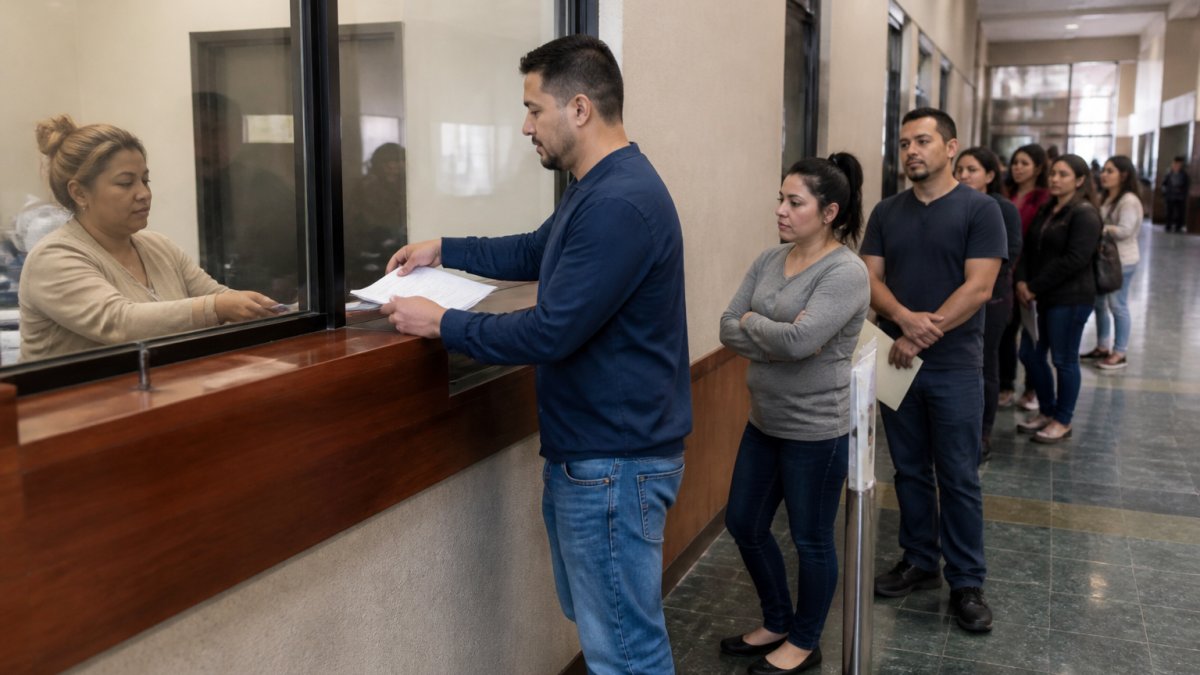
Requesting Counsel at Arraignment
Arraignment is your first court date, where the judge reads the charges and asks how you plead. This is the moment to speak up.
Say clearly: "I would like to request appointed counsel. I cannot afford a private attorney." The judge will pause the case and send you to a clerk or screening desk.
You do not need to plead guilty to ask. Requesting counsel is not an admission of anything.
What to Say to the Judge or Court Clerk
Keep it short and direct. You are not arguing your case yet.
- State your name and that you cannot afford a lawyer
- Ask for a financial affidavit to complete
- Answer questions about income and household size honestly
Do not guess at numbers. If you are unsure about a figure, say so and ask to correct it later.
Public Defender Financial Screening: Income, Assets, and Expenses
The court is not asking whether you are poor in the abstract. It is asking whether paying a private attorney would force you to give up basic necessities like housing, food, or medical care. That standard is called ability to pay, and it is applied through a financial affidavit you complete under oath.
What Counts as Income
Expect the screening to look at every source of money coming in, not just wages:
- Gross pay from employment, including overtime and tips
- Self-employment or gig income
- Unemployment, disability, or workers' compensation benefits
Some benefits are protected and may be excluded or given less weight, but you should still disclose them. Hiding a source because you think it does not count is the fastest way to lose credibility with the judge.
What Counts as an Asset
Assets are things you own that could be sold or borrowed against:
- Bank and credit union accounts, including savings
- Vehicles, boats, and recreational equipment
- Real estate, including a home or land
A single older car you need for work is treated very differently from a second vehicle or a paid-off truck. Equity matters more than the sticker price.
Household Size and Dependents
Who lives with you and who relies on you financially changes the math. The court generally considers:
- A spouse or domestic partner
- Minor children you support
- Adult children who are still dependents
Two people earning the same wage can get different answers if one supports four dependents and the other supports none. Bring names, ages, and proof of support if you have it.
Allowable Expenses the Court May Consider
You are not expected to live on nothing to afford a lawyer. Courts commonly weigh:
- Rent or mortgage
- Utilities
- Food and household supplies
Discretionary spending, streaming services, dining out, recent large purchases, can undercut your claim. If the judge sees a recent vacation or a new phone on your bank statement, expect questions.
How the Screening Actually Works
There is no single statewide income cutoff. Each county runs its own eligibility screening, and the process can differ from courthouse to courthouse.
A common pattern is that the screening officer or judge compares your net monthly income, after allowable expenses, to a local guideline. If you are close to the line, documentation is what tips the decision.
County-by-County Variation
Because oversight of the system is thin, two people with nearly identical finances can get different answers in different counties. If you were denied in one courthouse, that does not automatically mean you would be denied in another, but you generally cannot shop your case to a different county. What you can do is ask the screening officer what local standard they applied and whether any documentation would change the result.
Public Defender Application Documents You Need to Prepare
Bring proof, not just your word. Documents speed up the screening and make your case stronger.
Gather what you can before your court date:
Request a Free Case Evaluation →
- Photo ID or any government-issued identification
- Recent pay stubs or a letter from your employer
- Bank statements from the last few months
If you are in custody and unable to post bail, tell the court. Being held pretrial is a factor judges weigh, since you cannot work or gather documents yourself.
The single biggest mistake is showing up empty-handed. Even a few documents turn a vague claim of "I can't afford a lawyer" into a screening decision the judge can act on that same day.
What Happens If You Do Not Qualify for a Public Defender
A denial is not the end of the road, but it does start a clock. You usually have until your next court date to fix the problem, and missing that date can trigger a bench warrant. Treat the denial as a problem to solve this week, not next month.
Step 1: Ask the Judge to Reconsider
You can request reconsideration at the same hearing or at your next appearance. The strongest reconsideration request does three things:
- Identifies a specific error or omission in the original screening
- Provides documents that support the correction
- Asks the judge to revisit the ability-to-pay finding on the record
Common grounds for reconsideration include:
- A dependent or household member the screening missed
- An expense that was not counted, such as childcare or medical costs
- Income that was overstated because a job ended or hours were cut
Keep it factual. Do not argue that the judge was wrong, show what changed or what was overlooked.
Step 2: Ask About Other Appointed Counsel
In some counties, if the public defender's office has a conflict of interest, for example, because it already represents a co-defendant, the court appoints a private attorney from a panel at county expense.
If you were denied by the public defender's office specifically, ask the clerk whether a panel attorney is available. The answer depends on the county and the type of case.
Step 3: Understand the Cost of Private Counsel
If appointed counsel is not available, you can hire a private attorney. Costs vary widely by charge, county, and experience level. For a misdemeanor, some attorneys charge a flat fee; for a felony, expect a larger retainer and possibly additional fees for investigation or trial. Ask for a written fee agreement before you pay anything.
Many firms offer a free or low-cost initial consultation. Use that meeting to ask:
- What the total cost is likely to be
- What is included and what is billed separately
- Who will actually handle your case day to day
Step 4: Consider Self-Representation Carefully
You have the right to represent yourself. The court will typically require you to sign a waiver confirming you understand the risks. For a felony or any charge carrying jail time, self-representation is rarely wise. The rules of evidence, deadlines, and courtroom procedure are unforgiving, and a mistake can be difficult or impossible to undo.
Step 5: Do Not Miss Your Next Court Date
Whatever path you choose, show up. If you cannot afford a lawyer and you miss a hearing, the court may issue a bench warrant, set bail, or treat the absence as a waiver of your right to counsel. If you genuinely cannot appear, contact the clerk's office before the date and explain why.
Public Defender vs. Private Attorney: What the Choice Means for Your Case
The difference is not just who pays. It is how much time and attention your criminal case gets.
Public defenders are experienced, often excellent trial lawyers. Research from the California Policy Lab on indigent defense outcomes found that defendants in multiple-defendant cases fare better when represented by a public defender, though the study does not quantify the difference.
Private counsel changes the math:
| Factor | Public Defender | Private Attorney |
|---|---|---|
| Cost | Free or low-cost | Varies; ask for a quote |
| Caseload | High | Usually lower |
| Contact | Limited, shared with staff | Direct access |
| Investigation | Basic | Can be tailored to your case |
Neither option is automatically better. The right choice depends on the charge, the evidence, and how much time your lawyer can give you.
Common Mistakes That Hurt Your Public Defender Application
Most denials come from small errors, not bad luck. Avoid these.
- Guessing at numbers. Wrong figures on the affidavit look like dishonesty.
- Leaving out a household member. Dependents you support reduce your ability to pay.
- Missing your court date. A missed appearance can trigger a bench warrant.
A common mistake is treating the affidavit as a formality. It is a sworn statement, and the judge reads it closely.
If you're unsure whether you qualify, request counsel anyway. The worst outcome is a denial, and a denial still leaves you free to hire a lawyer or ask for reconsideration.
Frequently Asked Questions
Can I get a public defender if I have a job?
Having a job does not automatically disqualify you. The court looks at your total financial picture: income, assets, household size, and necessary expenses like rent, utilities, and dependents. If your income covers basic living costs but leaves little for legal fees, you may still qualify. The judge makes the final determination based on the financial affidavit you submit. Bring pay stubs and recent bank statements to your court date so the court can assess your situation accurately.
What financial information do I need to apply for a public defender?
You will typically complete a financial affidavit that asks about your income, assets, monthly expenses, and household dependents. Bring recent pay stubs, bank statements, proof of any government benefits, and a list of monthly bills. If you own a car or home, have that information ready. The court uses these documents to assess whether you can afford a private attorney. Incomplete or missing paperwork can delay the appointment of counsel.
What happens if I do not qualify for a public defender?
If the court finds you do not qualify, you must hire a private attorney or represent yourself. You can ask the judge to reconsider if your financial situation changes, such as losing a job or facing unexpected medical bills. You may also contact your county public defender's office to ask about a second review. Some counties allow you to reapply if your circumstances shift. Do not miss court dates while sorting this out, as that can lead to additional charges.
Can I request a public defender at my first court appearance?
Yes. At your arraignment, the judge will ask if you have an attorney. Tell the judge you cannot afford one and want to apply for a public defender. The court will give you a financial affidavit to complete, often the same day. In some counties, you may speak with a public defender briefly before the hearing. If you are in custody, the process may happen at your first appearance. Being clear and honest about your finances speeds up the appointment.
Facing charges in the San Fernando Valley is frightening, and the system moves fast. Van Nuys Crime stands with clients from arrest through trial and appeal, combining decades of courtroom experience with aggressive, personalized defense strategies and thorough investigation of police reports and expert testimony. We fight to protect your rights, your reputation, and your future. Request a free case evaluation with Van Nuys Crime and get a clear plan for your defense.