 How-to
5 Steps to Review a Criminal Defense Fee Contract
Last Updated: November 6, 2026
Quick Summary
To review a criminal defense fee contract, first confirm the fee structure (flat fee, hourly rate or retainer) and the scope of representation, including which case stages and trigger events cost extra. Then check excluded costs, payment and refund terms, and how the agreement can be terminated. Get every agreed change in writing before you sign.
- Identify whether you have a flat fee, hourly rate or retainer before reading other terms.
- Map each scope phrase to a case stage such as trial, sentencing or appeal.
- Ask whether a retainer is an advance deposit held in trust or a nonrefundable fee.
- Request a written formula for calculating refunds of unearned fees if representation ends early.
- Put every agreed change in the signed contract, since verbal promises are hard to enforce.
Table of Contents
- What a Criminal Defense Fee Agreement Should Include
- Step 1: Identify the Fee Structure: Flat Fee, Hourly Rate or Retainer
- Step 2: Check the Scope of Representation and What the Fee Covers
- Step 3: Look for Excluded Costs, Court Fees and Out-of-Pocket Expenses
- Step 4: Read the Payment Schedule, Refund and Trust Account Terms
- Step 5: Confirm Termination, Withdrawal and Changing Attorneys
- Criminal Defense Lawyer Fees and Felony Costs: What to Expect Before You Sign
- Requesting Edits and Clarifications Before You Sign Your Next Fee Agreement
- Frequently Asked Questions
What a Criminal Defense Fee Agreement Should Include
A criminal defense fee contract is the written agreement that sets out what you will pay your lawyer and what that payment covers. Reviewing this document slowly is important, because it shapes every decision about your case after you sign. (Source: American Bar Association's Model Rules of Professional Conduct)
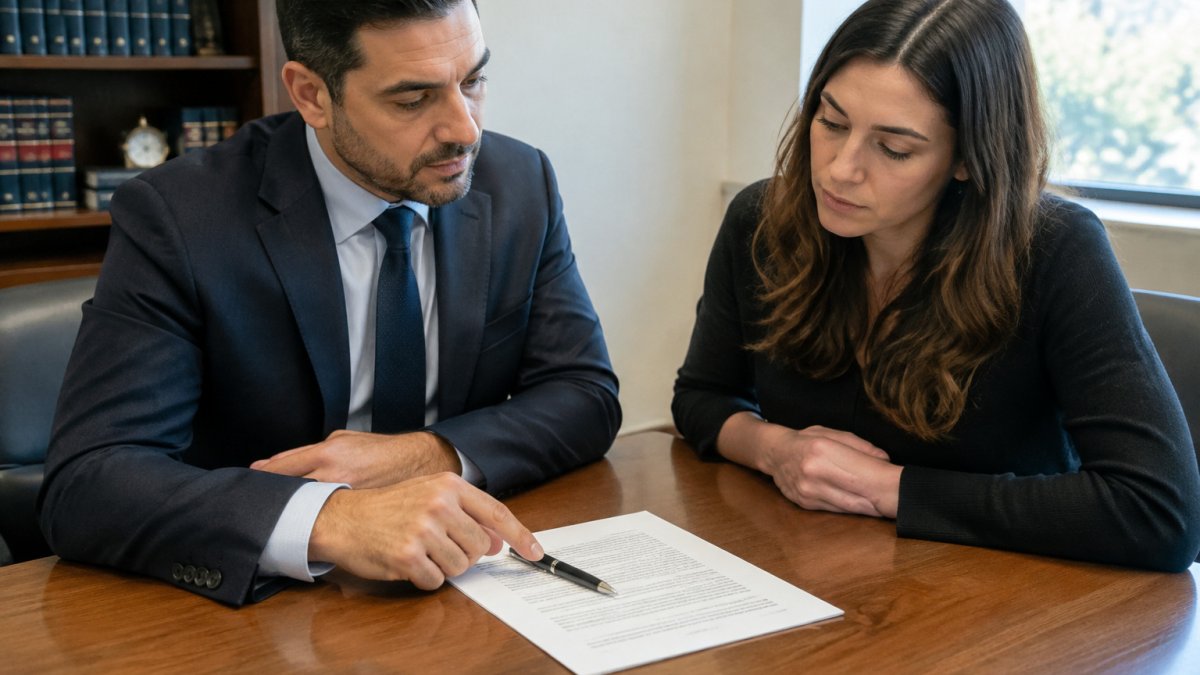
A complete agreement should name the attorney, state the fee structure, describe the services included, list any costs you might owe on top of the fee, and explain how and when you pay and what happens if the case ends early.
What to look for:
- The attorney's name and the firm's name
- The exact fee amount in USD
- A plain description of the services covered
Read the agreement before you sign, and ask for changes to anything you do not understand.
Step 1: Identify the Fee Structure: Flat Fee, Hourly Rate or Retainer
Most criminal defense lawyers charge in one of three ways. Knowing which one you have is the first part of the review.
- Flat fee: One set price for a defined set of services.
- Hourly rate: You pay for each hour the attorney works, usually billed in tenths of an hour.
- Retainer: An upfront payment that the attorney draws against as work is done.
Flat Fees Versus Hourly Rates
A flat fee gives you a known total, which makes budgeting easier. The risk is scope: a flat fee usually covers only the services written into the contract.
An hourly rate tracks actual effort. Costs can rise quickly on a complex case, so ask for estimates and regular billing statements. An attorney can explain how each option applies to your charges.
How Retainers Work
A retainer is not the same as the final bill. It is usually a deposit the lawyer holds and bills against. Check whether the agreement says the retainer is refundable, how much is left after billing, and whether you must replenish it.
Watch out: A retainer described as "non-refundable" can mean you lose the unused balance even if the case ends early. Confirm this term in writing before you pay.
Step 2: Check the Scope of Representation and What the Fee Covers
Scope is the single most litigated term in a criminal defense fee contract. It defines what your money buys and the point at which the attorney can ask for more. Read this section line by line and map each phrase to a stage of your case.
A well-drafted scope clause names each stage the fee covers:
- Arraignment or initial appearance, the first court date where charges are formally read
- Bail or bond hearing, arguments for release or reduction of conditions
- Preliminary hearing or grand jury stage, where the prosecution must show probable cause
Flat-Fee Scope Boundaries and Case-Stage Triggers
A flat fee is only as good as its boundaries. Most flat-fee criminal agreements define the fee by the charge level at signing, for example, a fee for a misdemeanor that assumes no trial. The contract should state, in plain language, what triggers a new fee or a supplemental charge. Common triggers include:
- Charges upgraded or new counts filed, a misdemeanor refiled as a felony, or additional counts added after arraignment
- Case set for trial, many flat fees cover pretrial work only, with a separate trial fee stated in the agreement
- Motions beyond routine, a suppression motion may be included, while a motion to dismiss or a complicated expert-based motion may not be
Ask the attorney to write the trigger language into the agreement rather than explain it verbally. "The flat fee covers all proceedings through sentencing, including one trial, and does not include appeals or retrials" is far more useful than "representation in this matter."
Watch out: A flat fee described as covering "all proceedings" without naming trial, sentencing, or appeal is ambiguous, and ambiguity tends to be resolved in favor of additional billing rather than the client.
Hourly and Retainer Scope Checks
If you are paying hourly or drawing against a retainer, scope still matters because every task outside the described services adds billable time. Confirm whether the following are billed and at what rate:
- Phone calls and emails with you, including short check-ins
- Communication with the prosecutor and court clerk
- Travel time to and from court
Ask for the attorney's billing increment, many firms bill in tenths of an hour, meaning a six-minute call is billed as 0.1 hour. Ask whether there is a minimum billing block for court appearances.
Questions to Ask About Scope
Before signing, get written answers to these questions:
- Which case stages are included, and which are billed separately?
- What events trigger a new fee or a supplemental charge?
- Does the fee cover one case number, one defendant, and one set of charges?
- Is trial included, and if not, what is the trial fee?
- Are appeals, post-conviction motions, and probation violations excluded?
- If the case resolves by dismissal or early plea, does any part of the fee change?
If the attorney will not put these answers in the contract, treat the verbal explanation as marketing rather than an enforceable term.
Step 3: Look for Excluded Costs, Court Fees and Out-of-Pocket Expenses
The fee is often not the whole cost. Many agreements add separate charges that come from outside the firm.
Common extra costs include:
- Court filing and administrative fees
- Expert witness and investigator fees
- Transcript and copying charges
Ask for an estimate of these costs. A reliable agreement lists them and explains how you will be billed. If a cost is missing from the contract, ask why before you agree to pay it.
Step 4: Read the Payment Schedule, Refund and Trust Account Terms
This is the section where clients lose the most money without realizing it. Payment terms control when funds leave your account, who holds them, and what you get back if the representation ends early. Read every sentence twice.
Payment Schedule Mechanics
A payment schedule should state the total fee, the deposit amount, the number and amount of installments, the due dates, and the consequence of a late payment. Look for:
- Deposit due at signing, the amount that must be paid before work begins
- Installment dates, calendar dates, not "monthly" or "upon billing"
- Late fees and acceleration, whether a missed payment makes the full balance due or lets the attorney pause work
A schedule that says "$5,000 down and the balance before trial" is not a schedule. Ask for dates and amounts in writing.
Advance Deposits Versus Earned Fees
The most important distinction in the contract is whether your money is an advance deposit held in trust or a fee earned on receipt. The two are treated very differently.
- Advance deposit (retainer held in trust): The attorney deposits your money into a client trust account, bills against it as work is performed, and must return any unused balance at the end. The money remains yours until it is earned.
- Earned-upon-receipt fee: The attorney treats the fee as earned when paid. Refund rights are narrower and depend on the contract language and jurisdiction rules.
- Nonrefundable fee: The contract states the fee will not be returned under any circumstance. These terms are restricted or prohibited in many jurisdictions and often read narrowly where allowed.
Ask the attorney to state which category applies and to use the words "advance deposit held in trust" if that is the arrangement. If the contract says "nonrefundable," ask for the specific rule or authority the attorney relies on, and confirm it against your state bar's fee rules.
Trust Account Handling and Reconciliation
When money is held in trust, the contract should explain how it is tracked. Look for:
- Monthly or periodic statements showing deposits, withdrawals, and the remaining balance
- Itemization of what each withdrawal paid for, hours, tasks, or costs
- Replenishment terms, whether you must top up the trust account when the balance falls below a threshold, and at what amount
A trustworthy agreement tells you how to request an accounting of your trust funds and how quickly the attorney must respond. If the contract is silent, ask for a written statement of the firm's trust-account practices.
Refund Rules and Termination Math
Refund language should answer a simple question: if the representation ends before the work is finished, how is the refund calculated? Look for:
- The formula, for example, total fee minus hours worked at the stated hourly rate minus costs advanced
- The timing, how many days after termination the refund is due
- The file transfer, whether the refund is conditioned on the client picking up the file or signing a release
A refund clause that says only "unused fees will be refunded" leaves the calculation undefined. Ask for the formula in the contract.
Suggested Clarification Language to Request
You can ask the attorney to add or revise language. Reasonable requests include:
- "Any portion of the fee not yet earned shall be refunded within 30 days of termination."
- "The attorney will provide a written accounting of trust funds upon request and at least every 60 days."
- "Costs advanced on the client's behalf will be itemized with receipts."
Put every agreed change in the signed contract. A verbal promise about refunds is difficult to enforce.
Watch out: A contract that labels the entire fee "earned upon receipt" while also requiring trust-account replenishment is internally inconsistent, ask the attorney to reconcile the two terms before you sign.
Verify Against Your State Bar's Fee Rules
Trust-account and fee rules are set at the state level and vary. Check the rules published by the state bar where your case is handled, which address trust accounts, fee agreements and refunds of unearned fees. Before signing, confirm the contract's trust-account and refund terms match your jurisdiction's published rules, and keep a copy of the contract and every payment receipt.
The table below summarises the key payment and refund checks from this section so you can scan them before signing.
| Term | What to check | Watch for |
|---|---|---|
| Advance deposit | Held in client trust account and billed against as work is done | Unused balance must be returned at the end |
| Earned-upon-receipt fee | Treated as earned when paid | Narrower refund rights |
| Nonrefundable fee | Stated in the contract as never returned | Restricted or prohibited in many jurisdictions |
| Trust statements | Periodic statements showing deposits, withdrawals and balance | Itemization of what each withdrawal paid for |
| Late payment terms | Whether missed payment accelerates the balance or pauses work | Attorney may suspend representation |
| Refund calculation | Formula for unearned fees after termination | Refund timing and file transfer conditions |
Step 5: Confirm Termination, Withdrawal and Changing Attorneys
Contracts also explain how the relationship can end. You should know your options before you need them.
Ask: Can you end the agreement at any time? Can the attorney withdraw, and what notice must be given?
Clear termination terms protect you if your needs change. A fair agreement explains how unearned money is returned and how your file moves to a new lawyer.
Criminal Defense Lawyer Fees and Felony Costs: What to Expect Before You Sign
Felony cases usually cost more than misdemeanor cases because they involve more hearings, more investigation, and more time in court.
Before you sign, ask the attorney for a written estimate that separates the fee from likely costs. A clear estimate makes the decision easier to compare.
Retainer amounts and felony fees vary widely by case. Pricing depends on the specific facts of your case, so ask the firm for a written quote or check its website for current information.
Requesting Edits and Clarifications Before You Sign Your Next Fee Agreement
You have the right to ask questions and request changes before you sign.
Put every agreed change in writing. A verbal promise does not change the contract.
For help deciding who to hire and what to negotiate, see the Benefits of Working With a Local Criminal Defense Attorney guide. You can also read Understanding Criminal Defense Retainer Agreements to learn how retainers work in more detail.
If you are facing charges and want a clear explanation of your fee agreement, Van Nuys Crime can review it with you.
BUTTON: Request a Free Case Evaluation CARD_TITLE: Unsure about your fee agreement? CARD_TEXT: Van Nuys Crime reviews criminal defense fee terms and explains each clause before you sign.
Frequently Asked Questions
What should a criminal defense fee agreement include?
A criminal defense fee agreement should state the fee structure (flat fee, hourly rate or retainer), the scope of representation, what the fee covers such as pretrial motions, court appearances and trial, and which costs are billed separately, including court costs, investigators and experts. It should also explain the payment schedule, how unearned funds are refunded, how the trust account is handled, and the conditions for withdrawal or termination. Ask for every term in writing before you pay anything, and confirm that the agreement names the attorney who will actually handle your case.
What is the difference between a retainer and a flat fee?
A flat fee is a single price for a defined set of services, such as a plea negotiation or a misdemeanor case through a set stage. A retainer is an advance deposit against which the attorney bills hourly or per task, and it is typically replenished as it is used. Under a flat fee, confirm what triggers additional charges, such as a case moving to trial. Under a retainer, confirm how billing is recorded and what happens to any unused balance at the end of the case.
Can a lawyer keep an unearned portion of a retainer?
Generally, no. Unearned advance payments are usually held in a client trust account and must be refunded if the representation ends before the funds are earned. Rules on trust accounts and fee disputes are set by the state bar and the courts in the state where the case is handled, so check the official rules for your jurisdiction. Your agreement should state clearly how and when any unearned balance will be returned.
What should I ask a criminal defense attorney about fees?
Ask what the total fee covers, which costs are billed separately, whether the fee is flat, hourly or a retainer, and what would cause the price to increase. Ask how often you will receive invoices, what payment methods are accepted, whether a payment plan is available, and how refunds are handled if you change attorneys or the case ends early. Request a written fee agreement and a copy of the fee terms before you sign.