 ultimate-guide
What Police Procedures Are Used During Arrests? 2026 Guide
Table of Contents
- The Legal Foundation: Probable Cause, Warrants, and Reasonable Suspicion
- What Are My Rights During a Police Encounter?
- Step-by-Step: What Police Procedures Are Used During Arrests?
- Search and Seizure: Fourth Amendment Limits and Digital Evidence
- The Booking Process in California Jails
- How to Find Someone in Los Angeles County Jail
- Frequently Asked Questions
Last Updated: September 23, 2026
The Legal Foundation: Probable Cause, Warrants, and Reasonable Suspicion
An arrest is the lawful taking of a person into custody to answer for a criminal offense, and it requires probable cause. The police procedures used during arrests begin long before anyone is handcuffed, with the legal standard justifying the seizure under the Fourth Amendment.
Arrest Warrants vs. Warrantless Arrests
A warrant is a judge's written authorization to arrest a specific person, but most arrests do not involve one. Officers can arrest without a warrant when they witness a felony, when a felony is reported and they have probable cause, or for a misdemeanor committed in their presence. A warrantless arrest is not automatically unlawful; it is held to the probable cause standard.
The Role of the Magistrate and Due Process
After a warrantless arrest, a magistrate reviews the facts to confirm probable cause, usually within a set timeframe that varies by jurisdiction. This due process checkpoint prevents indefinite detention without judicial oversight and is the first moment a judge, not an officer, evaluates the case.
What Are My Rights During a Police Encounter?
Your rights apply from the first moment of contact, whether or not you are under arrest: the right to remain silent, to refuse consent to a search, to legal counsel, and to know the reason for your detention.
Miranda Warnings and Custodial Interrogation
Miranda warnings are required before custodial interrogation, questioning after you are taken into custody and not free to leave. Officers must inform you of your right to remain silent and to an attorney; statements taken without that warning may be suppressed. Routine booking questions and spontaneous statements are not custodial interrogation.
Step-by-Step: What Police Procedures Are Used During Arrests?
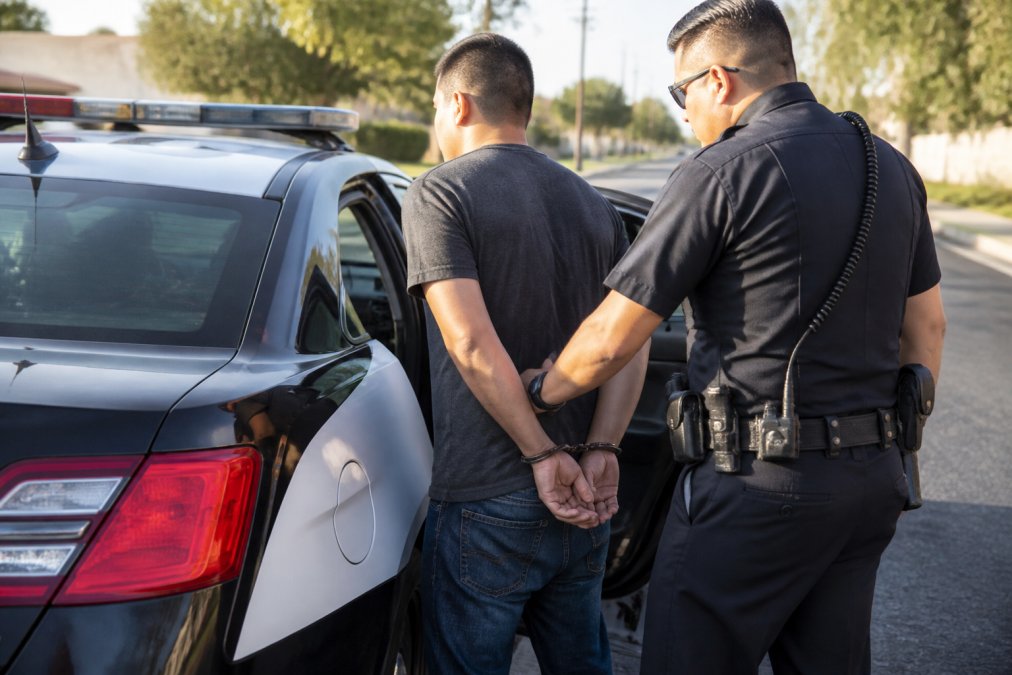
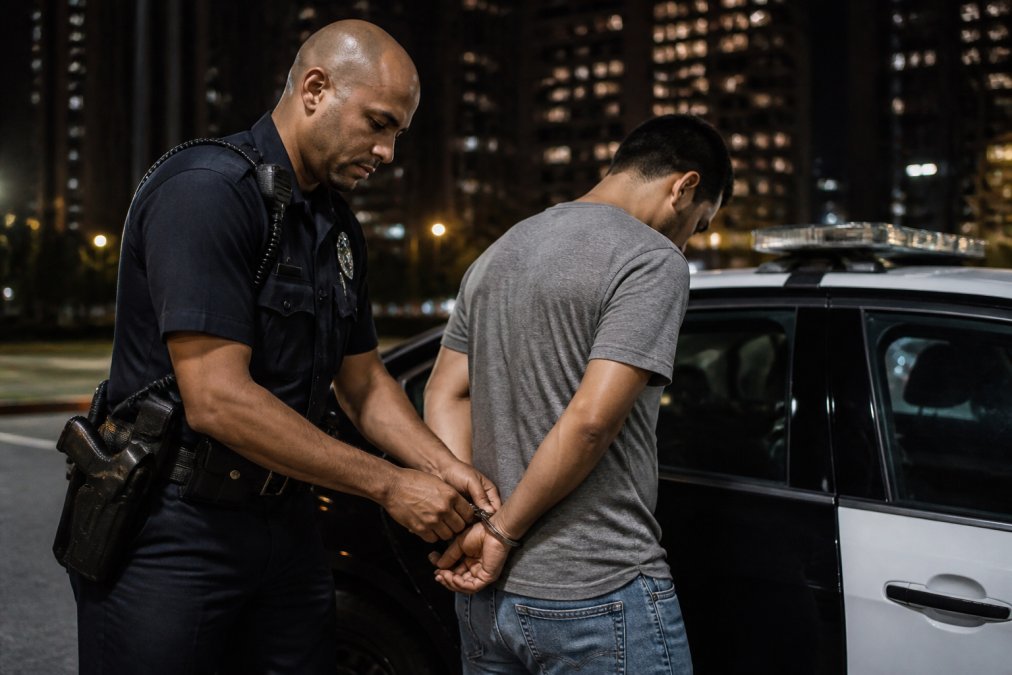
The standard sequence runs from initial contact through transport: identify and approach, detain or secure, inform the suspect of the charges, apply restraints, pat-down for weapons, search incident to arrest, and transport to booking. Each step has its own legal limits, and a failure at any one can affect the case.
Use of Force and De-Escalation Protocols
Officers may use only the force that is objectively reasonable under the circumstances, a standard set by the Supreme Court in Graham v. Connor. Modern department policy increasingly requires de-escalation first: slowing the encounter, creating distance, and using time and communication before physical control. When de-escalation is skipped, that sequence becomes a central issue in the defense.
Handcuffing, Pat-Down Searches, and Protective Sweeps
Handcuffing is standard restraint, and double-locked handcuffs prevent the cuffs from tightening further. A pat-down is a limited frisk for weapons, permitted when an officer has reasonable suspicion the person is armed. A protective sweep is a quick visual check of areas where a person might be hiding and requires specific justification. A frisk that becomes a full search without cause crosses a line.
Search and Seizure: Fourth Amendment Limits and Digital Evidence
The Fourth Amendment protects against unreasonable searches and seizures, from a pat-down on the street to the contents of a smartphone seized at booking. The legal authority for each search differs, and officers must name the exception they rely on.
Digital Evidence: Phones, Laptops, and the Warrant Requirement
Digital evidence is the newest and least understood front in arrest procedure, and where the rules diverge most sharply from physical searches. In Riley v. California (2014), the Supreme Court held that officers generally need a warrant to search the data on a cell phone, even when the phone was seized during a lawful arrest. A phone is not a physical container like a cigarette pack, it holds years of location history, messages, photos, and financial records, and the search-incident-to-arrest exception does not stretch that far. (Source: Graham v. Connor)
What this means in practice:
Request a Free Case Evaluation →
- Seizure vs. search. Officers may seize the phone to preserve evidence and prevent remote wiping, but seizing the device is separate from searching its contents, which requires its own legal authority.
- Warrant scope. A warrant to search a phone must describe what is sought and be limited in scope. A warrant for drug-related messages does not authorize a forensic dump of every photo, contact, and app.
- Forensic extraction. Tools that pull deleted data, cloud backups, or encrypted containers raise additional questions. If the extraction exceeded the warrant's scope, the fruits can be challenged.
- Passcodes vs. biometrics. Courts have split on whether the government can compel a suspect to unlock a phone with a fingerprint or face. Many treat biometric unlocking as testimonial and protected, while compelled passcode disclosure is more often treated as protected by the Fifth Amendment. The law is unsettled and jurisdiction-dependent.
- Third-party data. Messages stored with a provider, location data held by a carrier, and cloud backups may require separate legal process, a warrant, a court order, or a subpoena, depending on the data and the provider's policies.
Riley v. California, 573 U.S. 373 (2014)
The Booking Process in California Jails
The booking process is the administrative stage that follows a custodial arrest: identification, a booking photograph, fingerprinting, a records and warrants check, a medical and mental-health screening, and a property inventory. In California, booking is governed by state statute and county jail policy, in roughly this order:
- Intake and identification. Officers record the arrestee's name, date of birth, and charges. If the person cannot or will not identify themselves, the facility may hold them while fingerprints are run.
- Booking photograph and fingerprints. These are entered into state and federal databases, typically submitted to the California Department of Justice and, through it, to the FBI's Next Generation Identification system.
- Records and warrants check. The facility checks for outstanding warrants, probation or parole holds, and immigration detainers. A hold can extend custody even after bail is set on the new charge.
- Medical and mental-health screening. Jails are constitutionally required to screen for serious medical and mental-health needs. A positive screen can route the person to a medical unit or trigger a suicide watch.
- Property inventory. Personal items, phones, wallets, clothing, are inventoried and stored. The inventory is a record you can later request, and it matters if property is lost or a device was seized as evidence.
- Classification and housing. The person is assigned a custody level and housing unit based on the charges, criminal history, and safety concerns.
The Post-Arrest Timeline: What Happens After Booking
Most guides stop at booking. The more useful question is what happens next, and on what clock. Exact deadlines vary by jurisdiction and by whether the charge is a misdemeanor or a felony.
- Arraignment. In California, a person arrested without a warrant is generally entitled to be taken before a magistrate without unnecessary delay, commonly within 48 hours of arrest, excluding weekends and holidays, for in-custody defendants. At arraignment, the charges are read, the defendant enters a plea, and bail is addressed.
- The 48-hour rule. This is shorthand for the constitutional requirement, rooted in County of Riverside v. McLaughlin (1991), that a probable-cause determination occur within 48 hours of a warrantless arrest. Detention beyond 48 hours without a probable-cause hearing is presumptively unreasonable, though the government can rebut the presumption in limited circumstances.
- Bail and own-recognizance release. Bail is typically set by a county schedule or a judge at arraignment. California has moved toward risk-based pretrial release in many counties, and a defendant may be released on their own recognizance or under supervision conditions instead of cash bail.
- Preliminary hearing (felonies). For felony charges, a preliminary hearing is generally held within a set number of court days after arraignment, commonly 10 court days if the defendant is in custody, unless time is waived. The prosecution must show probable cause to believe the defendant committed the offense.
- Misdemeanor trial setting. Misdemeanor cases move faster, with statutory speedy-trial deadlines that begin running from arraignment.
| Stage | What Happens | Typical Timing |
|---|---|---|
| Arrest and transport | Restraint, pat-down, transport to facility | Immediate |
| Booking | Photo, fingerprints, records check, medical screen | First hours |
| Probable-cause review | Magistrate confirms probable cause | Within 48 hours of warrantless arrest |
| Arraignment | Charges read, plea entered, bail addressed | Within the jurisdiction's set window |
| Preliminary hearing (felony) | Prosecution shows probable cause | Generally within 10 court days if in custody |
| Pretrial | Discovery, motions, negotiation or trial prep | Weeks to months |
How to Find Someone in Los Angeles County Jail
To find someone in Los Angeles County jail, use the county's inmate locator, which searches by name or booking number and shows custody status and location. You will need the person's full legal name and date of birth for an accurate match. If the search returns nothing, the person may be in a different facility, in transit, or not yet fully booked.
| Stage | What Happens | Typical Timing |
|---|---|---|
| Arrest and transport | Restraint, pat-down, transport to facility | Immediate |
| Booking | Photo, fingerprints, records check | First hours |
| Magistrate review | Probable cause confirmed | Within the jurisdiction's set window |
| Arraignment | Charges read, plea entered, bail addressed | First court appearance |
| Pretrial | Discovery, motions, negotiation or trial prep | Weeks to months |
Frequently Asked Questions
What are the two basic types of arrests?
Arrests fall into two categories: arrests made with a warrant and warrantless arrests. A warrant is issued by a judge or magistrate after a showing of probable cause. Warrantless arrests occur when an officer has probable cause to believe a crime was committed in their presence or that the person committed a felony. Both types must satisfy Fourth Amendment requirements, and a judge reviews probable cause at the arraignment.
When are officers required to read Miranda rights?
Miranda warnings are required before custodial interrogation. That means the person must be in custody and officers must be asking questions designed to elicit incriminating statements. If you are detained but not under arrest, or if officers ask routine booking questions, Miranda may not apply. Statements obtained without a valid Miranda warning can be suppressed in court.
Can police use force during an arrest, and what are the limitations?
Officers may use only reasonable force, meaning force proportional to the threat and resistance encountered. Excessive force violates the Fourth Amendment. De-escalation protocols are increasingly required by department policy. If force was used, the arrest report and any body camera footage become critical evidence. An attorney can review whether the force used crossed a legal line.
What happens immediately after a person is taken into custody?
After being taken into custody, the person is searched incident to arrest, handcuffed, and transported to a station or jail. The booking process begins with identifying information, a booking photo, fingerprints, and a records check. Personal property is inventoried. The person must be brought before a magistrate for arraignment, typically within a short timeframe set by California law, and informed of the charges.
How does the booking process in California jails work?
The booking process in California jails involves intake screening, fingerprinting, a booking photo, and a criminal history check. Property is collected and stored. Depending on the charge, the person may be released on citation, held for arraignment, or transferred. Bail may be set according to a schedule or by a judge. An attorney can often appear at arraignment and argue for release or reduced bail.
What are my rights during a police encounter?
You have the right to remain silent, the right to refuse consent to a search, and the right to an attorney. If you are not free to leave, you are in custody and should be read your Miranda rights before questioning. You can ask if you are free to leave. You do not have to answer questions beyond identifying yourself. Anything you say can be used against you, so invoking your rights early is critical.