 how-to
What Happens at a Van Nuys Arraignment: Step-by-Step Guide
Table of Contents
- What Happens at a Van Nuys Arraignment: The Complete Overview
- Before You Arrive: Check-In Procedures and Logistics
- Understanding Your Defendant Rights at Arraignment
- The Judge's Role and What the Judicial Officer Will Do
- Pleading Not Guilty at Arraignment in California
- How Long Does an Arraignment Take in California
- Bail, Release Conditions, and Own Recognizance Decisions
- What Happens After Your Van Nuys Arraignment
What Happens at a Van Nuys Arraignment: Step-by-Step Guide
Last Updated: August 3, 2026
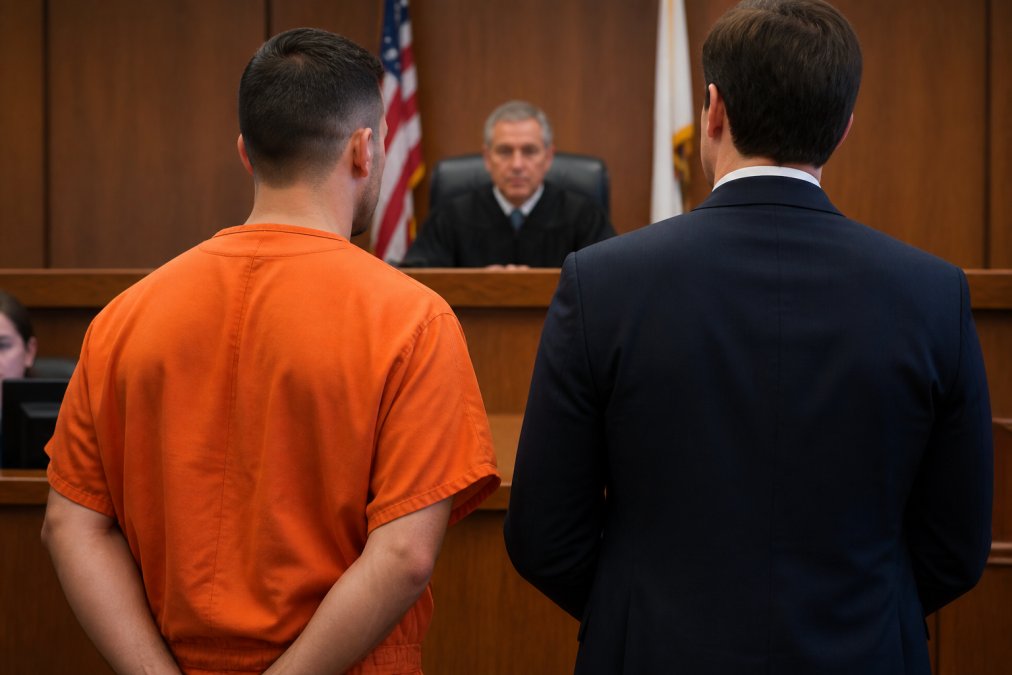
Understanding what happens at a Van Nuys arraignment can mean the difference between protecting your rights and making costly mistakes in the courtroom. An arraignment is your first formal court appearance after arrest, a procedural hearing where the judge informs you of charges, explains your rights, and addresses bail. For many defendants, this hearing determines whether they go home or remain in custody while awaiting trial.
The stakes are real. Decisions made at arraignment, especially regarding bail and legal representation, shape your entire case trajectory. Below, we'll walk through the complete process step-by-step, covering logistics, your rights, plea options, bail decisions, and what happens next.
Before You Arrive: Check-In Procedures and Logistics
Showing up prepared for your Van Nuys arraignment means understanding the physical logistics of the courthouse and what to expect when you walk through the doors.
Parking and Security at the Van Nuys Courthouse
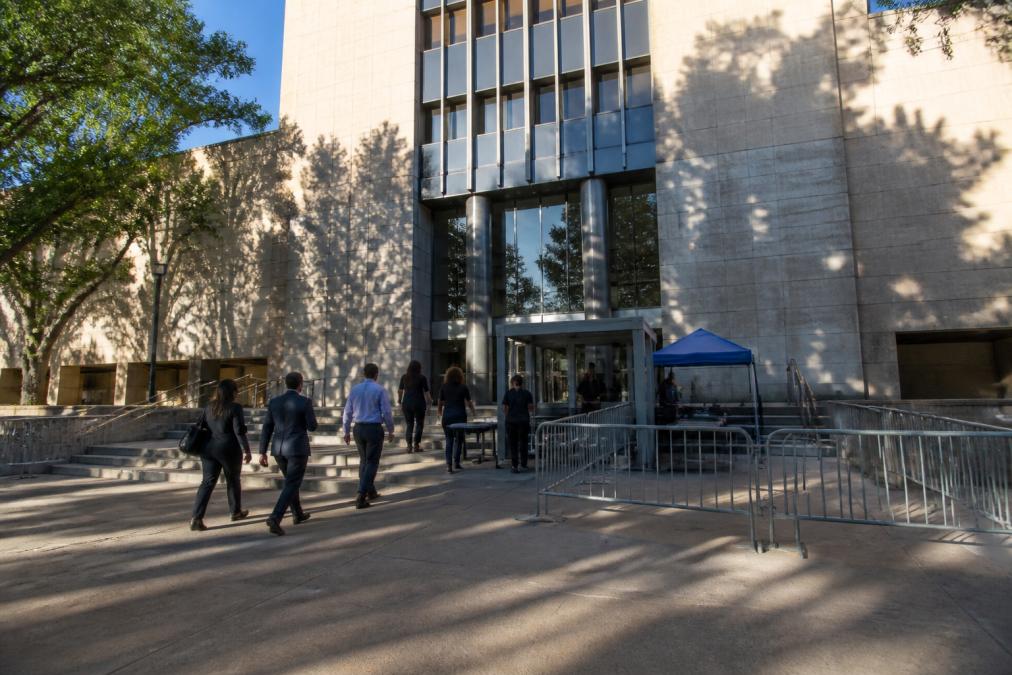
The Van Nuys courthouse is located at 6230 Sylmar Avenue, Van Nuys, California 91401. Parking is limited and fills quickly. Arrive at least 30-45 minutes before your scheduled appearance time to account for parking and security screening.
Street parking is available on nearby residential streets, though it's often competitive. A paid parking lot operates adjacent to the courthouse building, with fees around $5-$10 for a few hours.
Security is mandatory and thorough. You'll pass through a metal detector and bag screening similar to airport security. Remove your phone, keys, wallet, and any metal items before approaching the detector. Weapons of any kind, including pocket knives, pepper spray, and firearms, are prohibited.
Dress professionally in business casual at minimum: slacks or dress pants, a collared shirt, and closed-toe shoes. Avoid graphic t-shirts, tank tops, shorts, and athletic wear. Judges notice appearance, and looking respectful increases the likelihood they'll view you favorably during bail discussions.
What to Expect During Check-In
Once you pass security, proceed to the courtroom listed on your notice or citation. If you don't have a notice, ask a court clerk at the information desk for your case number and assigned courtroom. Have your identification ready.
When you enter the courtroom, identify yourself to the bailiff or court clerk. Sit in the gallery and wait for your case to be called. Arraignments are processed in batches, so you may wait 30 minutes to 2 hours depending on how many cases are scheduled.
When your name is called, approach the judge's bench or the designated area in the courtroom. The judge will confirm your identity, inform you of the charges, and explain your constitutional rights. Answer clearly: "Yes, I understand" or "No, I don't understand" if you need clarification.
Understanding Your Defendant Rights at Arraignment
Your constitutional rights are fundamental to the arraignment process. Understanding them protects you from making statements that could harm your case later.
You have the right to legal counsel. If you cannot afford an attorney, the court will appoint a public defender at no cost to you. You can request a public defender at any point during the arraignment.
You have the right to know what you're charged with. The judge will read the charges or provide a written complaint. If the charges are complex or unclear, ask the judge or your attorney to explain them.
You have the right to remain silent. Anything you say at arraignment can be used against you in trial. Do not discuss the facts of your case with the prosecutor, the judge, or anyone else in the courtroom unless your attorney advises you to do so. Keep your responses brief and factual: confirm your identity, address, and employment.
You have the right to a preliminary hearing or grand jury review. For felony charges, the prosecution must prove probable cause that a crime occurred and that you committed it. This happens at a preliminary hearing typically within 10 days of arraignment for misdemeanors, 60 days for felonies.
You have the right to discovery. The prosecution must provide you with evidence they plan to use against you, police reports, witness statements, lab results, surveillance footage, and other materials.
The Judge's Role and What the Judicial Officer Will Do
The judge (or judicial officer, which can include commissioners or referees in some proceedings) runs the arraignment. Understanding what the judge is doing helps you navigate the hearing with less anxiety.
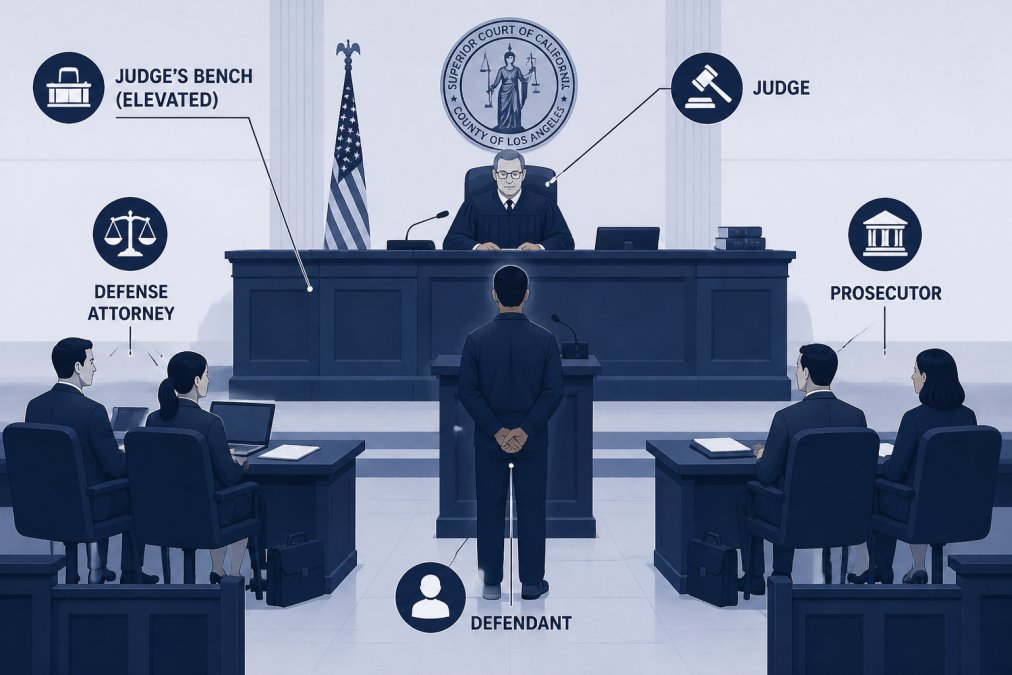
The judge's primary role is to ensure due process. They verify that you understand your rights, that you understand the charges, and that any decisions you make are voluntary and informed. They are not there to determine guilt or innocence, that happens at trial.
The judge will inform you of the charges in plain language and ask whether you understand. Be honest: if you don't understand, say so.
The judge will ask about your ties to the community: Do you have a job? Do you have family in the area? How long have you lived in California? Have you been arrested before? This information helps the judge assess whether you're likely to appear for future court dates and whether you pose a risk to public safety.
The judge will explain bail options and may release you on your own recognizance, set a bail amount, or deny bail. The judge considers the severity of the charges, your criminal history, your employment and community ties, and whether you have any history of failing to appear in court.
The judge will ask about your ability to afford an attorney. If you cannot afford one, the judge will appoint a public defender.
Pleading Not Guilty at Arraignment in California
Pleading not guilty at your Van Nuys arraignment is the most common and strategically sound choice for most defendants. A not guilty plea preserves your right to challenge the evidence, negotiate with the prosecution, and go to trial if necessary. It does not mean you deny the allegations; it means you require the prosecution to prove their case beyond a reasonable doubt.
Guilty Pleas vs. Not Guilty Pleas vs. Nolo Contendere
A guilty plea is an admission of guilt. Once you plead guilty, you waive your right to a trial and to challenge the evidence. Pleading guilty at arraignment is rarely advisable unless you've already negotiated a specific plea deal with the prosecutor and your attorney has thoroughly reviewed the terms.
A not guilty plea means you contest the charges. You're telling the court that the prosecution must prove every element of the crime beyond a reasonable doubt. A not guilty plea does not commit you to going to trial; most cases resolve through plea negotiations after discovery and preliminary hearings. But a not guilty plea keeps all options open: negotiation, dismissal, or trial.
Nolo contendere (no contest) is a middle ground. You don't admit guilt, but you accept the consequences as if you had been convicted.
At arraignment, enter a not guilty plea. This is almost always the correct first move. Your attorney can negotiate a plea deal later if that serves your interests.
How Long Does an Arraignment Take in California
Most straightforward arraignments, where the defendant enters a not guilty plea and bail is set, take 5-15 minutes from the time your case is called. However, total time in the courthouse is much longer. You may wait 1-2 hours for your case to be called, then spend 10 minutes in front of the judge, then wait another 30 minutes for paperwork to be processed.
If your case involves multiple charges, prior criminal history, or bail negotiations, the arraignment can stretch to 30-45 minutes. Plan for 2-3 hours total time at the courthouse. Bring a book or phone (though phones must be turned off in the courtroom). Wear comfortable shoes.
Bail, Release Conditions, and Own Recognizance Decisions
Bail decisions are often the most consequential outcome of your Van Nuys arraignment. The judge's decision about whether to release you, set bail, or hold you in custody directly affects your ability to work, support your family, and prepare your defense.
California law presumes that defendants are entitled to release on their own recognizance or on the least restrictive conditions necessary to ensure they appear in court and don't pose a danger to the community.
Own recognizance (OR) release means the judge releases you without requiring you to post bail. You sign a promise to appear at all future court dates. No money changes hands. OR release is the most favorable outcome because it costs you nothing and imposes minimal restrictions.
The judge may set bail at a specific amount depending on the severity of the charges and your background. To be released on bail, you must either pay the full amount to the court or pay a bail bondsman 10% of the bail amount (non-refundable).
If bail is set high and you cannot afford it, discuss options with your attorney immediately. Your attorney can request a bail reduction hearing, where they present evidence that a lower bail amount is appropriate. Factors that support a bail reduction include stable employment, family ties, length of residence in the area, and lack of prior failures to appear.
The judge may impose release conditions: no contact orders, stay-away orders, drug testing, GPS monitoring, or other restrictions. Violating release conditions can result in your arrest and bail being revoked.
What Happens After Your Van Nuys Arraignment
Your Van Nuys arraignment is the beginning of your case, not the end. If you entered a not guilty plea and were released on bail or OR, your next major event is usually the preliminary hearing (for felonies) or the pretrial conference (for misdemeanors).
Next Steps: Preliminary Hearing and Discovery
The preliminary hearing (also called a "probable cause hearing" or "prelim") is your opportunity to challenge the evidence early in the case. At the preliminary hearing, the prosecution must prove that there is probable cause to believe you committed the crime. Your attorney can cross-examine prosecution witnesses, challenge the admissibility of evidence, and move to dismiss charges if the evidence is insufficient. Many cases are dismissed or significantly weakened at the preliminary hearing stage.
Discovery is the process of exchanging evidence. The prosecution must provide you with all evidence they plan to use at trial, as well as any exculpatory evidence. Your attorney will request discovery in writing, and the prosecution has specific deadlines to respond.
After discovery and the preliminary hearing, your attorney will evaluate plea offers from the prosecution. If the evidence is weak, the prosecution may offer a significant reduction in charges. If the evidence is strong, a plea deal might be the best outcome. Your attorney will advise you on the strengths and weaknesses of your case and the value of any plea offer compared to the risk of trial.
If no acceptable plea deal emerges, the case proceeds to trial. Your attorney will file pretrial motions, prepare witnesses, and develop a trial strategy.
Frequently Asked Questions
How long does an arraignment take at the Van Nuys courthouse?
Most arraignments at Van Nuys Superior Court last between 5 and 15 minutes. However, your total time at the courthouse typically ranges from 1 to 3 hours when accounting for check-in, security screening, waiting in the courtroom calendar queue, and processing. Misdemeanor arraignments tend to move faster than felony cases. Arriving early and having your case number ready helps reduce delays.
Can I plead not guilty at my Van Nuys arraignment?
Yes. Pleading not guilty at your arraignment is one of your statutory rights as a defendant. When you enter a not guilty plea, you preserve your right to contest the formal charges and proceed to preliminary hearing or trial. This is distinct from nolo contendere (no contest) pleas. Your public defender or criminal defense attorney can advise whether a not guilty plea or other plea strategy serves your case best based on the prosecutor's evidence.
Do I need a lawyer for my Van Nuys arraignment?
While you have the right to represent yourself, having legal counsel at your arraignment is strongly recommended. An attorney can protect your defendant rights, challenge bail conditions, request own recognizance release, review the formal charges with you, and advise on plea strategy. If you cannot afford representation, a public defender will be appointed. Many serious felony charges benefit significantly from experienced criminal defense counsel who knows the Van Nuys Superior Court and local prosecutors.
What happens if I miss my arraignment date in Van Nuys?
Missing your court appearance at Van Nuys can result in a bench warrant being issued for your arrest. This creates additional legal problems beyond your original charges and makes your case harder to resolve favorably. If you cannot attend due to emergency circumstances, contact your attorney or the court clerk immediately to request a continuance. Proactive communication with the court is far better than a no-show, which signals disrespect and damages your credibility with the judicial officer.
What is the difference between an arraignment and a preliminary hearing in California?
An arraignment is your first court appearance where you are informed of charges, advised of rights, enter a plea, and bail is set. A preliminary hearing occurs later and allows the prosecutor to present evidence that probable cause exists to believe you committed the crime. At preliminary hearing, your defense can challenge the prosecution's case and cross-examine witnesses. The arraignment is brief and procedural; the preliminary hearing is a substantive hearing on the evidence.
This article was written using GrandRanker