 how-to
How to Negotiate Legal Fees With a Defense Lawyer
Table of Contents
- Criminal Defense Attorney Fee Structures
- When You Can Negotiate Legal Fees With a Defense Lawyer
- Questions to Ask a Defense Lawyer Before Hiring
- How to Ask a Lawyer for a Payment Plan
- Fee Negotiation Scripts and Tactics That Work
- What to Do When You Cannot Afford the Retainer
- Fee Disputes After Hiring and How to Avoid Them
- Conclusion
- Frequently Asked Questions
Last Updated: September 10, 2026
Criminal Defense Attorney Fee Structures
Criminal defense attorneys typically bill hourly, flat fee, or hybrid. Knowing which structure you're quoted is the first step in learning how to negotiate legal fees with a defense lawyer.
Hourly billing charges for every unit of time worked, usually in six-minute increments. It's transparent in theory, but totals are unpredictable because they depend on how the case unfolds.
Flat fees quote one price for the entire representation, from arraignment through resolution, giving cost certainty on routine matters. The catch: they usually exclude investigators, expert witnesses, and filing costs.
Hybrid arrangements combine a reduced hourly rate with a capped total, or a flat fee with hourly billing for anything beyond a defined scope. As Lawyerist's 2026 guide to alternative law firm pricing models notes, firms are increasingly adopting flat-fee, subscription, and unbundled structures, which gives clients far more room to negotiate than the traditional billable-hour model ever allowed.
| Fee Structure | How It Works | Best For | Main Risk |
|---|---|---|---|
| Hourly | Pay per six-minute increment | Unpredictable, complex cases | Total cost unknown upfront |
| Flat fee | One price, full representation | Routine charges, predictable outcomes | Excludes outside expenses |
| Hybrid | Reduced rate plus cap, or flat fee plus scope limits | Cases with defined phases | Scope disputes over "extra" work |
When You Can Negotiate Legal Fees With a Defense Lawyer
You can negotiate legal fees at almost any point: before hiring, when the case scope changes, or when you agree to a plea rather than trial. Your strongest position is before you sign a retainer agreement.
Experienced criminal defense attorneys may bill the equivalent of $400 to $600 per hour when their time is broken down, according to an analysis of legal fee structures by LA Criminal Defense Attorney. That number matters because it tells you what you're actually buying. When you negotiate, you're not haggling over a commodity. You're discussing how a finite resource, your attorney's time, gets allocated to your defense.
Timing matters. Before charges are formally filed, an attorney has maximum flexibility on price. Once trial preparation begins and hours pile up, discount room shrinks.
Questions to Ask a Defense Lawyer Before Hiring
Most fee disputes stem from questions nobody asked at the consultation. This list forces the vague parts of the engagement into the open while you still have leverage.
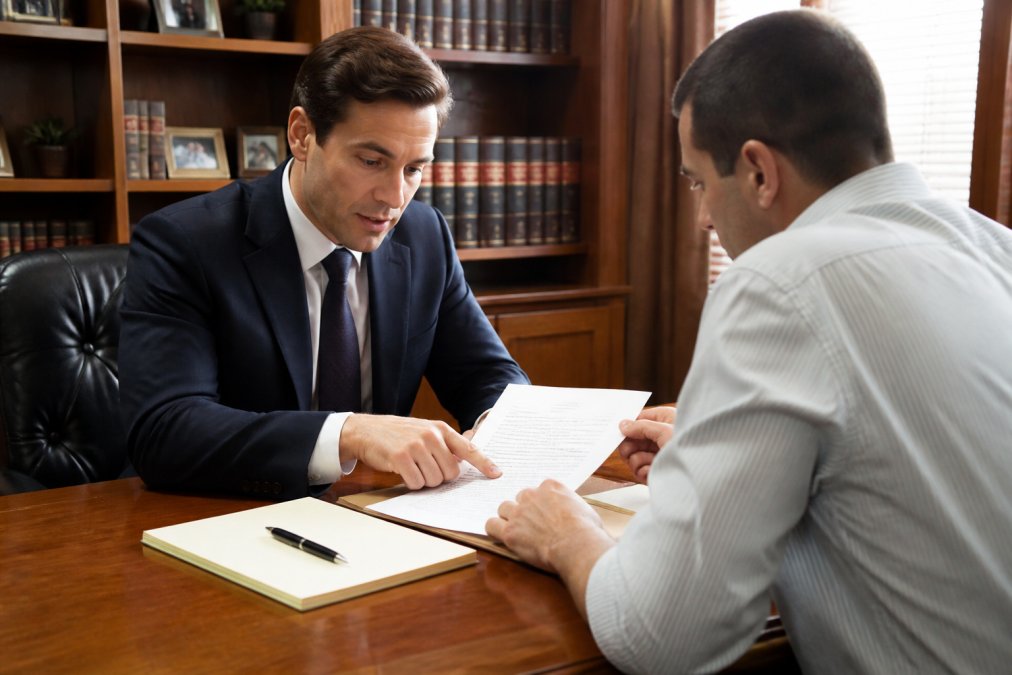
Bring this checklist to every consultation, and write down the answers in the attorney's own words.
On the fee structure itself
- Is this hourly, flat, or hybrid, and what is the exact rate or flat amount in writing?
- If hourly, what is the billing increment, and is travel time, phone calls, and email billed?
- If flat, what is the defined endpoint? Arraignment? Preliminary hearing? Plea? Trial? Appeal?
- What triggers a change from flat to hourly, and at what rate?
On what the fee excludes
- Which costs are separate from the fee: investigators, expert witnesses, forensic testing, transcripts, filing fees, subpoena service, or mileage?
- Do you mark up third-party expenses, or bill them at cost?
- Is there a cap on expenses, or do I approve each one before it is incurred?
- If I lose and the court orders me to pay prosecution costs or restitution, is that separate from your fee?
On scope and staffing
- Who handles my case day to day, you or an associate or paralegal, and at what rate is each billed?
- How many cases like mine have you taken to trial in the last two years?
- What is your estimate of total hours or total cost, and what are the three most likely events that would push it higher?
On billing and disputes
- How often will I receive an itemized invoice, and what is the billing cycle?
- What happens if I fall behind on payments? Do you withdraw, pause work, or renegotiate?
- Does the agreement include a fee arbitration clause, and which bar association administers it?
- Can I review the full written fee agreement before I sign, and can I take it home overnight?
That last question is not optional. A written fee agreement locks in the scope of work, the fee structure, and how disputes get handled. If an attorney resists putting terms in writing or pressures you to sign on the spot, walk away.
How to Ask a Lawyer for a Payment Plan
Most criminal defense firms will discuss payment plans, but you must ask directly with a realistic number. Attorneys extend payment arrangements far more often than clients assume, especially when the request is specific.
Here's how to ask without damaging the relationship:
- Lead with your commitment, not your hardship. "I want to hire you, and I need to structure payments to make it work."
- Propose a concrete schedule. "Can we do $2,000 down and $500 monthly for six months?" A specific offer is easier to accept than an open-ended request.
- Ask about the initial deposit separately from the total. Many firms care more about the upfront retainer than the payment timeline.
- Put the plan in the written agreement. Verbal payment promises cause fee disputes later.
A common mistake is waiting until you're behind on payments. Payment plans are easiest to negotiate on day one, when the attorney still wants your business.
Fee Negotiation Scripts and Tactics That Work
The most effective tactic isn't aggressive haggling. It's reframing the conversation around scope, risk, and timing, in language that lets the attorney say yes without feeling cornered. Attorneys negotiate for a living; they respond to clients who are organized, specific, and serious.
The psychology in one line: you're not asking for a discount, you're proposing a deal structure. A discount request puts the attorney on the defensive; a structure proposal invites them to solve a problem with you.
Script 1: The scope reframe (use when the flat fee feels high)
"I understand your flat fee for full representation. Before I commit, can we price this in phases? I would like a flat fee for the preliminary hearing, and if it goes past that, we revisit the number together. That way neither of us is guessing."
Why it works: it converts an all-or-nothing quote into a smaller, easier yes, and gives the attorney a reason to keep the case rather than lose it to a cheaper firm.
Script 2: The deposit-for-flexibility trade (use when you have cash on hand)
"I can pay a larger deposit today than your standard retainer if that gives us room on the total. What would that look like?"
Why it works: firms care about cash flow and on-time payers. A bigger upfront deposit reduces their risk, which is what they're actually pricing.
Script 3: The outcome alignment (use when the case may resolve by plea)
Request a Free Case Evaluation →
"If this resolves by plea agreement without a trial, would you consider adjusting the fee, or crediting the unused trial preparation time?"
Why it works: it ties the fee to effort actually expended, which is a fair argument most attorneys will at least discuss.
Script 4: The comparison, done respectfully (use only if you have real quotes)
"I have spoken with two other firms. Your experience is why I want to hire you. Their quote was lower. Is there anything you can do on the total so I can make this work?"
Why it works: it's honest, flatters without groveling, and gives the attorney a concrete reason to move. Do not bluff; attorneys talk to each other, and a fake quote ends the conversation.
Script 5: The email version (use when you would rather not negotiate live)
Subject: Fee structure question before retaining
Thank you for meeting with me on [date]. I would like to move forward. Before I sign the agreement, could you confirm two things in writing: (1) the total flat fee and exactly what stage of the case it covers, and (2) whether a payment plan of $X down and $Y per month is acceptable. If we can agree on those two points, I am ready to retain.
Why it works: email forces precision, creates a record, and removes the pressure of an in-person ask.
The mid-case scope change, which almost no guide covers
This is where most fee relationships break. The case was quoted as a plea, then the prosecutor adds a charge, the client decides to go to trial, or a suppression motion changes the posture. The bill spikes and both sides feel ambushed.
Handle it the moment you see the change coming, not when the invoice arrives. Use language like this:
"I understand the case has changed since we set the fee. Before you do the additional work, can we put the new scope and the new number in writing so we are both clear? I am not disputing the original agreement. I want to avoid a dispute on the next one."
That framing signals you'll pay for legitimate additional work and forces a written amendment to the fee agreement before the meter runs. If the attorney won't put the new scope in writing, that's your warning sign.
What to Do When You Cannot Afford the Retainer
When the initial deposit is out of reach, you still have options. The worst move is doing nothing and letting a court date pass.
Start by asking the firm directly about a reduced initial deposit. Many attorneys will lower the upfront amount if you commit to a payment schedule in writing. If that fails, explore these alternatives:
- Sliding scale legal aid: Many nonprofit legal organizations set fees based on income.
- Public defender eligibility: If you cannot afford counsel, you may qualify for a court-appointed attorney. Eligibility is determined by the court, so ask about the process rather than assuming you won't qualify.
- Unbundled services: Hire an attorney for a single task, like reviewing a plea agreement, rather than full representation.
- Pro bono programs: Bar associations and legal clinics connect defendants with volunteer attorneys for certain cases.
For serious felony charges, a public defender may be your only realistic option, and that isn't a failure. What matters is qualified representation before your first court appearance.
Fee Disputes After Hiring and How to Avoid Them
Fee disputes almost always trace back to one thing: an unclear scope of work. The attorney believed one thing was covered; you believed another. By invoice time, both sides feel wronged.
Prevention beats resolution. Insist on an itemized invoice at a defined billing cycle, not a lump sum at the end. Review each invoice promptly and raise questions in writing within days, not months. If a dispute arises, start with a direct conversation, then put concerns in writing; most state bar associations offer fee arbitration as a formal fallback.
The Federal Bar Association's 2026 program on law firm rate negotiations highlights that portfolio-level negotiation, addressing fees across an entire relationship rather than case by case, is proving more effective than traditional one-off discussions. For an individual client, the lesson is simpler: negotiate the whole engagement upfront, not each charge after the fact.
Conclusion
Rising law firm rates, up 7.4% in the most recent period according to the Thomson Reuters Law Firm Rates Report 2026, make fee conversations unavoidable. The defendants who get the best outcomes aren't the ones who haggle hardest. They're the ones who ask clear questions, get everything in writing, and hire an attorney who treats the fee agreement as the start of a relationship, not the end of a sale.
At Van Nuys Crime, our team brings decades of combined courtroom experience to every case, from arraignment through trial and appeal, with a defense strategy customized to your circumstances rather than a template. We investigate police reports thoroughly, identify weaknesses in the prosecution's case, and keep you informed at every stage through direct communication. If you're facing charges and worried about what representation will cost, request a free case evaluation. We'll walk you through the fee structure, the scope of work, and your options before you commit to anything.
Frequently Asked Questions
Is it standard practice to negotiate fees with a criminal defense lawyer?
Yes. Many defense attorneys expect fee discussions and are open to adjusting payment timing, scope, or structure. Hourly rates for experienced criminal defense attorneys may work out to the equivalent of $400 to $600 per hour when their time is broken down, according to LACriminalDefenseAttorney.com (2026), so asking about how those hours are spent is reasonable. You can negotiate legal fees by asking about flat fees, payment plans, or a narrower scope of work rather than demanding a lower rate.
What is a flat fee versus an hourly rate in criminal defense?
A flat fee is one set price for a defined scope of work, such as handling a plea agreement or a specific hearing. An hourly rate bills you for each unit of time the attorney works, tracked through billable hours and reported on an itemized invoice. Many criminal defense attorneys use flat fees for predictable stages and hourly billing for trials or appeals. Ask which structure applies to your case and what happens if the case extends beyond the quoted scope.
How do I ask a lawyer about their billing structure during a consultation?
Ask directly and early: request a written fee agreement, an itemized list of what the retainer covers, and whether court costs and legal expenses are included or billed separately. Lawyerist's 2026 guide on law firm pricing notes that firms increasingly offer flat-fee, subscription, and unbundled arrangements, so it is fair to ask whether any of those apply. A clear billing cycle and fee disclosure protect the attorney-client relationship on both sides.
Are there ways to reduce legal costs without compromising the quality of my defense?
You can reduce costs by narrowing the scope of work, providing your own documents and timeline, and asking about unbundled services for specific tasks. A February 2026 analysis from LACriminalDefenseAttorney.com warns that flat fees that seem too good to be true often signal lower-quality representation or hidden costs, so weigh any discount against the attorney's trial experience. Comparing fees across firms is often more effective than pushing a single attorney below their set rates.