 how-to
How to Find Out If There's a Warrant for Your Arrest
Table of Contents
- Understanding Warrants: Bench vs. Arrest Warrants
- How to Search for a Warrant for Your Arrest Online
- Can a Lawyer Check for Warrants Without Turning Me In?
- What Happens If You Have a Warrant for Your Arrest
- How to Clear a Bench Warrant
- The Risks of Ignoring an Outstanding Warrant
- Next Steps: Protecting Your Rights
Last Updated: August 17, 2026
Understanding Warrants: Bench vs. Arrest Warrants
A warrant is a court-issued legal document that authorizes law enforcement to take specific action, typically to arrest someone or search a location. Understanding the difference between a bench warrant and an arrest warrant is critical if you're trying to find out if there is a warrant for your arrest.
An arrest warrant is issued by a judge based on probable cause that you've committed a crime. Law enforcement presents evidence to the court, and if the judge finds sufficient grounds, they sign the warrant, giving police legal authority to locate and arrest you.
A bench warrant is issued by a judge when you fail to appear in court as ordered. The name comes from the judge's "bench." If you were supposed to show up for a hearing, trial, probation check-in, or other court appearance and you didn't, the judge can issue a bench warrant for your arrest. Bench warrants are common, and many people don't realize they have one until they're pulled over or encounter law enforcement.
Both are serious and authorize arrest, but the bench warrant often feels like a surprise because people forget about a court date or didn't receive notice. Understanding which type applies to your situation is the first step toward resolving it.
How to Search for a Warrant for Your Arrest Online
The most direct way to find out if there is a warrant for your arrest is to search court records online. Many county superior courts in California maintain searchable databases accessible to the public. However, each county maintains its own records, and access methods vary.
Start by identifying which county has jurisdiction over your case. If you were arrested or charged in a specific location, that county's superior court is where your case would be filed.
Using Superior Court Online Portals
Most California counties offer free online case search tools through their superior court websites. These portals typically allow you to search by defendant name, case number, or date of birth. To search, visit your county's superior court website and look for a link labeled "Case Search," "Public Records Search," or "Online Case Information." You'll usually need to enter your full name or case number. Once you enter your information, the system will display any active cases, pending charges, or outstanding orders, including warrants.
The advantage of online portals is speed and privacy. You can search from home without speaking to anyone. The disadvantage is that not all counties have robust online systems, and some older warrants may not appear in digital databases. If your search returns no results, the record may not be digitized or the system may be incomplete.

Contacting the Sheriff's Department Directly
If the online search doesn't yield clear results, contact your county sheriff's department directly. The sheriff's office maintains warrant records and can tell you definitively whether an active warrant for your arrest exists in that county. Call the non-emergency line and ask to speak with someone in records or investigations. Be prepared to provide your full name, date of birth, and any case numbers you might have.
The benefit of calling is certainty. A person can confirm or rule out a warrant quickly. The downside is that you're creating a record of your inquiry. If you're concerned about this, consider having an attorney make the inquiry on your behalf.
Requesting Criminal History Records from the Department of Justice
For a comprehensive statewide search, you can request your criminal history record from the California Department of Justice. This record includes arrests, charges, convictions, and outstanding warrants across all California counties. You can request this record in person, by mail, or through an authorized fingerprinting service.
To request your record, visit the DOJ's Criminal History Records Information page or submit a Request for Live Scan Fingerprinting through an authorized agency. You'll need to provide identifying information and pay a nominal fee. This approach takes longer, typically 3-7 business days, but it's thorough and official.
Can a Lawyer Check for Warrants Without Turning Me In?
A qualified criminal defense attorney can check for warrants on your behalf without automatically turning you in to law enforcement. An attorney-client relationship is protected by privilege. When you hire a lawyer and ask them to investigate whether a warrant exists, that communication is confidential. Your attorney can contact the court, sheriff's department, or district attorney's office to inquire about a warrant without disclosing your location or current status.
The key word is "qualified." You need to be speaking with a licensed criminal defense attorney. The privilege only exists when you've established a genuine attorney-client relationship, meaning you've hired the attorney to represent you and you're seeking legal advice.
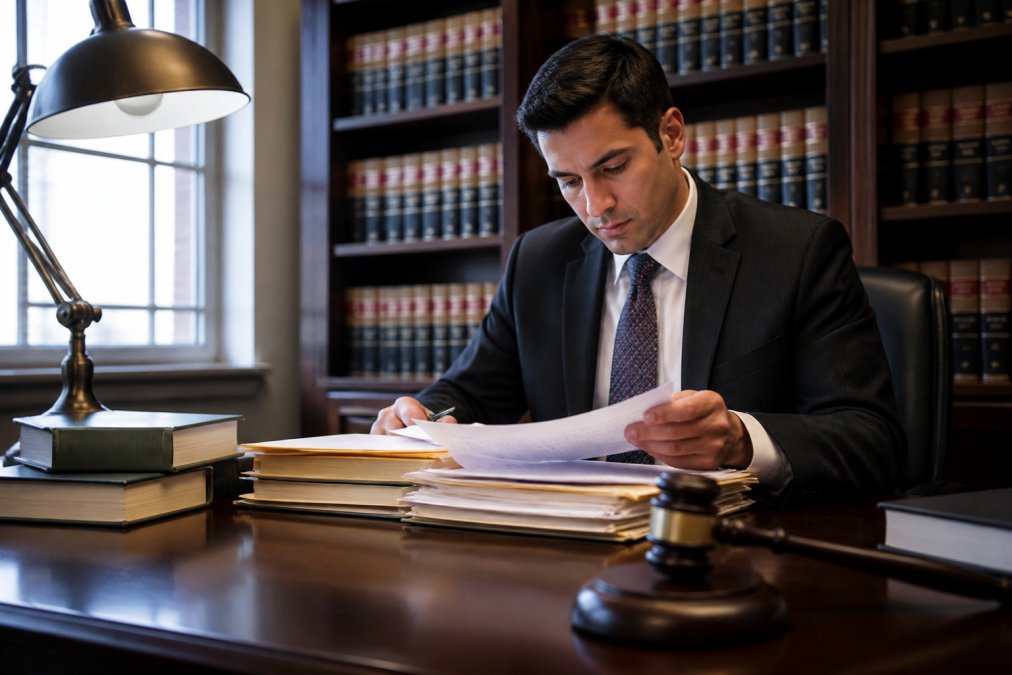
Once your attorney confirms a warrant exists, they can often negotiate with the prosecutor or court to arrange a voluntary surrender. This means you turn yourself in at an agreed-upon time and place, typically with your attorney present. Voluntary surrender is far preferable to being arrested unexpectedly and often results in more favorable bail conditions.
However, there are limits. If you're wanted for a violent felony or your case involves serious charges, an attorney may have an ethical obligation to advise you to turn yourself in immediately. Additionally, if your attorney discovers you're planning to flee or harm someone, they cannot help you evade law enforcement.
The bottom line: an attorney can investigate a warrant confidentially and help you resolve it strategically, on terms that protect your rights and minimize damage to your case.
What Happens If You Have a Warrant for Your Arrest
If you discover that there is a warrant for your arrest, understanding what comes next is essential. The consequences depend on the type of warrant, the charges involved, and how the warrant is executed.
If law enforcement executes the warrant, you'll be arrested and taken into custody. You'll be booked at the police station or county jail, which involves recording your personal information, photographing, fingerprinting, and a preliminary background check. You'll then be held until a bail hearing, which typically occurs within 72 hours of arrest.
At the bail hearing, a judge will determine whether you're released on your own recognizance, released on bail, or held without bail. The judge considers factors like the severity of the charges, your criminal history, ties to the community, employment status, and whether you're a flight risk. If you have an attorney present, they can argue for reasonable bail conditions and advocate for your release.
If the warrant is a bench warrant for failure to appear, the consequences are typically less severe than for an arrest warrant related to new charges. If the warrant is for an arrest based on alleged criminal conduct, the situation is more serious.
The key is not to let it reach this point. Discovering a warrant proactively and addressing it with an attorney gives you control over the situation.
How to Clear a Bench Warrant
If you have a bench warrant for your arrest, you can clear it, but the process requires action. A bench warrant won't disappear on its own.
Request a Free Case Evaluation →
The first step is to contact the court that issued the warrant. You can do this directly or through an attorney. Explain that you want to resolve the warrant and clear your name. The court will typically require you to appear before the judge who issued the warrant or another judge in that courtroom.
In many cases, the court will allow you to appear voluntarily instead of being arrested. This is called a "walk-in appearance" or "voluntary appearance." You show up at the courthouse at a specified time, check in with the clerk, and appear before the judge. This demonstrates responsibility and cooperation, which judges view favorably.
At the hearing, the judge will ask why you failed to appear originally. Common reasons include not receiving notice, a scheduling conflict, or a misunderstanding about the court date. If you have a legitimate explanation, present it clearly. The judge may dismiss the warrant, reschedule your hearing, or modify the terms of your release.
If the original case involved probation or other conditions, the judge may also address whether you've violated those conditions. If you have an attorney, they can negotiate with the prosecutor before the hearing to reach an agreement that minimizes additional consequences.
For bench warrants, the key is speed. The longer you wait, the more likely law enforcement will locate you through other means.
The Risks of Ignoring an Outstanding Warrant
The consequences of ignoring a warrant escalate quickly. An outstanding warrant is a permanent liability. Any interaction with law enforcement, a traffic stop, a background check for employment, a police response to a neighborhood incident, can result in your arrest.
Ignoring a warrant damages your credibility with the court. When you finally appear, whether voluntarily or after arrest, the judge will consider your failure to address the warrant as a negative factor. This affects bail conditions, sentencing recommendations, and how seriously the judge takes your case.
Additional charges can be filed. Failure to appear is itself a crime. If you ignore a warrant long enough, prosecutors may add charges for failure to appear, contempt of court, or other related offenses.
Your employment, housing, and financial opportunities are at risk. Many employers conduct background checks, and an outstanding warrant will appear. Housing applications often include criminal history checks. Banks and financial institutions may flag accounts associated with outstanding warrants.
Finally, the longer you wait, the harder it becomes to resolve the situation favorably. An attorney can often negotiate better terms if you address a warrant early. If you wait months or years, prosecutors and judges view this as evasion, and they're less inclined to work with you.
Next Steps: Protecting Your Rights
If you believe there is a warrant for your arrest, take action immediately.
Step 1: Confirm the warrant exists. Use one of the search methods outlined above to get definitive confirmation.
Step 2: Consult with a criminal defense attorney. An attorney can investigate the warrant, advise you on your options, and represent you in resolving it.
Step 3: Arrange a voluntary resolution. With your attorney's guidance, contact the court or prosecutor to arrange a voluntary appearance or surrender.
Step 4: Prepare for the hearing. Work with your attorney to develop a strategy for the hearing.
Step 5: Follow through. Appear as scheduled, comply with all court orders, and stay in communication with your attorney throughout the process.
The Van Nuys Crime team understands that discovering an outstanding warrant is frightening. We've helped countless clients in the San Fernando Valley navigate this situation, from confirming a warrant exists to negotiating favorable terms for resolution. Our approach is straightforward: we protect your rights, investigate your case thoroughly, and fight for the best possible outcome. If you're facing a warrant for your arrest, contact us for a free case evaluation. We'll explain your options and help you move forward with confidence.
An outstanding warrant doesn't have to control your future. By taking immediate action and working with an experienced criminal defense attorney, you can resolve it strategically and protect your rights. The Van Nuys Crime team brings decades of courtroom experience to warrant cases across the San Fernando Valley. Contact us today to discuss your situation and begin the process of clearing your name.
Frequently Asked Questions
Can I check for an arrest warrant online for free?
Yes, you can search for a warrant for your arrest through public court databases and the Superior Court online portals at no cost. Most county sheriff's departments also allow free warrant searches through their websites. However, these searches may not capture all outstanding warrants across all jurisdictions. For a comprehensive check, contacting the Sheriff's Department directly or requesting records from the Department of Justice provides more thorough results. An attorney can also conduct this search confidentially on your behalf.
What should I do if I discover there is an active warrant for my arrest?
Contact a criminal defense attorney immediately before taking any other action. An attorney can assess your situation, understand the warrant's basis, and determine the best course of action, whether that's arranging a voluntary surrender, requesting bail reduction, or filing a motion to quash the warrant if it was issued improperly. Do not ignore the warrant or attempt to flee, as this will significantly worsen your legal position and create additional criminal charges.
Will the police be notified if I search for a warrant in my name?
No, conducting a personal warrant search online through public databases will not notify law enforcement. However, if you contact the Sheriff's Department directly by phone or in person to inquire about a warrant, they may take steps to locate and arrest you depending on the warrant's status. This is why working with a criminal defense attorney is the safest approach, your attorney can check for warrants confidentially and protect your rights while determining the next steps.
What is the difference between a bench warrant and an arrest warrant?
An arrest warrant is issued by a judge based on probable cause that you committed a crime and authorizes law enforcement to arrest you. A bench warrant is issued when you fail to appear in court or violate court orders, and it carries the same enforcement power as an arrest warrant. Both allow police to take you into custody, but a bench warrant typically stems from your failure to comply with court requirements rather than initial criminal suspicion. Both types require immediate legal attention.
This article was written using GrandRanker