 how-to guide
Clear a Bench Warrant in Van Nuys: Step-by-Step Guide
Table of Contents
- What Is a Bench Warrant and Why It Matters in Van Nuys
- Step 1: Search for Your Warrant Status at Van Nuys Courthouse
- Step 2: File a Motion to Quash or Recall Your Bench Warrant in Van Nuys
- Step 3: Appear Voluntarily or Make a Court Appearance
- Common Mistakes to Avoid When Clearing a Bench Warrant
- How a Bench Warrant Affects Employment, Background Checks, and Your Future
- Your Day-of-Court Checklist: What to Bring and How to Prepare
- Why You Need a Van Nuys Criminal Defense Attorney for Bench Warrant Relief
Clear a Bench Warrant in Van Nuys: Step-by-Step Guide
Last Updated: July 27, 2026
What Is a Bench Warrant and Why It Matters in Van Nuys
A bench warrant is a court order issued by a judge authorizing law enforcement to arrest you when you fail to appear in court as required. An active bench warrant can disrupt your life significantly, law enforcement can arrest you during any traffic stop, routine police interaction, or background check. Many people discover outstanding warrants only when applying for employment, housing, or professional licenses.
A bench warrant doesn't require probable cause; it's issued solely because you missed a court appearance. This makes it one of the most common warrants issued in Los Angeles Superior Court, and also one of the most straightforward to resolve if you act quickly.
Bench Warrant vs. Arrest Warrant: Key Differences
An arrest warrant is issued when law enforcement has probable cause to believe you committed a crime and presents evidence to a judge for approval. A bench warrant is issued administratively when you fail to appear, the judge doesn't need to investigate anything. Your absence from court is the sole trigger.
This distinction matters because clearing a bench warrant focuses on addressing your failure to appear, not defending against criminal charges. While both are serious, bench warrants are typically easier to resolve because they don't require proving your innocence of any crime.
In Van Nuys Courthouse specifically, bench warrants are handled through the criminal division's warrant recall procedures. The process is standardized, which means outcomes are more predictable than in cases involving arrest warrants tied to active investigations.
Step 1: Search for Your Warrant Status at Van Nuys Courthouse
Before you can clear a bench warrant in Van Nuys, you need to confirm one actually exists and gather specific information about it.
What Information You'll Need
Start by gathering your case number, your full legal name, and your date of birth. If you have any court documents from your original case, a citation, court notice, or bail paperwork, locate those first. The case number is the most important piece of information because it allows the clerk's office to pull your exact file.
The Van Nuys Courthouse is located at 6230 Sylmar Avenue, Van Nuys, CA 91401. This is the primary criminal courthouse for Van Nuys cases.
Contacting the Clerk's Office
The Van Nuys Courthouse clerk's office handles warrant inquiries directly. Call the criminal division at the main courthouse number during business hours (typically 8:00 AM to 4:00 PM, Monday through Friday). Provide your case number and full name. The clerk can confirm whether an active bench warrant exists and provide the hearing date or next court appearance required.
Calling the clerk's office to check your warrant status is not an admission that triggers arrest. The clerk is simply providing information. Write down the exact warrant information: the case number, the original charge, the date the warrant was issued, and any bail amount if one exists.
Step 2: File a Motion to Quash or Recall Your Bench Warrant in Van Nuys
Once you've confirmed the warrant exists, you have two primary legal paths forward: filing a motion to quash the warrant or appearing voluntarily.
Understanding Your Legal Options
A motion to quash argues that the warrant should be canceled because it was issued improperly or because you have a valid reason for missing court. Valid reasons include: you didn't receive proper notice of the court date, you were incarcerated and unable to appear, you experienced a medical emergency, or you had a legitimate misunderstanding about the court date.
A motion to recall is more straightforward. You simply request that the judge recall (cancel) the warrant so you can appear voluntarily without fear of arrest. This approach works best when you're ready to resolve the matter immediately. Judges routinely grant these requests because you're showing responsibility and preventing unnecessary arrest procedures.
Preparing Your Motion Documents
If you file a motion, you'll need to prepare specific documents. The motion itself is a formal letter to the court explaining your request and your reasons. The format matters, it must follow California court rules.
A declaration is a signed statement under penalty of perjury explaining why you missed court. This is your opportunity to provide context. If you were in the hospital, include hospital records. If you didn't receive notice, explain what happened. Be honest about it. Judges respond better to honest explanations than elaborate excuses.
You'll also need proof of service, documentation showing you served copies of your motion on the prosecutor's office. The Van Nuys Courthouse clerk can explain the specific service requirements.
Step 3: Appear Voluntarily or Make a Court Appearance
Whether you file a motion or appear directly, you'll eventually stand before a judge to address the bench warrant.
Working With a Van Nuys Criminal Defense Attorney
This is the critical juncture where legal representation makes an enormous difference. A Van Nuys criminal defense attorney can appear on your behalf, file the motion with proper legal language, and negotiate with the prosecutor before the hearing. They understand the specific judges at Van Nuys Courthouse and how each one typically handles bench warrant recalls.
An attorney can negotiate with the District Attorney's office before the hearing. Sometimes the prosecutor will agree not to object to the warrant recall, which means the judge will almost certainly grant it.
What to Expect at Your Hearing
When you appear before the judge, the proceeding is brief, typically 5 to 10 minutes. The judge will ask you to confirm your identity and address. The prosecutor may make a statement about your case. Your attorney (or you, if unrepresented) will explain why the warrant should be recalled.
In most cases, bench warrants are recalled immediately. The judge signs an order canceling the warrant, and you're free to leave. However, your case isn't closed. You still have pending charges or a probation matter that needs resolution. Your next court date will be set, and you'll be expected to appear.
If you fail to appear again after the warrant is recalled, a new bench warrant will be issued immediately. This second warrant is treated more seriously by judges.
Common Mistakes to Avoid When Clearing a Bench Warrant
The first major mistake is waiting too long. Every day an outstanding warrant exists increases the risk of arrest. The sooner you address the warrant, the sooner it's resolved.
The second mistake is attempting to handle the motion yourself without legal guidance. Court procedures are strict. A motion filed incorrectly gets denied, and you've wasted time.
The third mistake is missing the new court date after the warrant is recalled. Set calendar reminders. Confirm the date with your attorney. Mark it prominently on your calendar.
The fourth mistake is providing false information or exaggerating your excuse. Judges can tell when people are being dishonest. A simple, honest explanation is far more credible than an elaborate story.
The fifth mistake is appearing without understanding what happens next. After the warrant is recalled, you still have a case to resolve. Understand what charges you're facing, what the prosecutor is offering, and what your options are.
How a Bench Warrant Affects Employment, Background Checks, and Your Future
An active bench warrant creates ripple effects across your life that extend far beyond the courtroom. Employment background checks routinely reveal active warrants, and discovering a warrant often means immediate rejection. Housing applications also involve background checks, and landlords frequently deny rental applications upon discovering a warrant.
Professional licensing is another area where warrants create problems. If you're pursuing a career in healthcare, education, law, accounting, or any field requiring professional licensing, an active warrant can prevent you from obtaining or renewing your license.
The psychological impact is real too. Living with an active warrant creates constant anxiety. You worry about routine traffic stops and avoid certain areas. This stress affects your work performance, relationships, and overall well-being.
Your Day-of-Court Checklist: What to Bring and How to Prepare
Preparation eliminates surprises and demonstrates respect to the court.
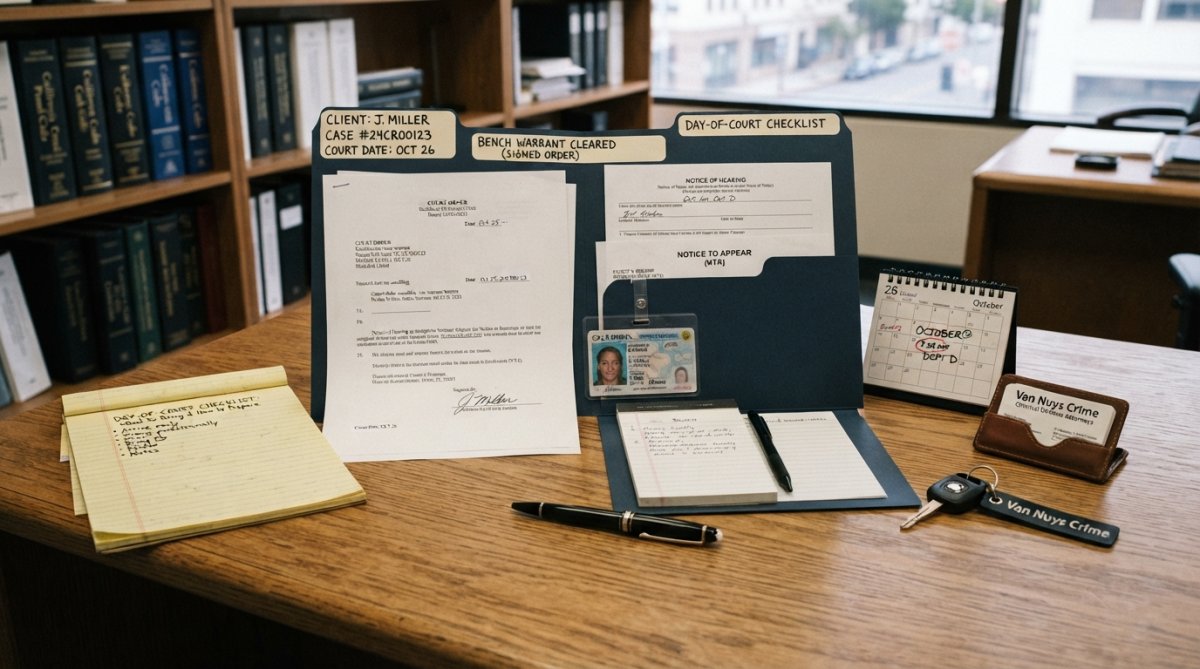
Essential Documents to Bring:
- Your case number and any court documents you have
- Valid photo identification (driver's license or passport)
- Any documentation supporting your explanation (hospital records, work schedules, proof you didn't receive notice)
- A written statement summarizing your explanation (keep it brief, one page maximum)
- Contact information for your attorney, if you have one
- Proof of service if you filed a motion yourself
Dress and Demeanor:
Dress professionally and conservatively. Business casual is appropriate. Avoid clothing with logos, graphic images, or anything that draws attention. Arrive early, plan to arrive 20-30 minutes before your scheduled hearing time.
When you enter the courtroom, sit quietly in the gallery. When your case is called, stand immediately and approach the counsel table. Address the judge as "Your Honor." Speak clearly and directly.
What Happens in Sequence:
- Your case is called. You and your attorney (if you have one) approach the bench.
- The judge confirms your identity and explains you're there regarding a bench warrant.
- The prosecutor may make a statement about your case.
- You or your attorney explain why the warrant should be recalled.
- The judge decides and signs an order.
- You receive a new court date for your underlying case.
The entire process typically takes 5-10 minutes. Having an attorney present makes it smoother because the attorney handles most of the talking.
Why You Need a Van Nuys Criminal Defense Attorney for Bench Warrant Relief
Handling a bench warrant alone is possible, but it's far riskier and more stressful than working with an experienced criminal defense attorney.
An attorney provides immediate practical value. They file your motion correctly, negotiate with the prosecutor, and appear in court on your behalf. They handle the procedural complexity that trips up unrepresented people. More importantly, an attorney protects your interests in your underlying case. Clearing the bench warrant is step one. Step two is resolving your actual charges. An attorney who handles the warrant recall also manages your defense strategy going forward.
The stress reduction is significant. You don't have to figure out court procedures, file documents, or stand alone before a judge.
Understanding Legal Representation Costs
Many people avoid hiring an attorney because they assume the cost is prohibitive. This assumption often costs them more in the long run through poor outcomes or additional charges.
Legal representation for bench warrant matters varies based on complexity. Van Nuys Crime offers flexible representation options and provides free case evaluations so you understand your options before making any financial commitment. Many clients find that the cost of representation is far less than the cost of the consequences they'd face without it, lost employment, housing denial, or additional criminal charges.
A bench warrant hanging over your head creates constant anxiety and real legal risk. The process to clear it is straightforward when you understand the steps and have proper guidance. Van Nuys Crime combines deep experience with Van Nuys Courthouse procedures, aggressive representation of your interests, and personalized attention to your specific situation. We've helped clients clear bench warrants, resolve underlying charges, and move forward with their lives. Request a free case evaluation today and let us show you how we can protect your future.
Frequently Asked Questions
What is the difference between a bench warrant and an arrest warrant in California?
A bench warrant is issued when you fail to appear in court or violate court orders; an arrest warrant is issued when police have probable cause you committed a crime. Bench warrants are issued by judges for non-compliance, while arrest warrants come from law enforcement investigations. Both allow police to arrest you, but bench warrants typically arise from your own actions or failures to appear. Understanding this distinction helps clarify how to clear a bench warrant through proper court procedures.
Can a lawyer appear on my behalf to quash a bench warrant in Van Nuys without me being present?
In many cases, a Van Nuys criminal defense attorney can file a motion to recall or quash your bench warrant on your behalf. However, the judge may require your personal appearance at a hearing, especially if the warrant involves serious charges or repeated failures to appear. Your attorney can request judicial discretion to proceed without you present, but this depends on the specific circumstances and the judge's decision. Always consult with your attorney about whether your presence will be required.
What happens if I turn myself in for a bench warrant in Van Nuys?
If you voluntarily appear at Van Nuys Courthouse or contact the Los Angeles Superior Court clerk's office, you demonstrate good faith to the judge. You may be held in custody pending a hearing, or released on your own recognizance depending on the warrant's severity and your criminal history. Having legal representation before you turn yourself in significantly improves your chances of being released without bail. The judge will consider your voluntary appearance as a positive factor when deciding whether to recall the warrant and what conditions to impose.
How long does a bench warrant stay active in California, and what are the consequences of ignoring it?
Bench warrants remain active indefinitely until recalled by the court. Ignoring a warrant can result in arrest at any traffic stop, employment background check, or police encounter. An outstanding warrant can prevent you from obtaining professional licenses, passing security clearances, and may impact employment opportunities and housing applications. The longer you wait, the more serious the consequences become. Acting quickly to clear your warrant through proper legal channels minimizes these impacts and demonstrates responsibility to the court.
This article was written using GrandRanker