 ultimate-guide
How Long Do Domestic Violence Cases Take to Resolve
Table of Contents
- How Long Do Domestic Violence Cases Take to Resolve
- Misdemeanor vs. Felony Domestic Violence Cases
- Stages of a Criminal Domestic Violence Trial
- Domestic Violence Plea Bargain Process
- Factors That Extend Case Duration
- Domestic Violence Case Dismissal Rates and Outcomes
- The Role of No-Contact Orders and Restraining Orders
- Conclusion
- Frequently Asked Questions
Last Updated: September 26, 2026
How Long Do Domestic Violence Cases Take to Resolve
Understanding how long do domestic violence cases take to resolve is critical for defendants and families. Misdemeanor domestic violence cases typically take 3-9 months to resolve, while felony cases often extend to 6-18 months. Knowing what to expect at each stage helps reduce anxiety and allows families to plan accordingly.
Court backlogs, evidence availability, prosecutor decisions, and legal strategy all influence the timeline. Some cases resolve in weeks through plea agreements; others stretch beyond a year when trials become necessary.
Misdemeanor vs. Felony Domestic Violence Cases
Misdemeanor cases (minor injuries or first-time offenses) move faster than felony cases (serious bodily injury, weapon use, or repeat offenses).
Misdemeanor cases generally resolve within 3-9 months. They follow a simplified procedural path with fewer pretrial hearings and less discovery material. If the defendant contests charges or demands a trial, the timeline extends toward the upper end of that range.
Felony domestic violence cases typically take 6-18 months. The additional time reflects more extensive discovery, multiple pretrial motions, longer investigations, and greater prosecutorial resources.
Geographic jurisdiction matters significantly. Local court dynamics directly impact how long do domestic violence cases take to resolve.
Stages of a Criminal Domestic Violence Trial
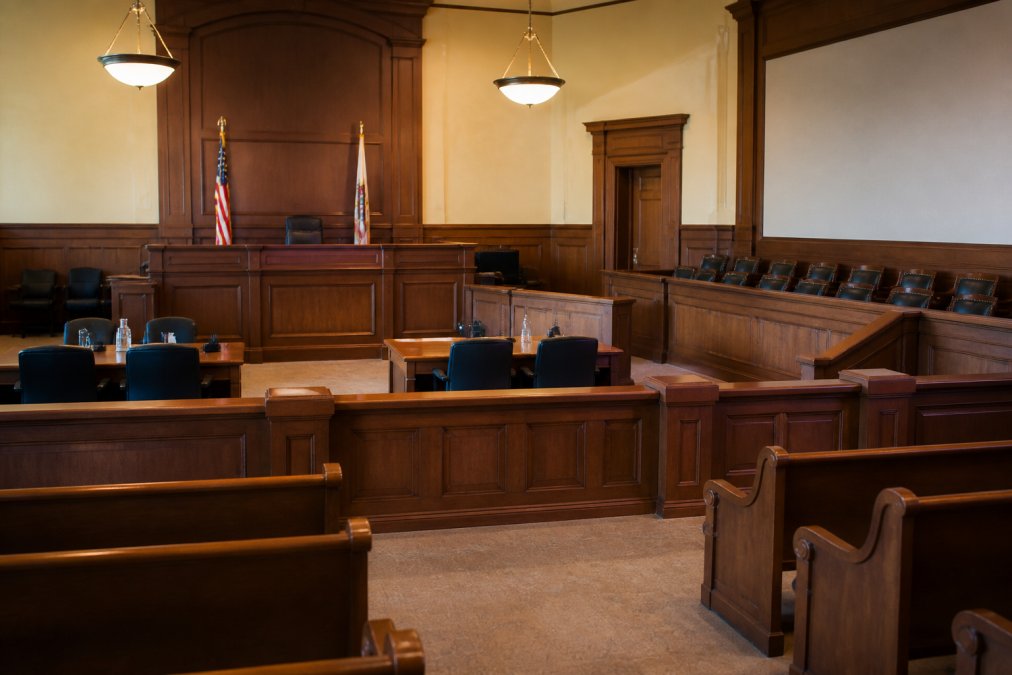
A domestic violence criminal case moves through distinct stages, each with its own timeline implications. Understanding these stages helps defendants and families anticipate what comes next and prepare accordingly.
Arrest and Bail Hearing
Within 72 hours of arrest, the defendant must appear for a bail hearing. The judge determines whether the defendant can be released and under what conditions, including whether a no-contact order will be imposed.
The bail hearing typically lasts 15-30 minutes. The prosecutor argues for detention or high bail; the defense argues for release or lower bail. A defendant released on their own recognizance can prepare their defense more effectively than one held in custody.
Arraignment and Pre-Trial Motions
The arraignment occurs within 10-30 days of arrest. The defendant enters a plea and is informed of their rights. Pretrial motions (to suppress evidence, dismiss charges, or modify bail) are typically filed at this stage.
Pretrial motions can extend timelines significantly. A motion to suppress evidence may require a separate hearing, adding 2-8 weeks. If successful, charges may be dismissed; if not, the case proceeds.
Discovery Phase and Evidence Exchange
Discovery is the formal exchange of evidence. The prosecutor provides police reports, witness statements, photographs, medical records, and exculpatory evidence. The defense requests specific materials and may file motions if information is withheld.
The discovery phase typically lasts 4-12 weeks. Complex cases with forensic analysis or medical records can extend discovery to 6 months or longer due to third-party delays.
Domestic Violence Plea Bargain Process
Plea bargaining resolves 80-90% of domestic violence cases before trial.
How Plea Negotiations Work
A plea bargain is a negotiated agreement where the defendant pleads guilty or no contest to charges (or reduced charges) in exchange for dropped charges or sentencing leniency. Negotiations can begin immediately after arraignment.
Negotiations typically unfold in stages: (1) Initial Offer (Weeks 2-4): Prosecutor makes opening offer; (2) Defense Response (Weeks 4-8): Defense identifies weaknesses and makes counter-offer; (3) Negotiation Rounds (Weeks 8-16): Multiple rounds of communication; (4) Final Offer (Weeks 16-20): Agreement reached, plea entered before judge, sentencing within 2-6 weeks.
Typical Plea Reductions in Domestic Violence Cases
Common reductions include: (1) Felony to Misdemeanor (eliminates firearm prohibitions and professional license impacts); (2) Charge Reduction (removing "domestic violence" enhancement); (3) Sentencing Recommendation (probation instead of jail); (4) Collateral Condition Modifications (waiving anger management or reducing probation duration).
How Evidence Quality Affects Plea Leverage
Weak evidence (victim recants, contradictory body camera footage, inconsistent witness statements, constitutional violations) improves plea leverage. Strong evidence (multiple corroborating witnesses, severe documented injuries, defendant admissions, surveillance video) limits leverage.
Victim Cooperation and Its Impact on Plea Offers
Victim cooperation significantly affects plea negotiations. Prosecutors offer better terms when victims are willing to testify. In jurisdictions where prosecution can proceed without victim testimony (using police reports and 911 recordings), prosecutors maintain leverage. In jurisdictions requiring victim testimony, an uncooperative victim improves the defendant's negotiating position.
Request a Free Case Evaluation →
Timing and Leverage: Early vs. Late Plea Negotiations (Source: the Federal Rules of Criminal Procedure)
Early plea negotiations (within 2-4 weeks of arraignment) yield better outcomes because prosecutors haven't invested trial resources and face caseload pressure. Late negotiations yield worse outcomes because prosecutors have invested resources and reduced uncertainty. Early pleas can result in felony-to-misdemeanor reductions and reduce case duration by 6-12 months.
Mandatory Conditions and Their Role in Plea Agreements
Plea agreements typically include: (1) Anger Management Classes (8-52 weeks, $500-$2,000); (2) Domestic Violence Counseling (12-52 weeks); (3) Restraining Orders (3-10 years); (4) Probation (1-3 years for misdemeanors, 3-5 years for felonies).
Factors That Extend Case Duration
Several factors predictably lengthen how long do domestic violence cases take to resolve. Understanding these, and how they interact, helps set realistic expectations and identify where your attorney can accelerate resolution.
Cases with only police reports and witness statements complete discovery in 4-6 weeks. Forensic analysis (DNA 8-12 weeks, toxicology 6-10 weeks, digital evidence 4-8 weeks) extends discovery significantly. Medical evidence requiring expert testimony adds 8-16 weeks. Cases with injury photographs, body camera footage, or 911 recordings resolve faster.
State and county rules create substantial variance. Strict discovery deadlines accelerate cases but compress attorney review time.
Court backlogs significantly extend timelines. Overloaded jurisdictions may schedule pretrial conferences 8-12 weeks out (versus 3-4 weeks in less-burdened courts), adding 2-6 months to case duration. Trial dates may be delayed 6-12 months in overloaded jurisdictions.
Witness unavailability can add 4-8 weeks as prosecutors attempt to locate or persuade witnesses. Out-of-state or incarcerated witnesses can delay trial 2-6 months. Witness credibility problems (criminal history, substance abuse) may require additional investigation, adding 4-12 weeks.
Defense Strategy and Prosecutorial Leverage
A defendant's decision to contest charges versus accept an early plea offer fundamentally alters timeline. Defendants who demand discovery, file pretrial motions, and refuse early plea offers extend cases by 4-12 weeks minimum. However, this strategy sometimes yields better outcomes: a motion to suppress evidence that succeeds can result in case dismissal, and prosecutors aware that a defendant will litigate aggressively may offer better plea terms earlier.
Conversely, defendants who accept early plea offers (within 2-4 weeks of arraignment) often receive more favorable terms because prosecutors haven't yet invested significant trial preparation resources. The difference between an early plea and a late plea can be 3-6 months in case duration and sometimes 20-40% difference in sentencing recommendations.
Prosecutorial Resources and Case Priority
Not all cases receive equal prosecutorial attention. Cases involving serious bodily injury, weapon use, or repeat offenders are prioritized and receive faster investigation and scheduling. Cases involving minor injuries or first-time offenders may languish in the system for months while prosecutors focus on higher-priority felonies.
Domestic Violence Case Dismissal Rates and Outcomes
Not all domestic violence cases result in conviction. Dismissal rates vary by jurisdiction and case type.
Outcomes vary:
- Dismissal: Charges dropped entirely; defendant's record may be expunged
- Acquittal: Defendant found not guilty at trial
- Conviction on reduced charges: Defendant pleads guilty or is convicted of a lesser charge (e.g., simple assault instead of domestic violence assault)
- Conviction on original charges: Defendant convicted as charged; sentencing follows
The Role of No-Contact Orders and Restraining Orders
No-contact orders and restraining orders are standard conditions in domestic violence cases and significantly impact case timelines and case resolution dynamics.
Conclusion
How long do domestic violence cases take to resolve depends on multiple factors: misdemeanor cases typically resolve in 3-9 months, while felony cases extend to 6-18 months. Court backlogs, evidence complexity, and whether you pursue a trial versus a plea agreement all influence your timeline. If you're facing domestic violence charges or a loved one has been arrested, the first step is securing experienced legal representation immediately.
Frequently Asked Questions
How long do domestic violence cases typically take in court?
Misdemeanor domestic violence cases typically take 3-9 months to resolve, while felony cases take 6-18 months. Timelines vary based on case complexity, evidence availability, court backlogs, and whether the defendant accepts a plea bargain or proceeds to trial. Cases that go to full trial generally take longer than those resolved through plea agreements or dismissal.
What factors cause domestic violence cases to take longer?
Multiple factors extend case duration: court backlogs, the need for expert witness testimony, police report inconsistencies, discovery disputes, pre-trial motions, witness availability, and the defendant's decision to pursue trial rather than accept a plea. Evidence quality and the strength of the prosecution's case also influence how quickly prosecutors move forward or whether they dismiss charges.
Can a domestic violence case be resolved without going to trial?
Yes. Many domestic violence cases are resolved through plea bargains, where the defendant agrees to plead guilty to reduced charges or a lesser offense in exchange for a shorter sentence. Cases may also be dismissed if evidence is weak, witnesses are unavailable, or the prosecution lacks sufficient proof. Plea agreements typically resolve cases much faster than trials.
What happens during the arraignment in a domestic violence case?
At arraignment, the defendant appears before a judge, is informed of charges, and enters a plea (guilty, not guilty, or no contest). The court also addresses bail or release conditions, including no-contact orders that prevent the defendant from contacting the alleged victim. Arraignment typically occurs within 48-72 hours of arrest and is one of the first formal steps in the case timeline.