 ultimate-guide
Failed Drug Test on Probation in California: What Happens Next
Table of Contents
- Is a Failed Drug Test an Automatic Probation Violation?
- How the Probation Violation Hearing Process Works
- Potential Consequences: From Warnings to Revocation
- Misdemeanor vs. Felony Probation Violation Penalties
- Defenses for a Positive Drug Test on Probation
- What to Do Immediately After a Failed Drug Test
- Diversion Programs and Treatment-Based Probation
- Conclusion
Last Updated: August 19, 2026
Failed Drug Test on Probation in California: What Happens Next
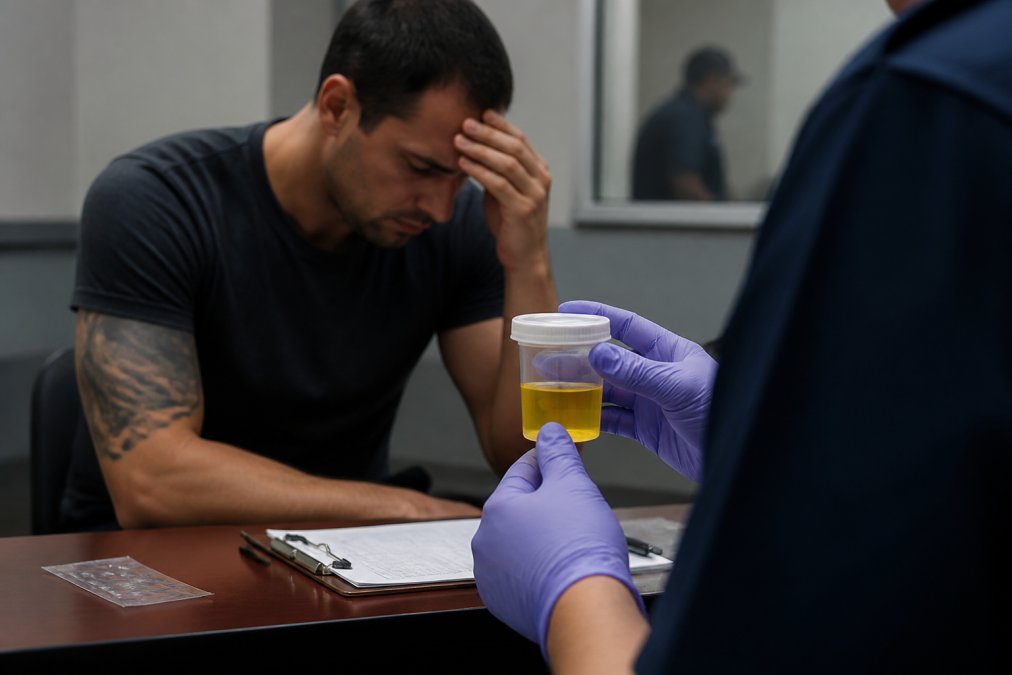
A failed drug test while on probation doesn't automatically mean you're going back to prison. But the consequences are serious, and how you respond in the first 48 hours can dramatically shape the outcome. This guide walks you through what actually happens when you fail a drug test on probation in California, from the probation officer's report to the revocation hearing, and the specific defenses and mitigation strategies that work.
Is a Failed Drug Test an Automatic Probation Violation?
No. A failed drug test on probation in California is classified as a technical violation, not an automatic trigger for revocation. Failing a test means you've broken a condition of your probation, but it doesn't automatically mean your probation is revoked or you're sent to prison.
According to the Council of State Governments Justice Center's 2017 analysis of California probation reform, probation currently sends nearly 70% fewer people to state prison than in 2008. California has shifted toward graduated sanctions for technical violations rather than automatic revocation. For a first-time failed drug test, most jurisdictions use a stepped approach: warning, increased testing, mandatory treatment referral, or short jail time before revocation is considered.
The probation officer has discretion in how to respond. Key variables are your probation terms, the substance involved, and your violation history. A first failed test for marijuana carries different weight than a first failed test for methamphetamine.
How the Probation Violation Hearing Process Works
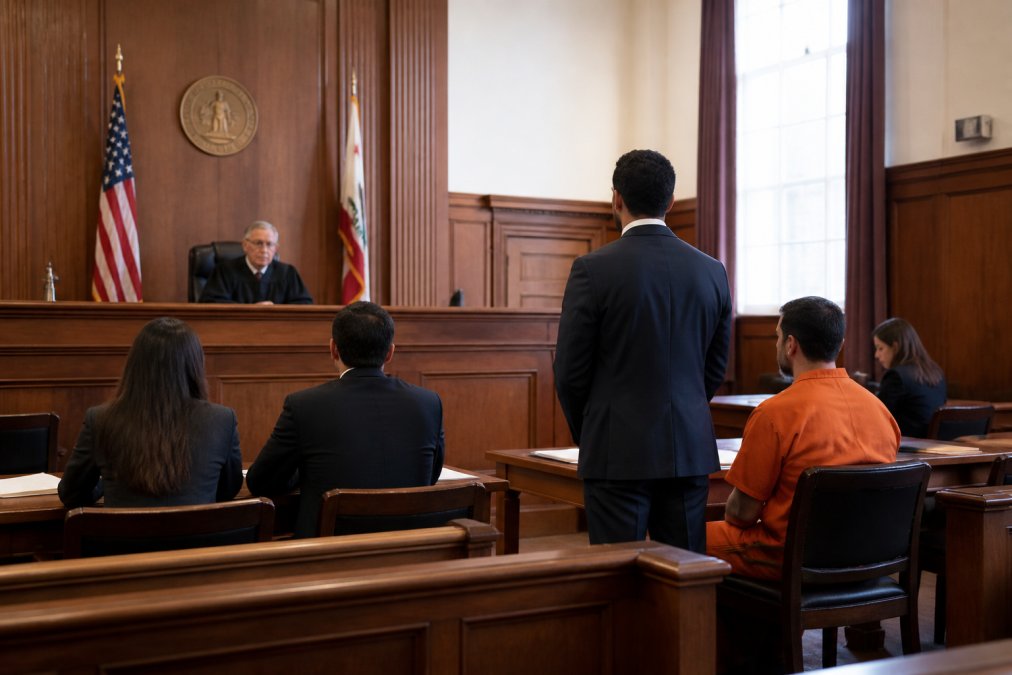
When your probation officer files a violation report, you'll receive notice of a probation revocation hearing. This is where the state attempts to prove you violated probation terms, and where your defense begins.
The Role of Your Probation Officer
Your probation officer is not your advocate. They're a state employee tasked with monitoring compliance and reporting violations. At the hearing, they'll testify about the failed test, your compliance history, and their recommendation, which carries significant weight with the judge.
The relationship you've built matters. If your officer has documented consistent compliance before the positive test, they're more likely to recommend sanctions short of revocation. If you have a history of missed appointments or prior violations, they'll use that to argue for stricter consequences.
The probation officer must present the failed drug test result as evidence. This is your opportunity to challenge the test itself through chain-of-custody issues, lab errors, or false positives.
Standards of Proof at Revocation Hearings
The standard of proof at a probation revocation hearing is "preponderance of the evidence," not "beyond a reasonable doubt." The judge only needs to find it more likely than not that you violated probation, a lower threshold than criminal guilt.
However, this also means smaller evidentiary problems can tip the scales. A chain-of-custody gap, a lab error, or contamination in the testing process becomes much more significant at this hearing. You have the right to legal counsel, can cross-examine the probation officer and lab technician, and can present your own evidence and witnesses. Many probation violations are overturned or reduced because defendants challenge the evidence directly.
Potential Consequences: From Warnings to Revocation
The consequences for a failed drug test on probation in California range from a formal warning to full probation revocation and imprisonment under your original sentence. Where you land depends on whether it's your first violation, the substance involved, your probation terms, and the judge's discretion.
Graduated Sanctions for First-Time Violations
California's probation reform movement has shifted the system toward graduated sanctions, a tiered response that reserves revocation for repeated or serious violations.
For a first failed drug test, typical outcomes include:
- Formal warning: The probation officer documents the violation but doesn't file a report.
- Increased supervision: More frequent check-ins, increased drug testing, or electronic monitoring.
- Mandatory substance abuse treatment: Enrollment in an outpatient or inpatient program, with probation extension to cover treatment duration.
- Short-term jail time: 30 to 90 days in county jail, after which you return to probation with modified terms.
- Probation extension: Your probation period is extended by 6 months to 2 years.
- Fines or restitution: Additional financial penalties on top of your original probation terms.
Southern California courts generally use graduated sanctions rather than immediate revocation. A judge will consider whether you've completed treatment before, whether you have employment and family support, and whether the violation appears to be a lapse or a pattern.
Repeat Violations and Escalating Penalties
A second failed drug test brings significantly harsher consequences. The probation officer will recommend revocation, and the judge is likely to grant it. A second violation typically results in 30 to 180 days in county jail with probation modification or full probation revocation and return to prison under your original sentence. By the third violation, revocation is nearly certain.
According to California's 2017 probation reform analysis, technical probation violations resulting in prison admission declined from 11,000 in 2011 to 5,000 in 2017. Repeat violations are the primary path to revocation.
Misdemeanor vs. Felony Probation Violation Penalties
Your original offense determines the severity of probation violation consequences.
Misdemeanor probation violations (Penal Code 1203.2):
- Maximum jail time: 1 year in county jail
- Probation can be revoked and replaced with jail time
- Violations rarely result in state prison time CBD and drug testing.
Felony probation violations (Penal Code 1203.2):
- You can be returned to prison to serve the remainder of your original sentence
- If you received a 3-year felony sentence and served 1 year on probation, violation can send you back for the remaining 2 years
- Probation officer's recommendation carries more weight in felony cases
A failed drug test on felony probation is therefore more serious than the same violation on misdemeanor probation. Your defense strategy must account for this difference. Mitigation becomes critical, you need to demonstrate rehabilitation, treatment engagement, and changed circumstances that justify probation continuation despite the violation.
Defenses for a Positive Drug Test on Probation
A positive drug test is not automatically conclusive proof of drug use. Multiple defenses exist, and many failed tests are overturned or reduced through effective legal challenge.
False Positives and Lab Testing Procedures
False positives in drug testing are real and documented. Between April and July 2024, nearly 6,000 drug tests in California prisons yielded false positives due to a lab error, according to reporting from the Los Angeles Times and San Quentin News. This illustrates a critical point: lab procedures matter, and errors happen.
Your defense strategy should include:
- Request the lab report: Examine the specific substance detected, the concentration level, and the testing method used
- Demand chain-of-custody documentation: Verify every person who handled your sample and when
- Hire an independent lab expert: Have your own expert review the lab's procedures and results
- Challenge the testing method: Some tests (immunoassay) are less reliable than others (GC-MS). If the initial test wasn't confirmed by a second method, that's a vulnerability
- Document medications and supplements: If you take prescription drugs or over-the-counter medications that could cause a false positive, document this before the hearing
Many probation violations are dismissed or reduced when defendants challenge the lab work directly.
Cannabis and State-Legalized Substances
California legalized recreational cannabis in 2016. Yet many probation terms still prohibit cannabis use. This creates a legal gray area that works in your favor.
Request a Free Case Evaluation →
If your positive test is for cannabis, your defense includes challenging the probation term itself as outdated, distinguishing between use and impairment, asserting medical necessity if you have a medical cannabis recommendation, and arguing proportionality, even if the term is valid, a cannabis violation is less serious than a hard drug violation and should trigger graduated sanctions, not revocation.
Courts in California increasingly recognize that cannabis prohibition on probation is anachronistic. A skilled defense attorney can use this shift to reduce consequences significantly.
Pre-Hearing Mitigation Steps
What you do between the failed test and the hearing matters enormously. Judges notice immediate action and interpret it as genuine rehabilitation.
Within 48 hours of a failed test:
- Enroll in a substance abuse treatment program
- Secure written proof of enrollment
- Document any medical conditions or medications that could explain the positive result
- Gather character references from employers, family, or community members
- Begin attending support group meetings (AA, NA, etc.) and get documentation
In the weeks before the hearing:
- Complete at least one month of treatment
- Maintain perfect compliance with all other probation terms
- Pass subsequent drug tests
- Secure employment or enrollment in school if not already working or studying
- Get letters of recommendation from your treatment counselor, employer, or community leader
These actions demonstrate to the judge that you're taking the violation seriously and taking responsibility for change.
What to Do Immediately After a Failed Drug Test
The first 48 hours after learning you've failed a drug test are critical. Your actions now will shape how your case unfolds.
Step 1: Do not panic or make statements Your probation officer may ask you to explain the positive result. Do not volunteer information beyond what's necessary. Anything you say can be used against you at the revocation hearing. If asked directly, say, "I'd like to speak with my attorney before answering questions," and stop talking.
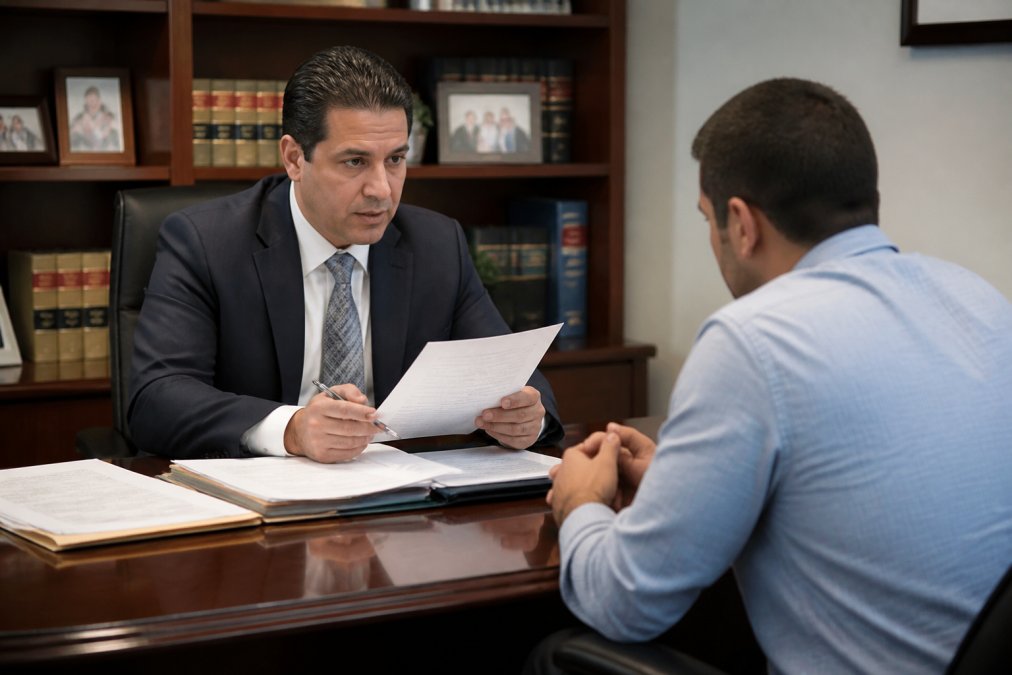
Step 2: Contact a criminal defense attorney immediately An attorney will review your probation terms, the test results, and your options before your officer files a formal violation report. In some cases, an attorney can negotiate with the probation department to avoid formal filing altogether.
Step 3: Request the lab report and testing documentation Your attorney will request the actual lab report, chain-of-custody documentation, and the testing procedures used. The earlier you review it, the earlier you can identify defenses or false positive possibilities.
Step 4: Enroll in treatment immediately Even if treatment hasn't been mandated, enrollment in a substance abuse program within 48 hours sends a powerful message. Get written proof of enrollment.
Step 5: Secure character references and documentation Begin gathering letters from employers, family members, community leaders, or treatment providers that speak to your character and commitment to rehabilitation.
Step 6: Prepare for the violation hearing Your attorney will file motions challenging the test if grounds exist, prepare your testimony, and develop a mitigation presentation.
Diversion Programs and Treatment-Based Probation
California recognizes that substance abuse is often a treatment issue, not purely a criminal one. Several programs allow you to address the underlying problem rather than face traditional probation revocation.
Proposition 36 (2000) requires courts to divert certain drug offenders into treatment instead of incarceration. If you're on probation for a drug offense and fail a test, you may be eligible for Proposition 36 treatment diversion if you haven't already used it.
Drug Court is available in many California counties, including San Fernando Valley Superior Court. Drug Court combines probation supervision with intensive treatment, regular court appearances, and judicial oversight. Participants who complete Drug Court successfully have charges dismissed or reduced. A failed drug test in Drug Court triggers treatment intensification, not automatic revocation.
AB 109 realignment and SB 678 reforms shifted responsibility for lower-level offenders from state prison to county probation, emphasizing rehabilitation and graduated sanctions. If you're under county probation supervision due to these reforms, your probation officer has explicit authority to use treatment-based alternatives to revocation.
The availability of these programs depends on your original offense, your probation terms, and whether you've already participated in similar programs. Your attorney will evaluate whether you qualify and whether diversion is strategically advantageous in your case.
Failing a drug test on probation is serious, but it's not the end of your case. California's probation system has evolved toward rehabilitation and graduated sanctions. A first-time violation rarely results in revocation if you respond strategically, with immediate legal counsel, treatment engagement, and effective challenge to the test evidence.
The difference between probation continuation and prison time often comes down to the quality of your defense and how quickly you act. If you're facing a probation violation hearing, request a free case evaluation today.
| Violation Stage | Typical Outcome | Timeline | Key Action |
|---|---|---|---|
| First positive test | Warning or treatment mandate | 2-4 weeks | Enroll in treatment immediately |
| Probation officer report filed | Violation hearing scheduled | 4-8 weeks | Secure legal representation |
| Violation hearing | Graduated sanction or revocation | 1 hearing date | Present mitigation evidence |
| Revocation decision | Probation continuation or prison time | Immediate | Appeal if revoked (rare) |
Frequently Asked Questions
Can I go to jail for a first-time failed drug test on probation?
A first-time failed drug test rarely results in immediate full revocation and jail time in California. Most courts use graduated sanctions, which may include increased testing, mandatory substance abuse treatment, probation extension, or short-term jail stays before full revocation is considered. However, jail time is possible depending on your probation terms, the severity of your case, and the judge's discretion. A probation officer typically reports the violation, but the court has discretionary authority to determine penalties based on mitigating factors and your compliance history.
Is a failed drug test considered a technical violation of probation?
Yes, a failed drug test is classified as a technical violation of probation terms, not a new criminal offense. Technical violations involve breaking the conditions of probation rather than committing a new crime. However, the consequences can still be serious. At a revocation hearing, the standard of proof is 'preponderance of the evidence,' which is lower than 'beyond a reasonable doubt' used in criminal trials. This means the prosecution only needs to show it's more likely than not that you failed the test, making conviction at a revocation hearing easier than in a criminal trial.
What defenses exist for a positive drug test on probation?
Several defenses may apply to a positive drug test on probation. False positives from lab errors are a significant defense; nearly 6,000 drug tests in California prisons yielded false positives between April and July 2024 due to lab procedures. If you used a state-legalized substance like cannabis, you may have a defense depending on your specific probation terms. Improper testing procedures, chain-of-custody violations, or contaminated samples can also be challenged. Pre-hearing mitigation steps, such as enrolling in treatment programs voluntarily, can influence judicial discretion at your revocation hearing. An attorney can examine the lab results, testing procedures, and your probation agreement to identify applicable defenses.
What happens at a probation violation hearing?
At a probation violation hearing, the probation officer presents evidence of the violation, and you have the right to respond and present your own evidence. Your attorney can cross-examine witnesses and challenge the evidence. The judge determines whether the violation occurred by a preponderance of the evidence standard. If the violation is proven, the judge decides the penalty using judicial discretion, considering factors like your compliance history, the severity of the violation, and mitigating circumstances. Possible outcomes include warnings, increased supervision, mandatory treatment, probation modification, jail time, or full revocation with the original sentence imposed.
This article was written using GrandRanker