 ultimate-guide
Domestic Violence Lawyer: Defense & Your Rights
Table of Contents
- What Constitutes Domestic Violence Under the Law
- Penal Code 273.5 Defense Strategies
- Consequences of a Domestic Violence Conviction
- Domestic Violence Restraining Order Defense
- False Allegations and Defending Your Innocence
- Why Legal Representation Matters in Domestic Violence Cases
- Your Next Steps: Getting a Free Case Evaluation
Last Updated: August 11, 2026
What Constitutes Domestic Violence Under the Law
Domestic violence encompasses a range of abusive behaviors between intimate partners, family members, or household members. It includes physical assault, threats, intimidation, emotional abuse, financial control, and sexual assault. The key element is a pattern of coercive control designed to dominate or intimidate another person.
Under California law, domestic violence is broadly defined to capture the full spectrum of abusive conduct. Physical violence is the most visible form, but emotional abuse, isolation from support systems, and threats carry equal legal weight. Many people don't realize that pushing, grabbing, or even threatening to harm someone qualifies as domestic violence, the absence of serious injury doesn't diminish the charge.
The law recognizes that abusive relationships create power imbalances. A single incident can constitute domestic violence if it involves force, threats, or coercion. Repeated patterns of controlling behavior, monitoring communications, restricting finances, preventing employment, also meet the legal definition. Understanding what the law considers domestic violence is critical because charges can carry life-altering consequences, regardless of whether visible injuries occurred.
Courts examine the context and history of the relationship when evaluating allegations. A heated argument differs legally from a pattern of intimidation. This distinction matters enormously in your defense strategy. A domestic violence lawyer can identify whether prosecutors are overreaching or mischaracterizing isolated incidents as systematic abuse.
Penal Code 273.5 Defense Strategies
California Penal Code Section 273.5 makes it illegal to inflict corporal injury on an intimate partner, spouse, or cohabitant. This statute carries serious penalties and is one of the most commonly charged domestic violence offenses. Understanding the specific language of the law is essential to mounting an effective defense.
Penal Code 273.5 requires proof of three elements: (1) you willfully inflicted corporal injury on an intimate partner, (2) the injury was not accidental, and (3) the injury caused a traumatic condition. Prosecutors must prove each element beyond a reasonable doubt. A skilled domestic violence lawyer examines whether the prosecution can actually meet this burden.
Common defense strategies against Penal Code 273.5 charges include challenging whether an injury actually occurred, arguing that any injury was accidental rather than willful, or demonstrating self-defense. Many cases hinge on credibility, whose account of events is more reliable? Evidence gathering becomes critical. Police reports, medical records, witness statements, and even surveillance footage can undermine the prosecution's narrative.
Self-defense is a powerful defense when the evidence supports it. If you reasonably believed force was necessary to protect yourself from imminent harm, you have the right to use reasonable force in response. This defense requires careful documentation and presentation. A domestic violence lawyer with courtroom experience knows how to frame self-defense evidence persuasively to judges and juries.
False allegations present another common scenario. Some accusers fabricate injuries, misrepresent the sequence of events, or weaponize the legal system during custody disputes or relationship breakups. Proving a false allegation requires meticulous investigation, inconsistencies in the accuser's statements, medical evidence that contradicts their claims, or witness testimony that contradicts their version of events. Van Nuys Crime provides aggressive, personalized representation for cases ranging from minor offenses to serious felonies, including drug, gang, and violent crimes.
Consequences of a Domestic Violence Conviction
A domestic violence conviction carries consequences far beyond criminal penalties. Employment, housing, custody rights, professional licenses, and immigration status can all be jeopardized. Understanding the full scope of consequences is why aggressive defense at the earliest stage is critical.
Criminal penalties for a Penal Code 273.5 conviction vary based on whether the charge is prosecuted as a misdemeanor or felony. A misdemeanor conviction typically results in up to one year in county jail, fines, and mandatory domestic violence counseling. A felony conviction can mean two to four years in state prison, depending on aggravating factors like prior convictions or serious injuries. Probation is common in both cases, and probation violations can trigger additional incarceration.
Beyond incarceration and fines, a domestic violence conviction triggers a mandatory restraining order prohibiting contact with the alleged victim. This order remains in place for years and can be extended. Violating a restraining order is itself a criminal offense that compounds your legal exposure. If children are involved, a conviction significantly impacts custody and visitation rights. Family courts view domestic violence convictions as evidence of unfitness as a parent, often resulting in supervised visitation or loss of custody entirely.
Professional and employment consequences are severe. Employers, professional licensing boards, and background check systems flag domestic violence convictions. Teachers, healthcare workers, social workers, and other professionals in regulated industries face license revocation. Even in unregulated fields, many employers terminate employees upon conviction or refuse to hire applicants with domestic violence records. Housing discrimination is also common, landlords routinely reject applicants with domestic violence convictions.
Immigration status is jeopardized for non-citizens. A domestic violence conviction can trigger deportation proceedings, making it impossible to obtain citizenship or renew visas. The immigration consequences alone justify investing in aggressive legal defense before conviction becomes final. A domestic violence lawyer understands how to negotiate reduced charges or alternative resolutions that avoid the most damaging collateral consequences.
Domestic Violence Restraining Order Defense
A restraining order is often issued early in a domestic violence case, sometimes before charges are even filed. Understanding how to defend against these orders is crucial because violating one, even unintentionally, creates additional criminal liability.
Restraining orders come in two forms: temporary restraining orders (TROs) issued without the accused present, and permanent protective orders issued after a hearing where both sides present evidence. A TRO can be issued based solely on the accuser's testimony and allegations. You typically have the right to a hearing within two weeks to contest the order, and this hearing is your opportunity to present your side of the story.
At the hearing, the burden is lower than in a criminal case. The court only needs to find "reasonable grounds" to believe abuse occurred, not proof beyond a reasonable doubt. This lower standard makes defending against restraining orders challenging but not impossible. Evidence of false allegations, inconsistencies in the accuser's account, or alternative explanations for any injuries can persuade a judge to deny or modify the order.
A domestic violence restraining order defense requires presenting credible evidence and testimony. Witnesses who can attest to your character or contradict the accuser's version of events are valuable. Documentation, text messages, emails, medical records, photographs, that supports your account carries significant weight. Many people underestimate the importance of this hearing, treating it as secondary to the criminal case. In reality, a successful restraining order defense can undermine the prosecution's entire case by demonstrating that the accuser's credibility is questionable.
Modification or termination of an existing restraining order is possible if circumstances change. If the accuser recants, if new evidence emerges, or if the original order was based on false allegations, you can petition the court to modify or lift the order. Van Nuys Crime provides aggressive, personalized representation for cases ranging from minor offenses to serious felonies, including drug, gang, and violent crimes.
Request a Free Case Evaluation →
False Allegations and Defending Your Innocence
False allegations in domestic violence cases are more common than many people realize. Motivations vary, revenge during custody disputes, financial incentives, mental health issues, or simply regret about a consensual interaction. Regardless of the motivation, a false allegation can destroy your life if you don't mount an aggressive defense.
Defending against false allegations requires a different investigative approach than defending against legitimate claims. The goal is to demonstrate that the accuser's account is unreliable or fabricated entirely. Inconsistencies in their statements, medical evidence that contradicts their claims, witness testimony that supports your version, and documentation that undermines their narrative are all critical.
A common mistake is assuming that the absence of visible injuries proves innocence. Prosecutors don't need visible injuries to secure a conviction, they only need to prove that corporal injury occurred. An accuser can claim injuries that don't exist or were self-inflicted, and without careful investigation, these claims go unchallenged. A domestic violence lawyer digs into medical records, police reports, and witness statements to expose these inconsistencies.
Motivation is also relevant. If the accuser has a financial incentive to make the allegation, custody use, insurance fraud, or retaliation, this context matters. Text messages, emails, or witness testimony revealing the accuser's motive to fabricate can be devastating to their credibility. Many false allegations unravel when examined closely, but only if someone is actively investigating rather than accepting the prosecution's narrative at face value.
Prior false allegations by the accuser are particularly powerful evidence. If the accuser has made similar allegations against other people, this pattern demonstrates a history of fabrication. Discovering this history requires thorough investigation and knowledge of how to access prior police reports and court records. Van Nuys Crime's seasoned team of attorneys provides aggressive, personalized representation for cases ranging from minor offenses to serious felonies, including drug, gang, and violent crimes.
Why Legal Representation Matters in Domestic Violence Cases
A domestic violence charge is not something to handle alone or with an inexperienced attorney. The intersection of criminal law, family law, immigration consequences, and collateral damage makes these cases uniquely complex. An experienced domestic violence lawyer protects your rights, identifies weaknesses in the prosecution's case, and fights for the best possible outcome.
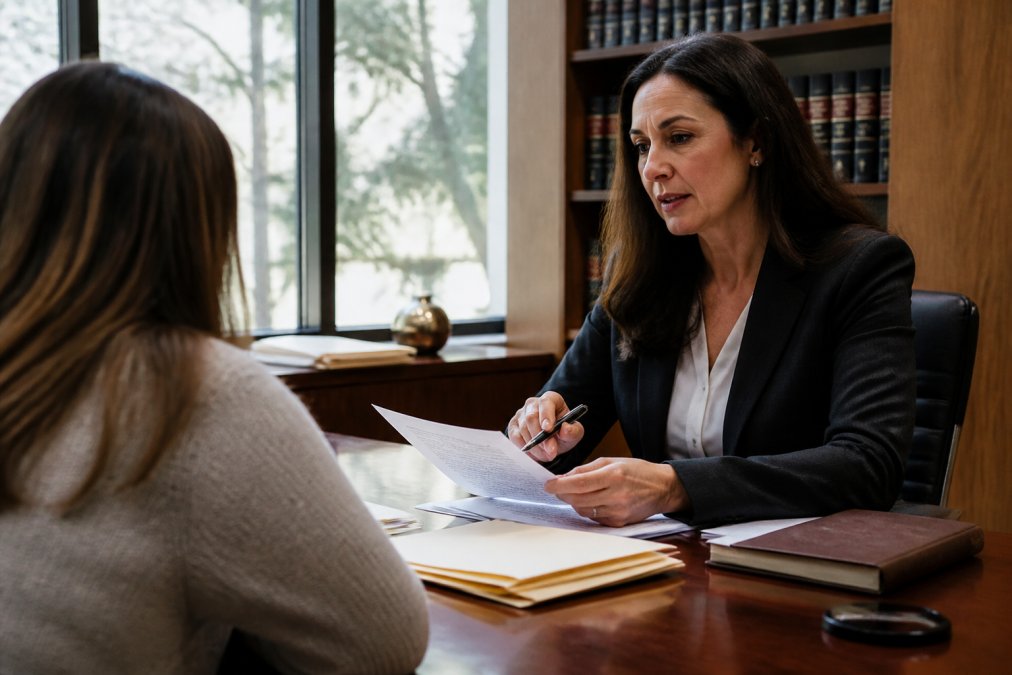
The prosecution has significant resources, police investigators, forensic experts, and the full weight of the state's authority. Without skilled legal representation, you're outmatched. An attorney levels the playing field by conducting independent investigations, challenging police procedures, cross-examining witnesses, and identifying evidence that supports your defense. Many cases turn on procedural violations or investigative shortcuts that only an experienced lawyer catches.
Negotiation is another critical function. Not every case should go to trial. An experienced domestic violence lawyer evaluates whether the prosecution's evidence is strong or weak, assesses your trial risks, and negotiates strategically for reduced charges, dismissals, or alternative resolutions. Some cases benefit from diversion programs that allow charges to be dismissed upon completion of counseling or anger management. Others warrant aggressive trial preparation because the evidence is weak. Only an attorney with deep courtroom experience can make this assessment accurately.
The early stages of a case are crucial. Decisions made at arraignment, bail hearings, and restraining order hearings set the trajectory for everything that follows. Mistakes at these early stages, accepting bail conditions that restrict your freedom, failing to challenge a restraining order, or waiving rights, can haunt you throughout the case. Van Nuys Crime prioritizes early intervention to protect your rights and position your case for the best outcome.
Communication and transparency matter enormously. You deserve to understand what's happening in your case, what your options are, and what each decision means for your future. An attorney who keeps you informed and involved in strategy decisions ensures you're making educated choices about your defense. The relationship between attorney and client must be built on trust, especially when facing life-altering charges.
Your Next Steps: Getting a Free Case Evaluation
If you're facing a domestic violence charge, the time to act is now. Every day that passes is an opportunity for evidence to be lost, witnesses' memories to fade, or the prosecution to build a stronger case. A free case evaluation with an experienced domestic violence lawyer can clarify your situation, explain your options, and outline a path forward.

During a free consultation, you'll discuss the specific facts of your case, the charges you're facing, and the potential consequences. An attorney will explain your rights, answer your questions, and assess the prosecution's evidence. This conversation is confidential and gives you the information you need to make informed decisions about your defense. Many people delay seeking representation because they're uncertain about cost or unsure whether they have a viable defense. A free evaluation removes these barriers.
Van Nuys Crime offers free case evaluations specifically designed for individuals facing domestic violence charges in the area. The firm combines decades of courtroom experience with thorough investigation and aggressive defense strategies. When you contact Van Nuys Crime, you're speaking with attorneys who understand the local court system, know the prosecutors and judges, and have a proven track record of achieving favorable outcomes for clients facing serious charges.
The stakes in a domestic violence case are too high to delay. A conviction can cost you your freedom, your family relationships, your career, and your reputation. An experienced domestic violence lawyer fights to protect all of these. Request a free case evaluation today and take the first step toward defending your rights and your future.
Facing domestic violence allegations can feel overwhelming, especially when you're uncertain about the legal process or the long-term consequences. Van Nuys Crime provides aggressive, personalized legal representation designed to protect your freedom and reputation. With deep courtroom experience, thorough investigation capabilities, and a commitment to identifying weaknesses in the prosecution's case, the firm works to negotiate reduced charges, secure dismissals, or achieve the best possible trial outcome. Your case deserves focused attention and strong advocacy from an attorney who understands the Van Nuys court system and is prepared to fight relentlessly for your future. Contact Van Nuys Crime for a free case evaluation and learn how experienced legal representation can change the trajectory of your case.
Frequently Asked Questions
What are the penalties for a domestic violence conviction?
Penalties depend on whether the charge is charged as a misdemeanor or felony. Misdemeanor convictions typically result in up to one year in county jail, fines up to $1,000, mandatory counseling programs, and a protective order. Felony convictions carry more severe consequences, including state prison time, higher fines, loss of firearm rights, and lasting impacts on custody and employment. A skilled domestic violence lawyer can work to reduce charges or secure alternative sentencing options like diversion programs.
Can a domestic violence charge be dismissed?
Yes, dismissals are possible depending on the evidence and circumstances. Common grounds for dismissal include insufficient evidence, violations of your constitutional rights during arrest or investigation, false allegations, or witness credibility issues. Your attorney will examine police reports, witness statements, and physical evidence to identify weaknesses in the prosecution's case. Many cases are also resolved through negotiation for reduced charges or alternative resolutions like mental health diversion programs.
What should I do if I am falsely accused of domestic violence?
Immediately contact a criminal defense attorney before speaking to police or prosecutors. Do not attempt to contact the alleged victim or witnesses. Gather evidence that supports your innocence: text messages, emails, witness statements, medical records, or surveillance footage. Document your timeline and any inconsistencies in the accuser's story. Your attorney will investigate the allegations thoroughly, challenge false evidence, and build a defense strategy centered on your innocence and the accuser's credibility issues.
How can a domestic violence lawyer help with a restraining order?
A domestic violence lawyer can represent you at restraining order hearings to challenge the order's necessity and scope. They will cross-examine the accuser, present evidence of false or exaggerated claims, and argue for dismissal or modification of terms. Even if an order is issued, your attorney can file motions to modify or terminate it once circumstances change. Early legal intervention is critical, restraining orders affect employment, housing, and custody, making skilled defense essential.
This article was written using GrandRanker