 ultimate-guide
Bail Procedures at Van Nuys Courthouse: A 2026 Guide
Table of Contents
- Understanding the Bail Process in California
- How to Post Bail in California
- Bail Schedule for Los Angeles County
- How to Request a Bail Reduction Hearing
- Van Nuys Courthouse Location and Procedures
- Post-Bail Obligations and Compliance
- Recent Bail Reform and Your Rights Under California Law
- Conclusion
Last Updated: August 24, 2026
Understanding the Bail Process in California
When arrested, the bail system determines whether you'll be released pending trial or held in custody. Understanding how bail procedures work at Van Nuys Courthouse is critical if you're facing charges in the San Fernando Valley. According to the California Supreme Court's 2026 decision in In Re Kowalcyzk, bail procedures have shifted significantly toward individualized risk assessments rather than wealth-based detention. Understanding the process can mean the difference between staying with your family or sitting in jail while your case proceeds.
What Happens After Arrest
After arrest, you're transported to the Van Nuys Division station or Los Angeles County jail system. During booking, officers record your information, photograph you, collect fingerprints, and conduct a background check, typically 2-4 hours.
Within 72 hours of arrest (or the next court day if arrested on a weekend), you must be brought before a judge for your first appearance. According to Los Angeles County Probation Department procedures, the Bail Deviation Program conducts telephonic interviews, background checks, and reference verification to determine your suitability for release. If you have stable employment, family ties to the area, no prior failures to appear, and minimal criminal history, you're far more likely to be released on your own recognizance (OR) or on a lower bail amount.
The First Appearance and Bail Hearing
Your first appearance is your bail hearing. The judge will consider the nature and severity of charges, your criminal record, employment and family ties, history of failing to appear, and community ties.
At Van Nuys Courthouse, judges follow the Pre-Arraignment Release Protocols (PARP), which took effect in October 2023. Under PARP, most non-violent, non-serious felonies and misdemeanors carry a $0 bail recommendation, meaning you could be released on your own recognizance without posting money. Per the 2026 Kowalcyzk ruling, bail cannot be set at an amount you cannot afford. Having a criminal defense attorney makes a tangible difference, as Van Nuys Crime attorneys know how judges at Van Nuys Courthouse approach bail arguments.
How to Post Bail in California
Once bail is set, you have three primary options: post cash bail yourself, use a bail bond agent, or request release on your own recognizance.
Cash Bail vs. Bail Bonds
Cash bail means paying the full bail amount directly to the court. If bail is set at $10,000, you pay $10,000 in cash or certified check. Once posted, you're released from custody. If you appear at all required court dates, the bail is returned to you at the end of the case (minus any court costs or fines).
Bail bonds are the alternative most people use. You pay a bail bond agent a non-refundable premium, typically 10% of the bail amount. For a $10,000 bail, you'd pay $1,000 to the bail agent, who then posts a surety bond with the court. If you fail to appear, the bail agent is liable for the full amount and will pursue you legally to recover it.
Own Recognizance Release
Own recognizance (OR) release is the best outcome: you're released without posting any money, simply promising to appear at court. Under California law and the PARP framework, judges must consider OR release for most defendants. To strengthen your OR release argument, gather evidence of community ties: employment letters, lease or mortgage documents, family relationships in the area, and community involvement.
Bail Schedule for Los Angeles County
Los Angeles County maintains a bail schedule that provides recommended bail amounts for different offenses. This schedule serves as a starting point for judges, though they can deviate based on individual circumstances.
How Bail Amounts Are Determined
The bail schedule categorizes offenses by severity. Misdemeanors typically carry $1,000 to $5,000 bail depending on the specific charge. Felonies vary widely: non-violent felonies might start at $5,000 to $25,000, while serious or violent felonies can exceed $50,000. According to Future Bail Bonds research on California bail statistics, the average bail amount in California is $50,000, which is five times higher than the national average.
The bail schedule is public information available from the Van Nuys Courthouse clerk's office or online through the Los Angeles Superior Court website. However, the schedule is a guideline, not a fixed rule. Judges routinely adjust bail based on factors specific to your case.
Factors Judges Consider at Van Nuys
When setting bail at Van Nuys Courthouse, judges evaluate:
- Nature of the charges: Violent crimes, sexual offenses, and serious felonies result in higher bail. Misdemeanors and non-violent felonies typically carry lower amounts.
- Criminal history: Prior convictions, especially for similar offenses, increase bail. A clean record works in your favor.
- Failure to appear history: Prior failures to appear increase bail as a flight risk indicator.
- Employment and stability: Steady employment and stable housing suggest community roots and likelihood to appear.
- Family ties: Family members living in the area, especially dependent children, strengthen arguments for lower bail or OR release.
- Ties to the community: Homeownership, long-term residence, volunteer work, or community involvement matter.
- Substance abuse or mental health issues: These can increase bail if they suggest danger to yourself or others.
- Public safety: If the judge believes you pose danger to the community, bail will be set higher or you may be held without bail.
Judge Sergio C. Tapia II, Presiding Judge at the Superior Court of Los Angeles County, stated in 2025: "Having judges conduct individualized risk assessments for release decisions rather than relying on an arrested individual's ability to pay money bail has improved public safety."
How to Request a Bail Reduction Hearing
If bail is set at an amount you cannot afford, you have the right to challenge it. A bail reduction hearing is your opportunity to present evidence that the amount is excessive or unaffordable.
When You Can Challenge Bail
You can request a bail reduction hearing at any point after your initial bail hearing with no waiting period. File a motion for bail reduction with the court in writing, including facts supporting your argument: employment verification, family ties, community connections, and evidence of stability.
What to Prepare for Your Hearing
Gather documentation demonstrating you're not a flight risk and pose no danger to the community:
- Employment letter: Position, salary, and length of employment
- Lease or mortgage documents: Proof of stable housing
- Family documentation: Birth certificates or custody documents showing family members in the area
- Character references: Letters from employers, community members, or clergy
- Financial records: Bank statements or tax returns showing stability
- Community involvement: Documentation of volunteer work, club memberships, or participation
At Van Nuys Courthouse, judges are receptive to bail reduction arguments when supported by solid evidence. Van Nuys Crime attorneys know how to frame these arguments persuasively based on the specific judge and charges.
Van Nuys Courthouse Location and Procedures
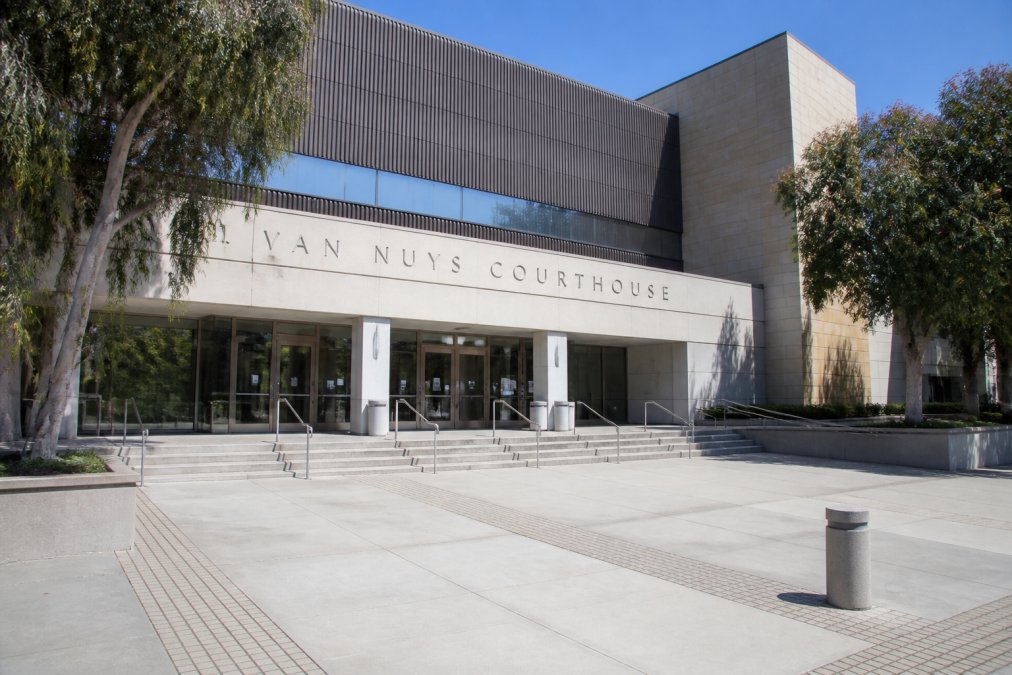
Van Nuys Courthouse is located at 14400 Erwin Street, Van Nuys, CA 91401. This is the primary courthouse serving the San Fernando Valley and handles criminal cases for the Van Nuys Division.
Finding the Bail Deviation Program
The Los Angeles County Probation Department operates a Bail Deviation Program at 7555 Van Nuys Boulevard, 4th Floor, Van Nuys, CA 91405. This program conducts risk assessments and can recommend bail reductions or release on your own recognizance. They'll conduct a telephonic interview, verify your information, and prepare a report for the judge. This report carries weight in bail hearings because it's an objective assessment by probation professionals. record retrieval services.
Tracking Your Case Status
Once released on bail, monitor your case status through the Los Angeles Superior Court website by searching your case number or defendant name. You can also call the Van Nuys Courthouse criminal clerk's office for information about upcoming court dates, bail condition changes, and case updates. Missing a court date is a serious violation that can result in bail forfeiture and a bench warrant.
| Element | Details |
|---|---|
| Courthouse Address | 14400 Erwin Street, Van Nuys, CA 91401 |
| Bail Deviation Program | 7555 Van Nuys Boulevard, 4th Floor, Van Nuys, CA 91405 |
| Case Tracking | Los Angeles Superior Court website or call courthouse clerk |
| Bail Schedule | Available at courthouse or online via LA Superior Court |
| PARP Guidelines | Apply to most non-violent and non-serious felonies |
Post-Bail Obligations and Compliance
Posting bail doesn't end your case, it means you've been released pending trial with strict obligations. Violating these conditions can result in bail revocation and a new arrest warrant.
Understanding Release Conditions
When released on bail, the judge imposes release conditions. Standard conditions typically include:
Request a Free Case Evaluation →
- Appearing at all court dates: Non-negotiable. Missing even one hearing results in bail forfeiture and a bench warrant.
- Not contacting victims or witnesses: Any contact, direct, indirect, through a third party, or via social media, is a violation.
- Not possessing weapons: You may be prohibited from owning or possessing firearms or other weapons.
- Maintaining employment: Some judges require you to maintain or actively seek employment.
- Substance abuse restrictions: You may be prohibited from using alcohol or drugs, with random testing required.
- Travel restrictions: You may be prohibited from leaving the state or required to notify the court of travel.
- Residence requirements: You may be required to reside at a specific address.

Violate any condition and the prosecution can file a motion to revoke your bail. You'll be arrested again and held pending a hearing on the violation. Compliance is absolutely critical.
What Happens if You Fail to Appear
Failing to appear at a scheduled court date is one of the most serious bail violations. When you fail to appear (FTA), the judge immediately issues a bench warrant for your arrest. Your bail is forfeited, if you posted cash bail, it's gone. If you used a bail bond agent, the agent is liable for the full amount and will pursue you aggressively.
An FTA also results in additional criminal charges. You can be charged with failure to appear, which is itself a crime, adding to your legal exposure and complicating your case. If you miss a court date, contact your attorney immediately.
Recent Bail Reform and Your Rights Under California Law
California's bail system has undergone significant reform. The 2021 California Supreme Court decision in In re Humphrey established that bail cannot be set at an amount a person cannot afford. The 2026 Kowalcyzk decision further clarified these protections.
Under Kowalcyzk, unless you're charged with specific serious offenses (capital cases, felonies involving violence likely to result in great bodily harm, sexual assault, or felony threats of violence), you cannot be held without bail. For all other offenses, bail must be set at an amount reasonably attainable.
Your rights under current law include:
- The right to a bail hearing where you can present evidence of community ties
- The right to counsel (a public defender if you cannot afford an attorney)
- The right to request a bail reduction hearing at any time
- The right to be released on your own recognizance if the judge determines bail is unnecessary
- The right to challenge bail as excessive or unaffordable
- The right to due process and equal protection under the law
Van Nuys Crime understands these rights intimately and fights to ensure they're protected in every case. From your first appearance through trial, having an attorney who knows the Van Nuys Courthouse system and the judges who preside there makes a measurable difference in bail outcomes.
Understanding bail procedures at Van Nuys Courthouse requires knowledge of both the legal framework and the practical realities of how the system operates locally. The bail decision will profoundly affect your life, whether you can work, support your family, and prepare your defense while free, or whether you'll be locked in jail pending trial. Van Nuys Crime has spent decades fighting for clients' rights at every stage of the bail process. Request a free case evaluation today and let our team protect your freedom and your future.
=== FAQ ANSWERS (audit these too, same rules) ===
[1] Q: How long am I held in custody before a bail hearing at Van Nuys Courthouse? A: You must be brought before a judge for your first appearance without unnecessary delay, typically within 72 hours of arrest. At this hearing, the judge determines whether to set bail, release you on your own recognizance, or remand you into custody. The exact timing depends on when you were arrested and court availability, but the 72-hour window is a constitutional requirement to protect your due process rights.
[2] Q: What's the difference between cash bail and a bail bond in California? A: Cash bail means paying the full bail amount directly to the court; if you appear at all court dates, the money is returned. A bail bond involves paying a premium (typically 10% of the bail amount) to a bail agent, who guarantees the full amount. The premium is non-refundable. Bail bonds are useful when you cannot afford to post cash bail, but they cost more overall. Understanding which option suits your situation is critical to minimizing financial burden while securing pretrial release.
[3] Q: Can I request a bail reduction hearing if the amount set seems too high? A: Yes. Under California law, particularly following the 2026 In Re Kowalcyzk decision, bail must be set at an amount reasonably attainable for you. You can file a motion to reduce bail and request a bail reduction hearing. You'll need to present evidence of your financial situation, ties to the community, employment, and criminal history. Having an attorney prepare your case significantly improves your chances of success, as judges consider factors like your likelihood to appear in court and public safety risk.
[4] Q: What happens if I fail to appear in court after posting bail? A: Failure to appear (FTA) has serious consequences. The court will issue a bench warrant for your arrest, and you forfeit your bail money or bail bond premium. Your bail agent may also pursue you for the full bail amount. An FTA can result in additional criminal charges and signals to the judge that you're a flight risk, making future bail more restrictive or impossible. If you cannot make a court date, contact your attorney immediately to request a continuance or clarify your obligations.
[5] Q: How do I find out the bail amount for someone in custody at Van Nuys? A: You can contact the Los Angeles County Bail Deviation Program at 7555 Van Nuys Blvd., 4th floor, Van Nuys, CA 91405. They conduct telephonic interviews and can provide bail information. Alternatively, you can search the Los Angeles Superior Court's online case management system or call the Van Nuys Courthouse directly. Having the defendant's name and booking number speeds up the process. An attorney can also quickly access this information and advise on your options.
[6] Q: What is own recognizance release, and can I get it at Van Nuys Courthouse? A: Own recognizance (OR) release means the judge releases you without requiring bail, you sign a promise to appear at all court dates. Judges grant OR release when they determine you're not a flight risk and pose no public safety threat. Factors include your ties to the community, employment, family, and criminal history. Under California's 2026 bail reforms, OR release is increasingly available for non-violent and non-serious felonies. An attorney can advocate for OR release, presenting evidence of your stability and reliability to the judge.
[7] Q: What does bail schedule mean, and how is it used in Los Angeles County? A: A bail schedule is a standardized list of recommended bail amounts for specific charges. In Los Angeles County, judges use the bail schedule as a starting point when setting bail at your first appearance. However, judges retain discretion to adjust bail based on your individual circumstances, employment, criminal history, ties to the community, and flight risk. Understanding the bail schedule for your charges helps you anticipate what the judge might set and prepare arguments for reduction if needed.
Frequently Asked Questions
Q: How long am I held in custody before a bail hearing at Van Nuys Courthouse?
A: You must be brought before a judge for your first appearance without unnecessary delay, typically within 72 hours of arrest. At this hearing, the judge determines whether to set bail, release you on your own recognizance, or remand you into custody. The exact timing depends on when you were arrested and court availability, but the 72-hour window is a constitutional requirement to protect your due process rights.
Q: What's the difference between cash bail and a bail bond in California?
A: Cash bail means paying the full bail amount directly to the court; if you appear at all court dates, the money is returned. A bail bond involves paying a premium (typically 10% of the bail amount) to a bail agent, who guarantees the full amount. The premium is non-refundable. Bail bonds are useful when you cannot afford to post cash bail, but they cost more overall. Understanding which option suits your situation is critical to minimizing financial burden while securing pretrial release.
Q: Can I request a bail reduction hearing if the amount set seems too high?
A: Yes. Under California law, particularly following the 2026 *In Re Kowalcyzk* decision, bail must be set at an amount reasonably attainable for you. You can file a motion to reduce bail and request a bail reduction hearing. You'll need to present evidence of your financial situation, ties to the community, employment, and criminal history. Having an attorney prepare your case significantly improves your chances of success, as judges consider factors like your likelihood to appear in court and public safety risk.
Q: What happens if I fail to appear in court after posting bail?
A: Failure to appear (FTA) has serious consequences. The court will issue a bench warrant for your arrest, and you forfeit your bail money or bail bond premium. Your bail agent may also pursue you for the full bail amount. An FTA can result in additional criminal charges and signals to the judge that you're a flight risk, making future bail more restrictive or impossible. If you cannot make a court date, contact your attorney immediately to request a continuance or clarify your obligations.
Q: How do I find out the bail amount for someone in custody at Van Nuys?
A: You can contact the Los Angeles County Bail Deviation Program at 7555 Van Nuys Blvd., 4th floor, Van Nuys, CA 91405. They conduct telephonic interviews and can provide bail information. Alternatively, you can search the Los Angeles Superior Court's online case management system or call the Van Nuys Courthouse directly. Having the defendant's name and booking number speeds up the process. An attorney can also quickly access this information and advise on your options.
Q: What is own recognizance release, and can I get it at Van Nuys Courthouse?
A: Own recognizance (OR) release means the judge releases you without requiring bail, you sign a promise to appear at all court dates. Judges grant OR release when they determine you're not a flight risk and pose no public safety threat. Factors include your ties to the community, employment, family, and criminal history. Under California's 2026 bail reforms, OR release is increasingly available for non-violent and non-serious felonies. An attorney can advocate for OR release, presenting evidence of your stability and reliability to the judge.
Q: What does bail schedule mean, and how is it used in Los Angeles County?
A: A bail schedule is a standardized list of recommended bail amounts for specific charges. In Los Angeles County, judges use the bail schedule as a starting point when setting bail at your first appearance. However, judges retain discretion to adjust bail based on your individual circumstances, employment, criminal history, ties to the community, and flight risk. Understanding the bail schedule for your charges helps you anticipate what the judge might set and prepare arguments for reduction if needed.
This article was written using GrandRanker