 ultimate-guide
After Being Arrested in Van Nuys: Your Rights & Next Steps
Table of Contents
- Immediate Actions After Being Arrested in Van Nuys
- Understanding the Van Nuys Jail Booking Process
- Your Constitutional Rights During Custody
- Contacting Family and Legal Counsel From Detention
- How Bail and Release Conditions Work
- The California Arraignment Process and Court Appearance
- Hiring a Criminal Defense Attorney in Van Nuys
- Gathering Case Documentation and Evidence
After Being Arrested in Van Nuys: Your Rights & Next Steps
Last Updated: August 2, 2026
Being arrested is disorienting and frightening. Understanding what to do immediately after arrest and knowing your constitutional protections can mean the difference between a case that spirals and one you can control. The steps you take in the first hours will shape everything that follows.
Immediate Actions After Being Arrested in Van Nuys
The moments immediately following arrest are critical. Your decisions in the first hour will either strengthen your position or undermine it.
Exercise Your Right to Remain Silent
The Fifth Amendment protects you from self-incrimination. This protection is absolute, you do not need to explain why you're exercising it, and silence cannot be used against you in court. Law enforcement is trained in interrogation techniques designed to elicit statements. They may claim cooperation will bring leniency or that silence looks guilty. These are not reasons to talk.
The correct approach is direct: "I want to exercise my right to remain silent and speak to an attorney." Say this clearly, once. Then stop talking entirely.
Do Not Resist Arrest
Resisting arrest, even passively, creates additional criminal charges. Your job is survival and clarity. Comply with physical commands, keep your hands visible, and do not argue about the legality of the arrest, that argument happens in court with your attorney. Compliance is a tactical decision that preserves your legal position.
Request Legal Counsel Immediately
As soon as you are in custody and before any questioning begins, state clearly: "I want to speak to an attorney." This invokes your Sixth Amendment right to legal representation. Once you make this request, all questioning must stop. If you cannot afford an attorney, you have the right to a public defender.
Understanding the Van Nuys Jail Booking Process
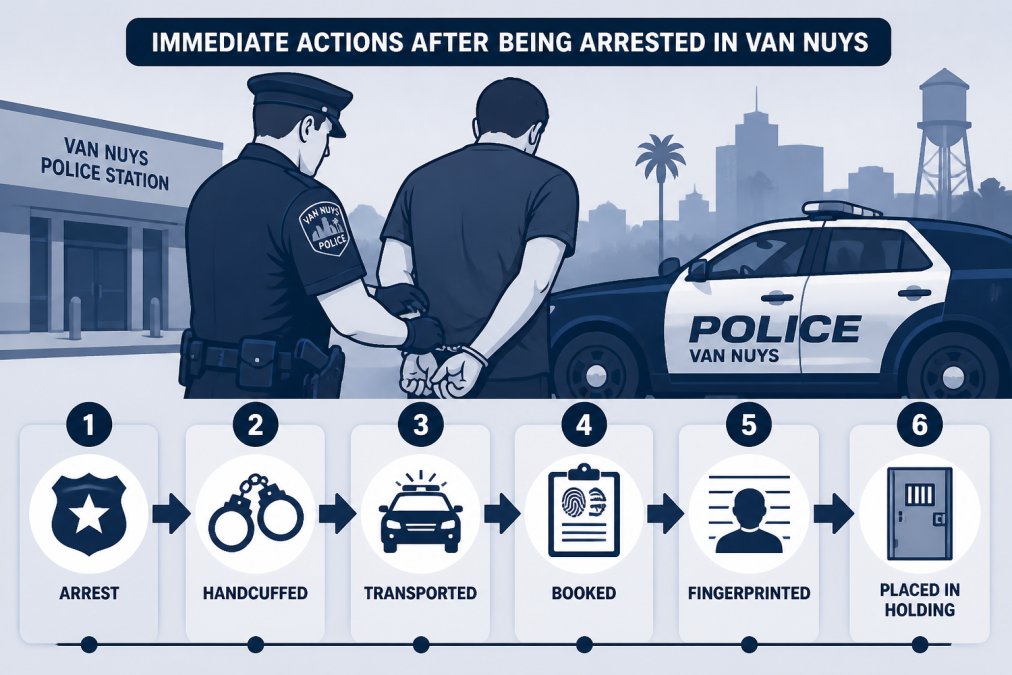
After arrest, you'll be transported to Van Nuys jail for booking, typically taking 2-4 hours. Booking is the administrative process that formally documents your arrest. You'll provide personal information, be photographed, fingerprinted, and background-checked. Answer questions about medical conditions, medications, and mental health truthfully, they affect your safety in custody.
Your property will be inventoried and stored. Everything taken from you will be documented. You'll receive a property receipt; keep it as your record. Do not sign anything except property receipts and booking forms. Do not sign a consent to search or any document that could be interpreted as an admission.
How to Search for Someone in Van Nuys Jail
If you're looking for someone arrested, the Van Nuys jail inmate search is available through the Los Angeles County Sheriff's Department website. You can search by name, booking number, or date of arrest. The search shows custody status, charges, bail amount, and next court date.
To search:
- Visit the Los Angeles County Sheriff's Department inmate information system
- Enter the person's full name or booking number
- Review custody status and charges
- Note the next court appearance date and bail information
If the person is not yet in the system, wait 2-4 hours; booking information updates with a delay.
Your Constitutional Rights During Custody
Your rights do not disappear when arrested. The Fifth Amendment, Sixth Amendment, and due process protections remain in effect throughout custody and court proceedings.
Fifth Amendment Protection Against Incriminating Statements
The Fifth Amendment protects you from being forced to incriminate yourself. Police must inform you of your rights before questioning through a Miranda warning. However, Miranda warnings are not required in all situations, they apply only to custodial interrogation designed to elicit incriminating information.
The safest approach is absolute: do not make any statements without an attorney present, regardless of whether a Miranda warning was given.
Attorney-Client Privilege and Legal Representation
Once you request an attorney, communications between you and that attorney are protected by attorney-client privilege. Officers cannot listen to your conversations with your attorney, and your attorney cannot be forced to disclose what you tell them. You can tell your attorney everything, the truth, your fears, your mistakes, your version of events, without fear it will be used against you.
If you cannot afford an attorney, you have the right to a public defender. Public defenders are attorneys who represent people who cannot afford private counsel and have the same ethical obligations as private attorneys.
Contacting Family and Legal Counsel From Detention
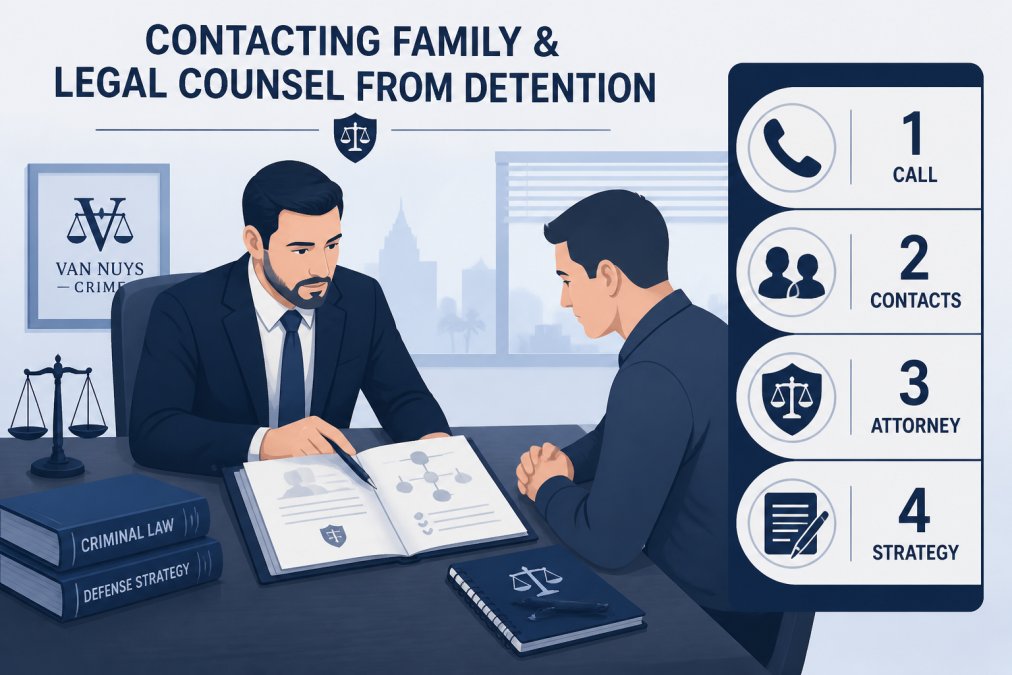
You have the right to make phone calls from custody. Your first call should be to an attorney or a trusted family member who can contact an attorney. Keep the call brief: provide your location, booking number, and charges.
Do not discuss your case over the phone with anyone except your attorney. Jail phone calls are often recorded, and statements made to family members are not privileged. Assume everything you say is being monitored.
Family members can visit during designated visiting hours, typically afternoon and early evening on weekdays and weekends. Do not discuss your case during visits. Family members can help arrange bail, locate an attorney, and gather evidence for your defense.
How Bail and Release Conditions Work
Bail is the amount of money the court sets to secure your release while your case is pending. The court sets bail based on charge severity, criminal history, community ties, employment status, and flight risk.
You have several options for posting bail:
Cash bail: You or a family member pays the full bail amount directly to the court. Once your case is resolved, the money is returned (minus any fines or restitution).
Bail bond: You work with a bail bondsman, who posts bail on your behalf in exchange for a non-refundable fee, typically 10-15% of the bail amount.
Release on own recognizance (ROR): The court releases you without requiring bail, based on your ties to the community and promise to appear at court dates.
Own recognizance with conditions: Similar to ROR, but with conditions such as electronic monitoring, drug testing, or restrictions on travel or contact with certain people.
Your attorney can request a bail reduction at your arraignment if the initial bail amount is too high.
If you use a bail bondsman, you'll sign a contract agreeing to appear at all court dates. Release conditions typically include appearing at all scheduled court dates, not contacting alleged victims or witnesses, maintaining employment or school enrollment, submitting to drug testing, and restrictions on travel. Violating release conditions can result in additional charges and revocation of bail.
The California Arraignment Process and Court Appearance
Your first court appearance is the arraignment, typically held within 72 hours of arrest. California law requires that you be brought before a judge within 72 hours of arrest for a probable cause hearing and arraignment.
At the arraignment, you will be informed of the charges, your rights, the bail amount or release conditions, your right to an attorney, and the date of your next court appearance. The entire process typically lasts 5-15 minutes.
Before your arraignment, your attorney will review the police report and charges with you. Do not speak during the arraignment unless your attorney tells you to. Let your attorney do the talking. If the judge asks you a direct question, answer briefly and honestly.
Common arraignment requests include bail reduction, release on own recognizance, discovery, and continuance. The judge will rule on each request. If bail is not reduced and you cannot afford it, you'll remain in custody. If you're released, you'll receive a written copy of your release conditions and next court date.
Hiring a Criminal Defense Attorney in Van Nuys
Your choice of attorney is one of the most important decisions you'll make. The difference between aggressive representation and passive handling can mean the difference between acquittal and conviction.
Public Defender vs. Private Criminal Defense Counsel
Public defenders are attorneys employed by the county to represent people who cannot afford private counsel. They have extensive courtroom experience and access to investigators, expert witnesses, and discovery resources. However, they carry heavy caseloads, often 300-500 cases per attorney per year, which limits the time devoted to each case.
Private criminal defense attorneys typically carry smaller caseloads and can dedicate more time to investigation, strategy development, and trial preparation. When hiring a private attorney, look for extensive experience in Van Nuys Superior Court, specific experience with your type of charge, trial experience, willingness to investigate and challenge police reports, and clear communication and availability.
Ask potential attorneys about their trial record, their approach to discovery, and their willingness to take cases to trial if necessary.
Gathering Case Documentation and Evidence
Building a strong defense requires understanding the evidence against you and gathering evidence in your favor. This work begins immediately after arrest.
Obtaining Your Police Report and Booking Number
Your attorney will request the police report through discovery. This report details the arrest, the officer's observations, any statements made, and the basis for the charges. The report is often inaccurate or incomplete, and inconsistencies can challenge the prosecution's case.
Your booking number is essential for tracking your case. It appears on all court documents, bail paperwork, and jail records. Your attorney will also request the dispatch recording, surveillance video or photographs from the scene, witness statements, any physical evidence collected, lab results, and prior police contacts or reports.
Digital Evidence Preservation and Your Defense
If your case involves digital evidence, text messages, social media posts, emails, or phone records, request that your attorney issue a preservation notice to relevant parties. This notice legally requires them to preserve records that might otherwise be deleted.
Digital evidence can be crucial to your defense. Messages showing your state of mind, communications with alleged victims, timestamps of your location, or evidence of someone else's involvement can all support your case. Do not delete anything; deletion can be interpreted as consciousness of guilt.
Being arrested is a crisis that demands immediate, strategic action. The decisions you make in the first hours, remaining silent, requesting an attorney, understanding your rights, will determine whether you can effectively defend yourself. Van Nuys Crime combines deep courtroom experience with thorough investigation to identify weaknesses in the prosecution's case and negotiate aggressively for reduced charges or dismissals. If you're facing serious charges, you need representation that fights relentlessly to protect your freedom and future. Request a Free Case Evaluation today and take control of your defense.
Frequently Asked Questions
What should I do immediately after being arrested in Van Nuys?
First, remain calm and do not resist arrest. Exercise your Fifth Amendment right to remain silent and do not answer questions without an attorney present. Request legal counsel immediately and clearly. Tell law enforcement you wish to speak with a lawyer. Avoid making statements that could incriminate you. Once booked, you have the right to make a phone call to contact family or legal counsel. These steps protect your constitutional rights during custody and help preserve your defense.
How do I find someone arrested in Van Nuys jail using an inmate search?
You can search for someone in Van Nuys jail by contacting the Los Angeles County Sheriff's Department, which operates the jail facility. Request the person's booking number, which you may obtain from law enforcement at the scene or through the booking process. The inmate search system allows you to verify custody status, bail amount, and court date information. Having the booking number speeds up the process. If you cannot locate the person, contact a criminal defense attorney who can access this information through legal channels and help coordinate bail or release.
What is the difference between a public defender and hiring a private criminal defense attorney in Van Nuys?
A public defender is appointed at no cost if you qualify based on income and cannot afford private counsel. Public defenders handle high caseloads and may have limited time per client. A private criminal defense attorney in Van Nuys can provide personalized representation, deeper investigation, and more courtroom availability. Private counsel may have established relationships with local prosecutors and judges in the Van Nuys courthouse system. The choice depends on your financial situation, case complexity, and need for aggressive advocacy. Discuss options with your attorney to determine the best fit for your defense.
How does the California arraignment process work after arrest?
After arrest, you must be brought before a judge for arraignment within 72 hours (or sooner if you are in custody). At the California arraignment process, you are informed of charges, your rights, and bail options. You can enter a plea, request a public defender, or hire private counsel. The judge sets bail or release conditions based on the charges and your background. This is your first court appearance and a critical moment for your defense. Having legal representation at arraignment protects your rights and can influence bail decisions. Your attorney can argue for reduced bail or release on your own recognizance.
What are my rights if I am arrested in California, and how do I protect them?
Your constitutional rights include the Fifth Amendment right to remain silent and the right to legal counsel. You cannot be forced to incriminate yourself. Anything you say without an attorney present can be used against you in court. Attorney-client privilege protects communications with your lawyer. You have the right to contact family and legal counsel, reasonable bail, and due process. Protect these rights by clearly requesting an attorney, refusing to answer questions, and not signing documents without legal advice. Exercise these protections immediately upon arrest to preserve your defense and ensure fair treatment throughout the criminal justice process.
What happens during the Van Nuys jail booking process?
During booking, law enforcement records your personal information, photograph, and fingerprints. You are searched, your belongings are inventoried, and you are medically screened. A booking number is assigned for identification in the system. You are informed of charges and your rights. This is when you can request a phone call to contact family or an attorney. Do not answer questions about the alleged crime during booking; request legal counsel instead. The booking process typically takes 2-4 hours. Your booking number is essential for family members to locate you using an inmate search and for your attorney to access case details.
How long can I be held in Van Nuys jail before seeing a judge?
California law requires you to be brought before a judge for arraignment within 72 hours of arrest (excluding weekends and court holidays). If you are arrested on a Friday, the 72-hour clock may extend into the following week if court is not in session. During this time, you remain in custody unless bail is posted or you are released on your own recognizance. This timeline is a due process protection. Your attorney can file motions to expedite your court appearance or argue for immediate release. Court holidays can affect scheduling, so confirm dates with the Van Nuys courthouse or your legal representative.
Supporting Resources
For more information about your rights and the criminal justice process, consult these authoritative sources:
[EXTERNAL_LINK: California Department of Justice Criminal Justice Information | doj.ca.gov]
[EXTERNAL_LINK: State Bar of California Lawyer Referral Service | calbar.ca.gov]
[EXTERNAL_LINK: Los Angeles County Public Defender's Office | pubdef.lacounty.gov]
This article was written using GrandRanker