 listicle
7 Ways to Fight a Restraining Order in California
Table of Contents
- Way 1: Read the Order and Comply With Every Term While Your Case Is Pending
- Way 2: How to Respond to a Temporary Restraining Order Before the Deadline
- Way 3: Gather Evidence to Present at a Restraining Order Hearing
- Way 4: DVRO Hearing Preparation: Build Your Defense Before You Walk Into Court
- Way 5: Prepare for Cross-Examination and Challenge the Petitioner's Credibility
- Way 6: Line Up Witnesses Beyond the Parties to Support Your Defense
- Way 7: Know the Post-Hearing Outcomes and How to Fight a Restraining Order That Was Granted
- Conclusion: Protect Your Rights With a Defense Strategy Built for Your Case
- Frequently Asked Questions
Last Updated: September 15, 2026
Way 1: Read the Order and Comply With Every Term While Your Case Is Pending
If you want to fight a restraining order in California, start with strict compliance, not defiance. When you are served, the terms take effect immediately and every provision applies while your case is pending. Read the entire order and follow it to the letter.
The California Courts Self-Help Guide explains that a domestic violence restraining order can include no-contact provisions, a stay-away order requiring you to keep a specific distance from the protected person, and even an order to move out of a shared residence. It may also address firearm relinquishment, child custody, and visitation rights.
One mistake undoes months of defense work: a single text, a drive past the house, or a social media post can be charged as a violation, giving the petitioner ammunition and leading to arrest before your hearing.
Way 2: How to Respond to a Temporary Restraining Order Before the Deadline
A temporary restraining order is a short-term order issued before a full hearing, and responding correctly is the most important procedural step in your case. You must file a formal written response stating whether you agree or disagree with the requested order and why.
According to the California Courts Self-Help Guide, filing that response is mandatory if you want to contest the petition. Miss the filing deadline printed on your paperwork and the court may grant the order by default, without ever hearing your side.
The response deadline is not the hearing date
Read your paperwork carefully. The court usually sets a hearing within a few weeks, and the response is typically due a set number of court days before it, often around five, though the exact figure is printed on your form. Count court days, not calendar days, excluding weekends and judicial holidays. If the deadline falls on a weekend or holiday it rolls to the next court day, but do not rely on that cushion. File early.
Use the correct response form for your order type
California uses different forms depending on the statute the petitioner filed under. Filing the wrong form is a common self-represented mistake:
- Domestic violence (DVRO), respond with form DV-120, Response to Request for Domestic Violence Restraining Order. The petition is DV-100.
- Civil harassment, respond with form CH-120, Response to Request for Civil Harassment Restraining Orders. The petition is CH-100.
- Workplace violence, respond with form WV-120, Response to Petition for Workplace Violence Restraining Orders.
- Elder or dependent adult abuse, respond with form EA-120.
- Gun violence, respond with form GV-120.
If unsure which track applies, look at the top of the temporary order; the petition's form number tells you. The response form mirrors the petition's structure, so answer each requested order item by item.
What goes in your declaration
Your declaration is your testimony on paper, and the judicial officer forms a first impression from it. A few rules:
- Respond to each numbered allegation in the petition, in order. Silence on an allegation can be read as an admission.
- Use plain, factual language. "On March 4, I was at work in Sacramento, as shown by my timecard (Exhibit B)" beats "The petitioner is lying."
- Attach exhibits and reference them by letter or number. Keep the declaration focused; a 40-page rant hurts you.
- Sign under penalty of perjury. False statements in a declaration are themselves a crime.
File, then serve, both steps are mandatory
Filing with the clerk is only half the job. You must also have a copy served on the petitioner (or their attorney) and file a proof of service. You cannot serve it yourself, use a friend over 18, a professional process server, or the petitioner's attorney. Keep the conformed, stamped copy as proof you met the deadline.
Fee waivers and interpreter requests
If the filing fee is a barrier, ask the clerk for a fee waiver application (form FW-001); courts grant these based on income and a waiver covers most filing fees. If you need an interpreter, request one as early as possible, do not assume one will be available on the day.
Request a Free Case Evaluation →
Emergency Protective Orders run on a much shorter clock
An Emergency Protective Order, by contrast, is even shorter: under California law it lasts either five business days or seven calendar days, whichever is shorter, per WomensLaw.org. That compressed timeline is why you cannot wait to act. An EPO is typically requested by law enforcement and issued by a judge after hours; it expires on its own, but the petitioner can file for a longer temporary order before it lapses.
Way 3: Gather Evidence to Present at a Restraining Order Hearing
Evidence to present at a restraining order hearing decides cases. Judges weigh credibility, and documentation beats memory. Start organizing the moment you are served.
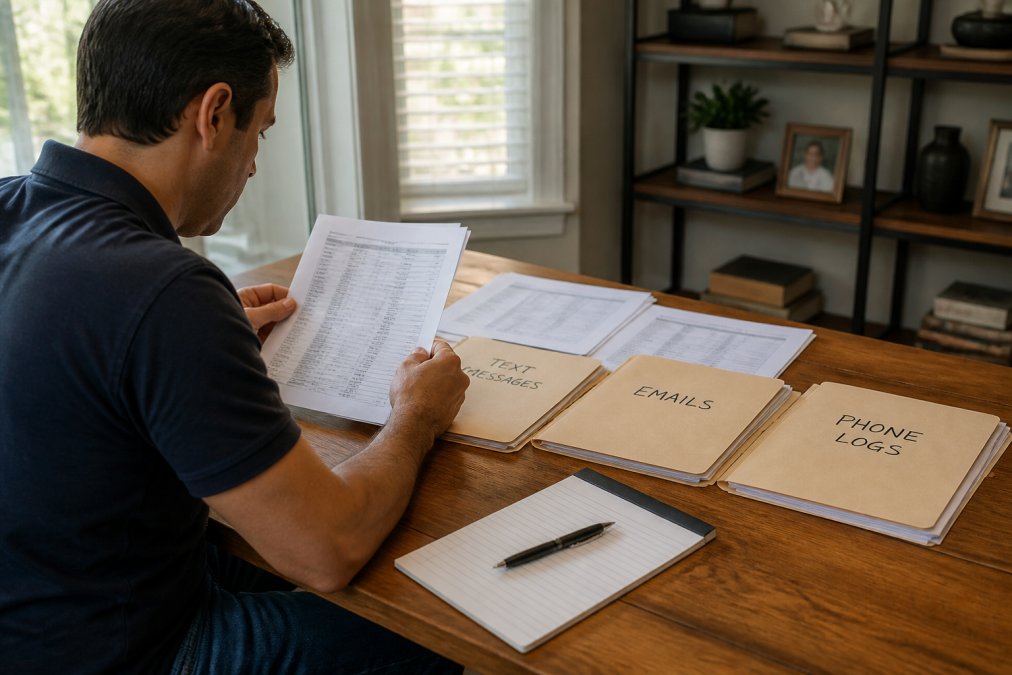
Pull together text messages, email logs, phone records, voicemails, photos with timestamps, and any third-party messages that contradict the petitioner's account. Legal guidance from Wegman & Levin stresses that systematic organization of this evidence, prepared for cross-examination of witnesses, is central to challenging the necessity of the order.
Preserve digital evidence properly: screenshot threads with timestamps visible, export call logs, and back everything up to cloud storage. Do not delete anything, even unhelpful messages; opposing counsel can subpoena records, and a gap looks like concealment.
Way 4: DVRO Hearing Preparation: Build Your Defense Before You Walk Into Court
DVRO hearing preparation is where cases are won or lost, long before you enter the courtroom.
Way 5: Prepare for Cross-Examination and Challenge the Petitioner's Credibility
Way 6: Line Up Witnesses Beyond the Parties to Support Your Defense
Way 7: Know the Post-Hearing Outcomes and How to Fight a Restraining Order That Was Granted
If you win
If the order is granted: duration and renewal
Firearm relinquishment is a separate legal obligation
Custody, visitation, and support
Professional licenses and employment
Modification and appeal
Compliance still matters after the hearing
Conclusion: Protect Your Rights With a Defense Strategy Built for Your Case
Frequently Asked Questions
What is the burden of proof for a restraining order in California?
The petitioner must prove their case by a preponderance of the evidence, meaning the judge must find it is more likely than not that the allegations are true. This is a lower standard than the beyond-a-reasonable-doubt threshold used in criminal cases. Because the burden rests with the petitioner, your defense can focus on creating inconsistencies in their account, presenting contrary evidence, and challenging the credibility of their testimony during cross-examination at the evidentiary hearing.
Can a restraining order be dismissed before the hearing?
Yes. A temporary restraining order can be dissolved or dismissed before the hearing if the petitioner withdraws the request or fails to properly serve the respondent with the required proof of service. The court may also deny a permanent order after the hearing if the petitioner cannot meet the burden of proof. If you are served with a temporary order, filing a written response and appearing at the scheduled hearing is the strongest way to contest it rather than assuming it will simply expire on its own.
What evidence should I present at a restraining order hearing?
Organize text messages, email logs, phone records, photographs, and any documents that contradict the petitioner's allegations. Digital evidence should be preserved in its original format with timestamps intact. Witness testimony from people who observed relevant events can also help. Present your evidence in a clear, chronological order so the judicial officer can follow it easily. An attorney can help you identify which evidence carries the most weight and prepare it for admission at the hearing.
What happens if you lose a restraining order hearing in California?
If the court grants a permanent restraining order, you may face stay-away and no-contact provisions, potential firearm relinquishment, and in domestic violence cases, possible child custody or visitation restrictions. The order can last up to five years and may be renewed. Violating its terms can lead to criminal charges. You may have options to appeal or request modification, so consult an attorney promptly about post-hearing remedies and your rights under due process.
How do I prepare for a DVRO hearing in California?
DVRO hearing preparation starts with filing a timely written response with the court. Then gather and organize all supporting evidence, identify witnesses who can testify, and prepare for cross-examination of the petitioner. Review the entire order to understand every restriction you must follow while the case is pending. Practicing your testimony and anticipating the petitioner's arguments with legal counsel can help you present a credible, consistent defense at the evidentiary hearing.